
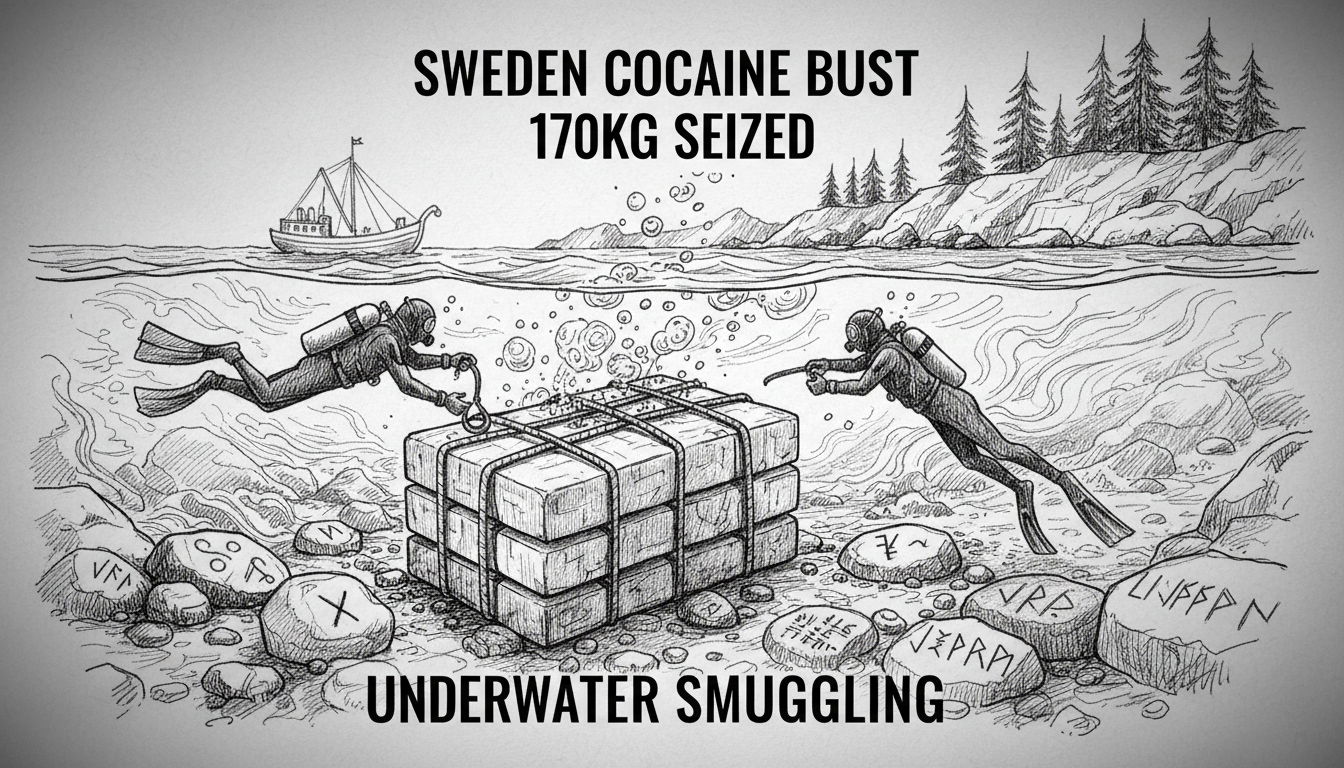
Sweden's Customs Service intercepted a sophisticated maritime drug smuggling operation, leading to the seizure of 170 kilograms of cocaine. The drugs, with an estimated street value of 160 million Swedish kronor, were retrieved from a ship's hull in Uddevalla harbor using underwater scooters. Two men have been sentenced to ten years in prison and deportation, with a third receiving seven years, for aggravated narcotics offenses.
This case highlights a significant and troubling trend in transnational crime. Criminal networks are employing advanced technology and methods to exploit Sweden's long coastline and busy ports. The successful interdiction by Tullverket, the Swedish Customs Service, represents a major victory for law enforcement but also underscores the persistent challenge.
A Routine Check Uncovers a Major Operation
The operation began to unravel during a routine check at the Öresund Bridge crossing last summer. Customs officers stopped a foreign-registered motorhome and discovered two underwater scooters in its cargo. This discovery immediately raised red flags for the experienced officers. Richard Johansson, group manager at the Swedish Customs Service's western criminal division, explained the significance in a statement. "It is a well-known method for smugglers to use divers to retrieve narcotics placed on ship hulls below the waterline," Johansson said.
The presence of this specialized equipment triggered a coordinated investigation. Authorities moved from the initial stop to surveillance and intelligence gathering. This led law enforcement to Ljungskile, where police later located and seized the massive 170-kilogram cocaine cache from two vehicles. The investigation pieced together a clear sequence: the drugs had been attached to a vessel's hull, retrieved in Uddevalla harbor by divers using the scooters, and were being transported for distribution.
The Evolving Tactics of Maritime Smuggling
The use of underwater scooters and divers represents a significant escalation in smuggling methodology. This approach requires substantial planning, coordination, and investment, indicating the involvement of organized criminal groups with considerable resources. Unlike bulk concealment in containers, this method allows for the discrete placement and retrieval of narcotics without needing to breach a ship's official cargo. It exploits a blind spot in traditional port security.
Experts point to Sweden's geography as a key factor. An extensive coastline with numerous ports and proximity to major European shipping lanes makes the country a target. Smugglers are constantly innovating to bypass security measures. This case shows a move towards more technically complex, low-profile methods that are harder to detect than large-scale container shipments. The operation required precise timing between the ship's arrival and the retrieval team on land.
Legal Repercussions and Policy Context
The Gothenburg District Court delivered stern sentences reflecting the severity of the crimes. Two of the convicted men received ten-year prison terms followed by deportation. A third individual was sentenced to seven years in prison, also with deportation. All were found guilty of aggravated narcotics offenses, a classification used for large-scale trafficking. These sentences align with Sweden's traditionally strict legal approach to drug crimes.
The Swedish government has consistently backed strong enforcement measures against drug trafficking. Policy directives from Rosenbad, the government offices, have emphasized interdiction and international cooperation. The Riksdag has maintained legislative frameworks that prescribe lengthy sentences for aggravated drug crimes. This legal environment aims to deter high-level trafficking by imposing significant penalties on those caught. The deportation orders further demonstrate a policy of removing foreign nationals who commit serious crimes.
Analysis: A Victory Amid a Growing Challenge
While this bust is a clear success for the Swedish Customs Service and police, it represents a single battle in a larger war. The sheer volume of cocaine seized—170 kilograms—points to a market demand that sustains such high-risk, high-reward operations. The estimated street value of 160 million kronor reveals the enormous profits that drive the trade. For law enforcement, the challenge is systemic and requires continuous adaptation.
Successful interdiction relies on intelligence, technology, and inter-agency cooperation. Officers must stay ahead of criminal innovation, whether it involves underwater gear, encrypted communications, or complex logistics. This case also highlights the importance of frontline officer vigilance; the initial stop was not based on specific intelligence but on professional suspicion. The broader question for policymakers is how to balance effective enforcement with addressing the root causes of demand and the social damage of drug abuse.
The International Dimension of Drug Trafficking
This was not a domestic operation. The involvement of foreign nationals, a foreign-registered vehicle, and a ship arriving from international waters underscores the transnational nature of modern drug trafficking. Sweden's efforts are part of a wider European and global fight. Cocaine typically originates in South America, transits through various regions, and enters Europe via multiple routes. Scandinavian ports are seen as potential entry points due to their efficiency and connectivity.
Cooperation with agencies like Europol and neighboring countries' customs services is crucial. The methods used in this smuggling attempt are likely not unique to Sweden. Intelligence sharing about such techniques helps protect the entire region's borders. The Swedish government's policy includes active participation in these international networks, understanding that national security is linked to cross-border law enforcement collaboration.
Looking Ahead: The Future of Border Security
The Ljungskile seizure will likely influence future strategies at the Swedish Customs Service. It validates investments in training officers to recognize unusual equipment and behaviors. It may also accelerate the deployment of more advanced scanning technology in ports and at border crossings. However, as security tightens in one area, criminal networks shift their tactics, creating a perpetual cycle of adaptation.
The significant prison sentences serve as a deterrent, but the financial lure of the drug trade remains powerful. The ultimate measure of success will be a sustained reduction in the volume of narcotics entering Sweden. This requires a multifaceted strategy combining enforcement, prevention, and treatment. For now, the message from this case is clear: Swedish authorities are capable of intercepting even sophisticated smuggling attempts, but the resources and ingenuity of the criminal networks they oppose should not be underestimated. The quiet waters of Uddevalla harbor became the stage for a high-stakes criminal enterprise, one that was ultimately foiled by alert customs officials and determined police work.