
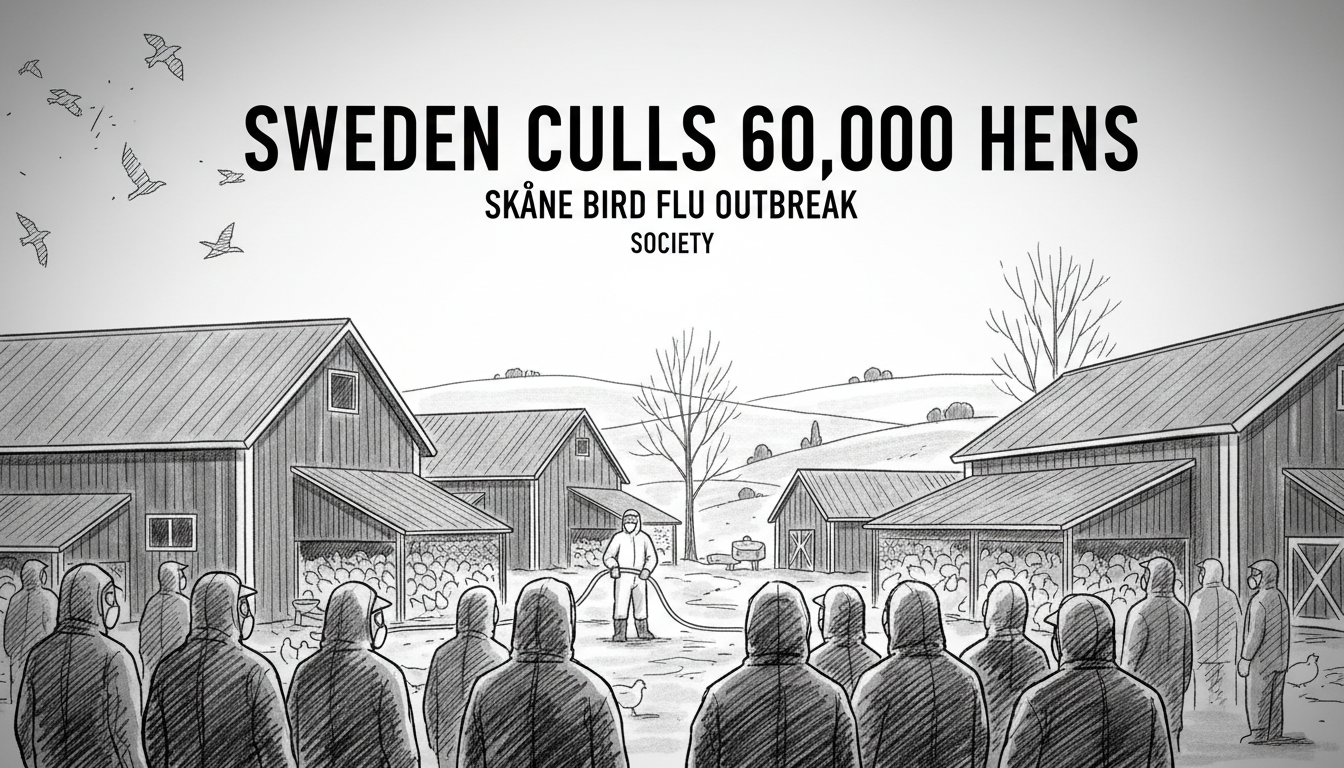
Sweden's poultry industry is facing a harsh reality as 60,000 breeding hens were culled on a farm in Skåne this weekend. The drastic action followed the confirmation of a highly pathogenic avian influenza outbreak, commonly known as bird flu. The farm owner raised the alarm after noticing an unusually high death rate among the flock, prompting immediate veterinary intervention. This single event sends ripples through Sweden's agricultural heartland and raises urgent questions about biosecurity and animal health.
For the farmer in Skåne, Saturday brought a devastating conclusion to growing concerns. The sight of sick and dying hens led to a call for help. A state veterinarian arrived, took samples, and confirmed the worst. The Swedish Board of Agriculture, Jordbruksverket, swiftly enacted its outbreak protocol. The entire flock of 60,000 birds was euthanized to prevent the virus from jumping to other farms. The operation was clinical, necessary, and deeply tragic for those who cared for the animals.
The Silent Spread and a Statewide Alert
The work did not stop at the farm gate. A critical trace-back operation is now underway. Officials are tracking every hatching egg, or 'avelägg', that left the infected premises. Any located eggs will be destroyed to eliminate another potential vector for the disease. Neighboring poultry farms across the region are on high alert. Teams from Jordbruksverket are conducting visits to other 'fjäderbesättningar', or feather-stocked farms, to assess risks and enforce strict movement controls. A quiet tension has settled over the countryside.
This is not Sweden's first encounter with the threat. Avian influenza is a recurring, global challenge for poultry producers. In recent years, several European nations have seen millions of birds culled in efforts to contain outbreaks. Skåne, with its dense and productive agricultural landscape, is particularly vulnerable. The region is a powerhouse for Swedish food production. A major outbreak here doesn't just affect one business; it threatens a key part of the national food chain and the rural economy that depends on it.
The Human Cost Behind the Headline
While the number 60,000 is a shocking statistic, it represents a profound personal and professional crisis. "For the farmer, this is a catastrophe," says Lena Karlsson, an agricultural economist familiar with the region. "Beyond the immediate emotional toll of losing your animals, you face months of lost income, deep uncertainty, and the arduous process of cleaning and restarting. The financial support systems exist, but they can't replace what's built over years." The farm will remain empty for an extended period as it undergoes mandatory disinfection. The future of its workers is now uncertain.
Jordbruksverket experts stress that early detection, as seen in this case, is vital. "The farmer did exactly the right thing by calling a vet at the first sign of trouble," a spokesperson for the agency said in a statement. "This swift action allows us to contain the outbreak and protect other flocks. Our message to all poultry keepers, from large farms to small backyard hen owners, is unwavering: maintain strict biosecurity and report any illness immediately." These measures include keeping wild birds away from feed, using disinfectant foot baths, and limiting farm access.
A Global Virus with Local Consequences
The virus itself, HPAI H5N1, is relentless. It is primarily spread by migrating wild birds, which makes border control impossible. Sweden's southern coast, including Skåne, lies directly under major migratory flyways. When wild birds carrying the virus land near farms, the risk of transmission through droppings or feathers becomes very real. This creates an almost impossible tension for farmers: they operate in an open landscape but must maintain a closed, sterile environment for their livestock. One breach can be catastrophic.
Animal welfare organizations acknowledge the grim necessity of culling during an outbreak but point to larger systemic issues. "Prevention is always better than reaction," notes Anna Bergström from the Swedish Animal Welfare Agency. "While culling is the standard method to stop an epidemic, we must invest more in understanding how farming practices and density affect disease resilience. The well-being of the animals is paramount, and dying from flu is a terrible death. The cull, while tragic, is intended to prevent wider, uncontrolled suffering."
Looking Ahead: Recovery and Resilience
The immediate focus is on containment. The success of the trace-back operation for the eggs will be a key metric. If all exposed eggs are found and destroyed, one pathway for the virus is closed. The next weeks will be critical for surveillance in the surrounding area. Farmers are checking their flocks multiple times a day, watching for any sign of lethargy, reduced egg production, or sudden deaths. The community is holding its breath.
For the affected farm, the road ahead is long. After the mandatory standstill period, the decision to restock will be a huge financial and emotional leap. Trust in biosecurity measures will need to be rebuilt from the ground up. The event also serves as a stark reminder to consumers. While Sweden has robust food safety systems, events like this highlight the fragility of our food supply chains. They are dependent on the health of animals, the vigilance of farmers, and the swift action of authorities.
This outbreak in Skåne is a local emergency with national implications. It tests the protocols of Jordbruksverket, the resilience of farmers, and the public's understanding of where food comes from. As the clean-up begins on that quiet Skåne farm, the broader question lingers: in a world where viruses travel on the wings of birds, how do we build a farming system that is both productive and safe? The answer will require more than just protocols; it will need sustained support for the people on the front lines, ensuring they can farm with both hope and security.