
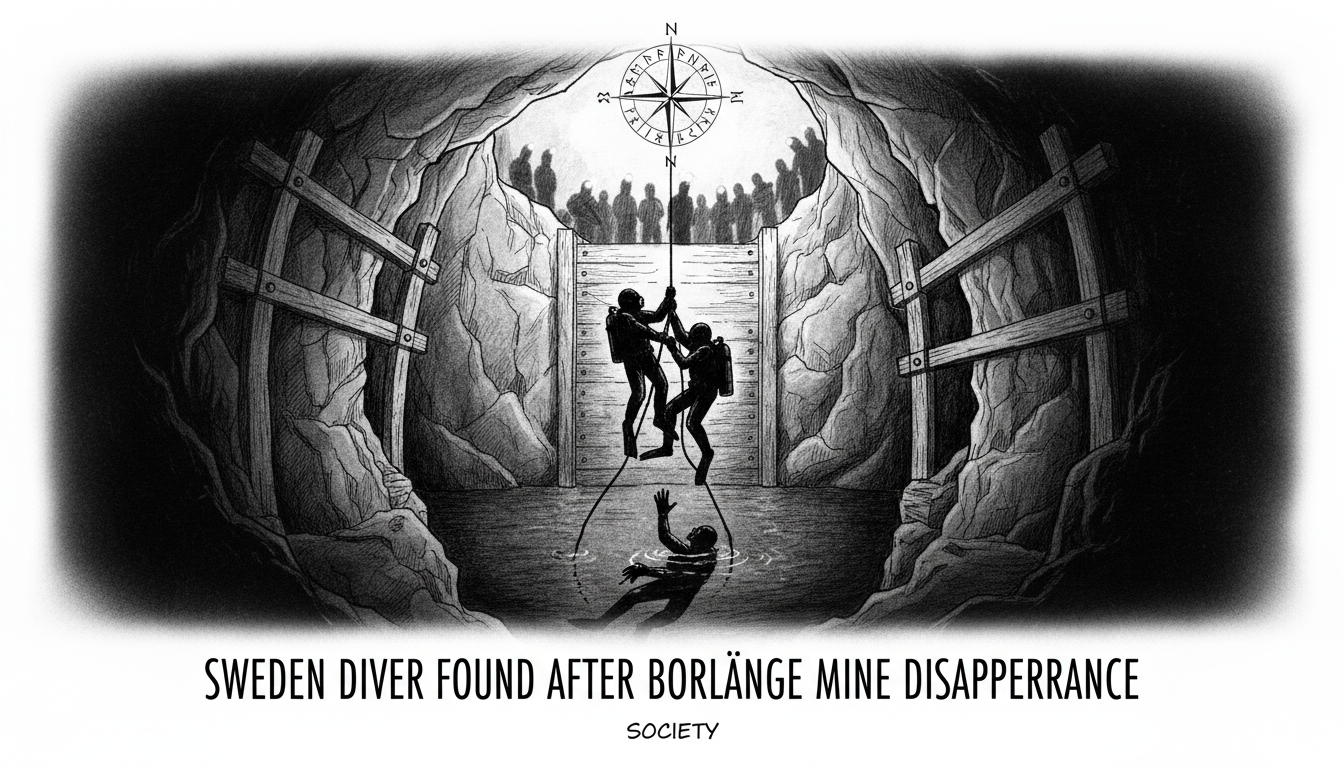
Sweden diving accident emergency services were alerted to a missing diver at an adventure mine in Borlänge just before 2 PM on Sunday. The diver has since been located, but their condition remains unclear. This incident casts a spotlight on the growing, yet inherently risky, trend of transforming Sweden's industrial past into adrenaline-fueled tourist attractions.
For hours on Sunday afternoon, the quiet industrial landscape around Borlänge was anything but calm. Police cars, ambulances, and rescue service vehicles converged on the site of a former mine, now repurposed for adventure tourism. The specific mine involved has not been officially named, but the community held its breath. A diver had vanished in the flooded, pitch-black depths of a historical excavation site. The relief was palpable when the individual was found, but the questions have only just begun.
From Industrial Heartland to Adventure Hub
Borlänge, in Dalarna County, is a city built on industry. Its identity has long been tied to the roar of steel production and the hum of paper mills. As these traditional industries evolved, the region faced the question of what to do with its physical heritage. The answer, increasingly, has been tourism. Across Sweden, decommissioned mines have been given second lives as museums, concert venues, and extreme sports locations. The adventure mine in Borlänge fits this new model perfectly, offering guided tours and, for the truly adventurous, the chance to dive into its submerged tunnels.
“These sites tell our story,” says Lars Pettersson, a local historian I spoke with from his home in Falun, just north of Borlänge. “They are monuments to the work that built modern Sweden. Turning them into experiences makes that history tangible, but we must never forget what they were: dangerous workplaces.” The contrast is stark. Where miners once toiled under perilous conditions for their livelihood, thrill-seekers now pay for a controlled encounter with that same environment.
The Inherent Risks of a Flooded Maze
The appeal of diving in an abandoned mine is undeniable for enthusiasts. It offers a unique combination of technical diving, exploration, and history. The water is often crystal clear and eerily still. But experts are quick to outline the dangers. Visibility can shift from clear to zero in seconds if sediment is disturbed. The tunnels are a confusing maze, often unmapped in their entirety. There is always a risk of falling rock or compromised structures. Furthermore, old mining equipment and hidden shafts create entanglement hazards.
“It is an environment that demands the utmost respect and preparation,” explains Anna Forsberg, a dive safety instructor based in Stockholm. “Standard open-water protocols are not enough. This requires specialized training in overhead environments, redundant equipment, and meticulous planning. Every dive should have a detailed map, a continuous guideline to the exit, and a clear understanding of the mine's specific hazards, like potential low oxygen levels in certain pockets.” The lack of immediate public details about Sunday's incident makes it impossible to speculate on what went wrong. However, the swift and large-scale emergency response highlights the severity with which authorities treat such calls.
A Community's Anxious Vigil
While not a major tourist draw like Stockholm's Gamla Stan or Gothenburg's archipelago, Borlänge's adventure mines are a point of local pride and economic hope. News of the accident traveled quickly through the community's tight-knit networks. At a café in the city center, the conversation over fika – the cherished Swedish coffee break – turned to the event. “You hear the sirens and you know it's something serious,” said Mikael, a lifelong resident who preferred not to give his last name. “We all know these old mines are there. You think of them as part of the landscape, not a place where someone could get into trouble today.”
This sentiment captures the dual reality of these sites. They are both historic landmarks and active, potentially hazardous, venues. The incident raises immediate questions about safety protocols, operator licensing, and the adequacy of regulations governing such niche adventure sports. Are the rules that cover a scuba dive in the Baltic Sea sufficient for a flooded iron ore mine?
Navigating the Regulatory Depths
In Sweden, adventure tourism operators are generally required to conduct risk assessments and have safety plans in place. Activities in specific geographical areas, like mines, may also require permits from the landowner and sometimes the county administrative board. However, the regulatory framework for extreme niche activities like mine diving is less clearly defined than for, say, operating a ski lift. It often relies on industry best practices and the operator's own safety culture.
“The responsibility is heavily weighted on the operator and the individual diver,” Forsberg notes. “There is an assumption of competence and personal accountability. For a certified, experienced diver with the right training, it can be a safe activity. The problem arises if either the operator cuts corners or a diver overestimates their skills.” The investigation by local authorities will likely focus on these very points: the preparedness of the dive operation, the experience level of the diver, and the specific chain of events that led to the disappearance.
The Aftermath and a Look Forward
The diver's condition remains the most pressing unknown. Being found is the first critical step, but injuries, hypothermia, or the physiological effects of a stressful ordeal can have lasting consequences. The individual's recovery is now the priority.
For the adventure tourism industry in Sweden, this incident serves as a sobering reminder. As the country continues to creatively repurpose its industrial relics, balancing authentic experience with uncompromising safety is a constant challenge. The allure of the unique and the extreme is powerful, but the legacy of these sites is already written in stone and iron. It is a history that includes both triumph and tragedy.
Will this event lead to a deeper scrutiny of adventure mine operations across Dalarna and beyond? It should. The successful transformation of Sweden's industrial past depends not just on imagination, but on an unwavering commitment to safety that honors the very history these sites represent. The mines of Borlänge have witnessed decades of hard work and risk. They deserve a future where adventure does not come at an unacceptable cost.