
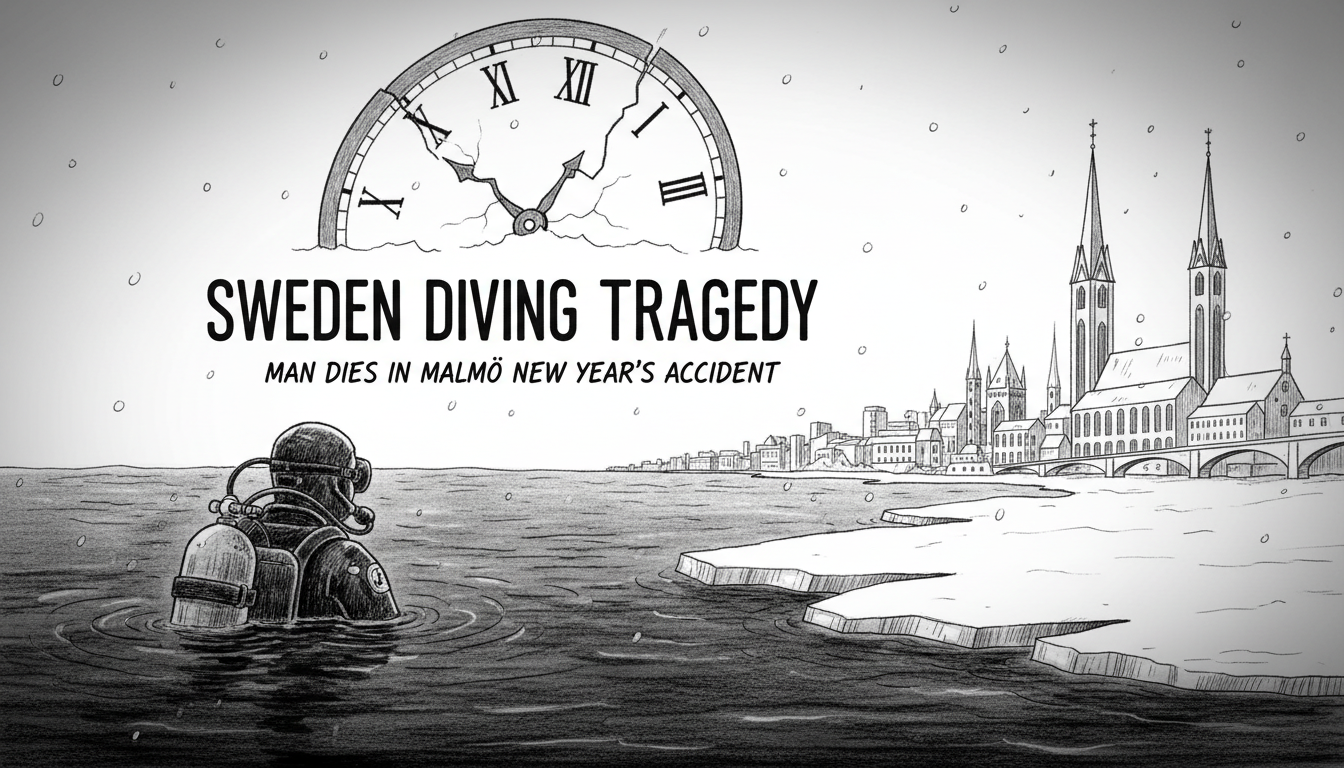
Sweden's New Year's Eve was marked by tragedy when a man died in a diving accident at Ön in Malmö. The incident occurred during a recreational dive with a group. Police have launched an investigation into the cause, which remains unclear. The man's family has been notified of his death. 'It is of course incredibly tragic and sad to receive this news on New Year's Eve,' said Leif Fransson at the police press center. The event casts a somber shadow over holiday celebrations in Sweden's third-largest city.
For the international community in Malmö, a city known for its vibrant expat life and the iconic Öresund Bridge, the news is a stark reminder of nature's risks. Diving along Sweden's southern coastline, from the rocky shores of the Bohuslän archipelago to the waters off Skåne, is a popular pastime. Yet it demands respect. This tragedy cuts to the core of Swedish society's relationship with nature—a culture built on 'allemansrätten' (the right of public access) and outdoor activity, but one where safety is paramount.
A Community in Mourning
The accident happened at Ön, a location in Malmö's harbor area. While specific details of the dive are part of the ongoing police investigation, the timing on December 31st amplifies the grief. New Year's Eve, or 'Nyårsafton', is a time for family gatherings, 'gott nytt år' wishes, and fireworks over cities like Stockholm and Gothenburg. For one family, it became a night of loss. Malmö, a city of contrasts with its historic squares like Stortorget and modern developments like the Turning Torso, now grapples with this sudden death. The local diving community, a tight-knit group often connected through clubs like the Malmö Sportdykarklubb, is likely feeling this loss acutely.
Police investigations into diving accidents are meticulous. They typically involve examining equipment for malfunctions, interviewing all members of the diving party, and reconstructing the events leading to the incident. Environmental factors such as water temperature, which can be near freezing in the Baltic at this time of year, visibility, and currents will all be considered. The goal is not to assign blame, but to understand. 'What caused the accident is unclear and will be investigated by police,' the official statement noted, emphasizing the procedural, fact-based approach common in Swedish authorities.
The Culture of Swedish Outdoor Life
To understand the context of this accident, one must understand 'friluftsliv'—the love of open-air life. It's a concept woven into the national fabric, from summer hikes in Abisko National Park to winter ice skating on frozen lakes. Diving is part of this tradition. Sweden's long coastline and countless lakes offer diverse underwater landscapes. Yet, this ethos comes with an unspoken contract: responsibility. Swedish institutions heavily promote safety. Organizations like Svenska Sportdykarförbundet (the Swedish Sport Diving Federation) emphasize rigorous training, equipment checks, and the buddy system.
'Every dive is a planned dive,' is a common mantra in safety courses. This means checking conditions, ensuring equipment is serviced, and never diving beyond one's training level. The buddy system, where divers operate in pairs constantly monitoring each other, is considered fundamental. In a society that values lagom (moderation) and collective well-being, ignoring these protocols is seen as a breach of social and personal responsibility. This tragedy will undoubtedly prompt local diving clubs and communities across Sweden, from the Stockholm archipelago to the west coast, to review their safety protocols as the new year begins.
A City of Resilience
Malmö itself is a city familiar with transformation. Once an industrial powerhouse, it has reinvented itself as a hub for innovation and culture. It's a city where the medieval Malmöhus castle stands near modern universities, and where the annual Malmö Festival fills the streets with life. This accident touches a community known for its resilience. The victim was part of a 'sällskap'—a company or group—a word that underscores the social nature of the activity. In Sweden, leisure is rarely solitary; it's shared with friends, family, or club members. The trauma for the group present is profound, and support systems, both formal and informal, will be crucial in the coming weeks.
Sweden has a strong framework for crisis support and accident investigation. The police work alongside other agencies to provide a clear picture. For the family, the pragmatic and thorough nature of the investigation may offer some small solace in knowing every angle is examined. The Swedish approach to tragedy is often characterized by quiet dignity, practical support, and a focus on factual understanding—a contrast to more expressive public grief seen in other cultures. This doesn't mean the emotion is absent; it is deeply felt but often channeled into structured support and systematic prevention for the future.
Safety in the Scandinavian Elements
Diving in Scandinavian waters presents unique challenges. Unlike tropical reefs, conditions can be harsh and change rapidly. Water temperatures, even in summer, rarely become warm. This requires proper thermal protection like drysuits. Visibility can vary, and currents around coastal areas like those near Malmö can be strong. Proper training for these specific conditions is not a luxury; it is a necessity. Experts consistently stress that equipment is only as good as the maintenance it receives and the skill of the person using it. A regulator serviced late, a missed buoyancy check, or a misjudgment of air supply can have dire consequences in cold water.
This incident serves as a somber reminder to all who engage with Sweden's beautiful but demanding natural environment. Whether it's diving, skiing in Åre, or sailing in the archipelago, preparation is key. The Swedish mentality often incorporates a deep-seated respect for nature's power—a concept known as 'naturens makt'. This tragedy underscores that relationship. It is a balance between the joy of exploration and the humility required by the elements.
Looking Forward with Reflection
As Malmö and Sweden move into 2024, this event leaves a mark. It is a personal tragedy for a family whose new year began with unimaginable loss. It is a communal event for the diving fraternity. And it is a public reminder of the risks inherent in the outdoor pursuits Swedes hold so dear. The police investigation will continue quietly, its findings potentially contributing to broader safety discussions. For now, the focus remains on the human loss. The fact that it happened on a holiday, a time of celebration, adds a layer of poignant contrast that will resonate widely.
In a culture that values 'trygghet' (security and safety) highly, an unexpected accident like this disrupts the social fabric. It prompts questions, reviews, and collective reflection. How do we better protect each other while enjoying our freedoms? How does a society built on trust in both institutions and individual responsibility process a random, tragic event? The answers are not simple. But in the Swedish way, they will be sought with diligence, care, and a commitment to preventing future heartbreak. The waters at Ön are calm now, holding their secrets until the investigation reveals its conclusions, but a community is left to navigate a wave of grief.