
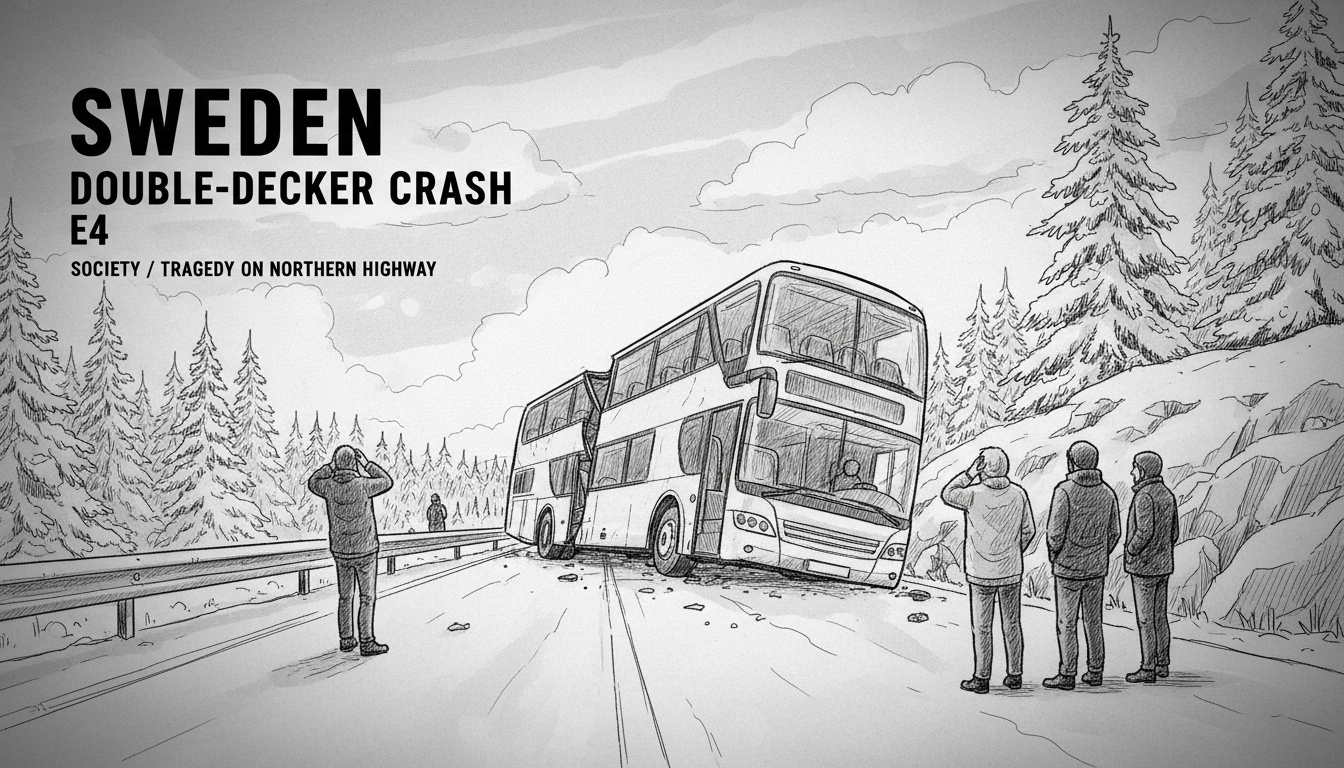
Sweden's E4 highway near Lövånger was the scene of a major accident Friday when a double-decker bus overturned after a collision with two cars. The bus, carrying 48 passengers, veered into a ditch alongside the vehicles. Police confirmed the crash occurred around 12:10 PM, prompting an immediate closure of the vital road in both directions.
Emergency services rushed to the site in northern Sweden. Images from the scene showed the large bus lying on its side. Two cars were also reported in the ditch. The scale of the incident required a massive response from local authorities.
Chaos on the E4: A Bus Overturns
A routine trip turned to chaos on one of Sweden's busiest highways. The double-decker bus was traveling on the E4 near the coastal community of Lövånger. Witnesses described a sudden crash that left the bus overturned. Initial reports indicate multiple vehicles were involved.
Police spokesperson Elisabeth Glaas provided early details. 'It is a full-size bus,' Glaas said in a statement. 'According to initial information, there are 48 passengers on the bus.' The exact cause of the collision remains under investigation. Authorities have not yet released information on injuries.
Emergency Response in Action
The alarm sounded just after noon on Friday. Rescue teams from the region mobilized quickly. Their priority was to secure the scene and assist any injured passengers. The complex nature of a double-decker accident poses unique challenges for first responders.
Extricating people from a toppled bus requires careful planning. The Swedish police and rescue services coordinated their efforts. Traffic on the E4 came to a complete halt. Long queues formed in both directions as drivers were diverted.
Local residents offered help where they could. This sense of community is common in rural areas of Sweden. The Red Cross and other volunteer organizations were likely activated. The full extent of the emergency response will become clearer in coming hours.
The Vital Artery: Sweden's E4 Highway
The E4 is more than just a road. It is a lifeline connecting Stockholm to the northern reaches of Sweden. This highway sees heavy traffic from commuters, tourists, and freight trucks. Any disruption here causes widespread logistical problems.
Accidents on the E4 can isolate communities in the north. Goods delivery and travel plans are often severely impacted. The closure near Lövånger will affect routes to cities like Umeå and Skellefteå. Alternative roads are smaller and less equipped for high volume.
This incident highlights the dependency on this single coastal route. Infrastructure investments in northern Sweden are a perennial topic in politics. Safety improvements on the E4 are frequently discussed after serious accidents.
Understanding the Risks: Double-Decker Buses
Road safety experts note that accidents involving buses demand special attention. Double-decker buses, with their high center of gravity, are more prone to tipping. Factors like speed, road conditions, and driver experience are critical in such cases.
'Accidents with buses, especially double-deckers, require a coordinated emergency response due to the potential for a large number of injuries,' explains a transport safety analyst. Maintenance checks and driver fatigue protocols are often scrutinized after crashes.
In Sweden, double-decker buses are common for long-distance travel. They offer efficient transport for many passengers. However, their design requires careful handling on highways known for variable weather. Winter conditions in the north can be particularly hazardous.
The Local Impact in Lövånger
Lövånger is a small locality in Skellefteå Municipality. It is known for its historic church town and coastal beauty. The community is now at the center of a national news story. Local officials are assisting with traffic management and support for victims.
Events like this shake small towns. Everyone feels connected when tragedy strikes on their doorstep. The community's resilience will be tested as recovery efforts continue. Swedish culture often emphasizes collective support in times of crisis.
Friday's accident will dominate local conversations. It may also influence regional travel patterns. Many Swedes were likely heading for weekend trips to summer cottages. Their plans are now disrupted by this unforeseen event.
Analysis: Road Safety in Sweden
Sweden prides itself on its Vision Zero traffic safety policy. The goal is to eliminate all road fatalities and serious injuries. Yet accidents like this remind us that the work is never done. Each incident provides data to improve safety measures.
The E4 has seen its share of serious crashes over the years. Authorities continuously work on upgrading barriers and signage. Driver education campaigns focus on fatigue and distraction. This crash will likely prompt renewed discussions on highway monitoring.
Comparative data shows Sweden has one of the world's lowest road death rates. But northern regions present unique challenges with longer distances and harsh weather. Investment in safer vehicle technologies and infrastructure is key.
What Comes Next: Investigation and Recovery
Police have launched a thorough investigation into the cause of the crash. They will examine vehicle black boxes, interview witnesses, and assess road conditions. The findings could lead to new safety recommendations for bus operators.
The passengers on the bus are the immediate concern. Their families are awaiting news. Swedish hospitals in the region are prepared to receive patients. The psychological impact on survivors can be long-lasting.
Traffic authorities will work to reopen the E4 as soon as it is safe. Cleanup and repair operations may take time. Travelers are advised to check real-time traffic updates and plan for delays.
This accident serves as a sobering reminder. Even on familiar roads, tragedy can strike in an instant. As Sweden reflects on this event, the focus must remain on protecting every life on the highway. How can we make our essential travel routes safer for everyone?