
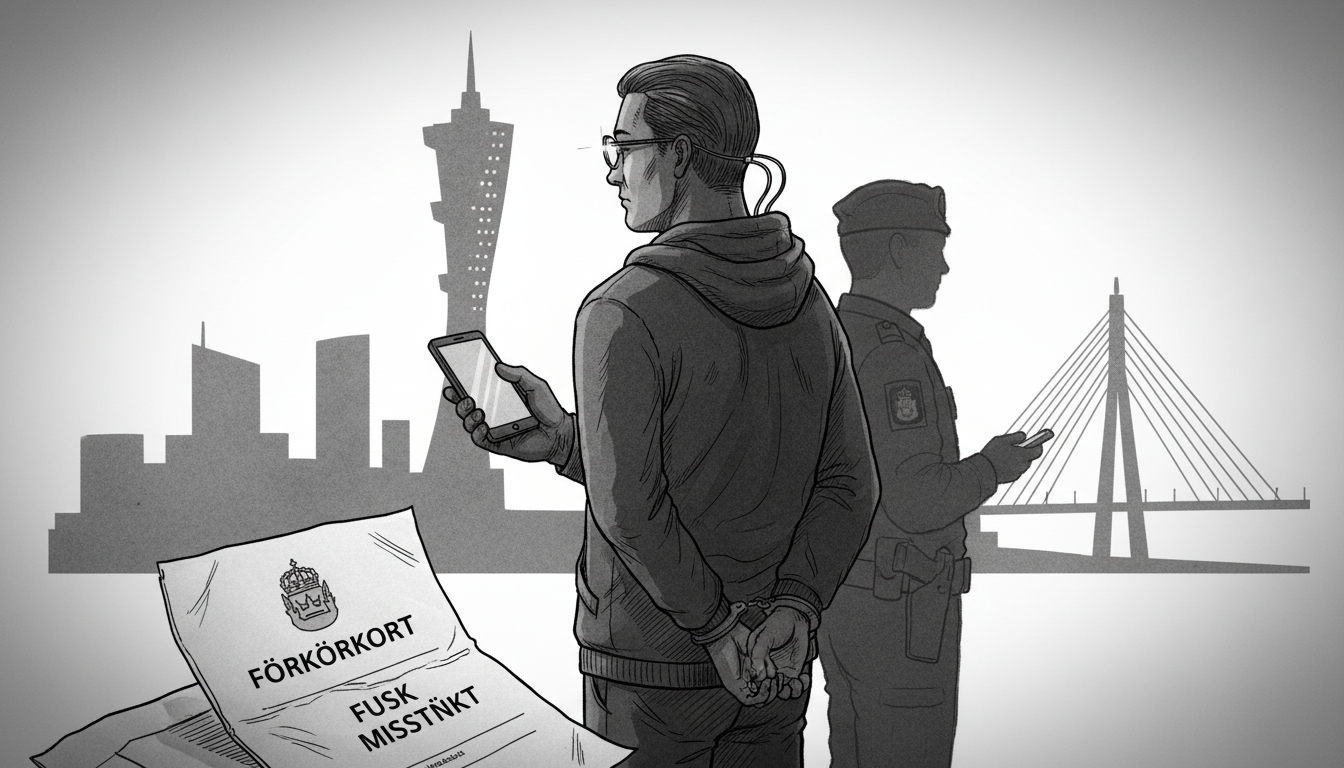
Sweden's theoretical driving test faced a new technological challenge last week when a man was arrested mid-exam in Södertälje. The reason? A pair of seemingly ordinary glasses equipped with a hidden camera and speaker, connected to a live video call. This incident marks a sharp escalation in the high-tech cheating methods now confronting authorities. ‘We need to constantly adjust our working methods to keep up,’ says Rikard Norrbom, Security Chief at the Swedish Transport Administration, Trafikverket.
Police were called to the test center as supervisors grew suspicious. The man, in his 30s, had two mobile phones on him. One was switched off. The other was live, feeding the test questions to an accomplice outside, who then whispered answers back through the glasses' tiny speaker. When confronted, the man reportedly claimed he simply thought the glasses ‘looked nice.’ He has since been convicted of fraud.
The AI-Powered Cheat Sheet
This isn't about scribbling answers on a hand. Modern cheating exploits consumer tech. Smart glasses, readily available online, can discreetly record exam questions. That footage can be streamed to someone using a search engine or, increasingly, an AI chatbot like ChatGPT to find correct answers in real-time. The helper then communicates via a bone conduction speaker, audible only to the wearer. It’s a silent, nearly invisible scheme that bypasses traditional exam hall defenses.
‘The method is sophisticated and difficult to detect with the naked eye,’ Norrbom tells Nordics Today. ‘It requires vigilance and sometimes technical countermeasures.’ Trafikverket does not disclose all its security protocols, but they involve a mix of human supervision and surveillance technology. Test centers have banned all electronic devices from exam rooms for years, but wearables like smart glasses push the boundaries of that rule.
A Growing Trend and a Safety Concern
While Trafikverket does not release exact annual figures on cheating, officials confirm a significant increase in cases involving technical aids over recent years. Each case represents a profound safety risk, experts argue. ‘The theoretical test isn't a bureaucratic hurdle. It's the foundation of safe road behavior,’ says Lena Pettersson, a traffic safety researcher based in Stockholm. ‘If you circumvent that knowledge, you're not just cheating the system. You're becoming a potential danger to everyone sharing the road with you.’
The stakes are high. Sweden's theoretical test has a pass rate typically between 50% and 60%. It covers vital knowledge: right-of-way rules, signage, and how to act in hazardous conditions. Failing it means more study, another fee, and delay. For some, the pressure to pass—combined with the ease of accessing cheating tech—creates a tempting shortcut with long-term consequences.
The Legal and Cultural Reckoning
Getting caught carries severe penalties. Beyond immediate test disqualification, individuals face prosecution for fraud, which can result in fines or even conditional sentences. A conviction also bars you from retaking the test for a set period, often two years. ‘It’s treated seriously because it undermines the entire licensing system’s credibility,’ explains legal analyst Magnus Falk. ‘The courts recognize that a driving license is a privilege predicated on proven competence, not deception.’
Culturally, the incident sparks a conversation about integrity, or hederlighet, a core Swedish value. In a society built on high trust, such blatant deception for a state-administered license feels particularly jarring. ‘It goes against the grain,’ says sociologist Eva Karlsson. ‘We trust that people follow the rules, that the system is fair. When someone uses technology to game it, it forces a reassessment of how we maintain that trust in the digital age.’
How Authorities Are Fighting Back
Trafikverket is in a continuous tech arms race. While they avoid specifics, countermeasures likely include signal jammers to block mobile networks in test areas, advanced camera systems to detect unusual eye or head movements, and software to monitor network activity within their facilities. Staff training is constantly updated to recognize the latest gadgets and suspicious behaviors.
‘The key is adaptability,’ Norrbom emphasizes. ‘As soon as one method is known, we develop counter-strategies. It’s an ongoing process.’ The agency also invests in public information, stressing the seriousness of cheating and its consequences. The message is clear: the risk of getting caught—and the subsequent legal and personal fallout—far outweighs any perceived benefit.
A Warning from Södertälje
The Södertälje case serves as a stark, public warning. It demonstrates that investment in cheating technology has moved from simple hidden earpieces to full-scale, real-time remote assistance. For honest test-takers, it’s a frustrating development that could lead to even stricter, more invasive security at exam centers.
For authorities, it’s a clear signal that the battle for exam integrity is being fought on a new frontier. As AI tools become faster and wearables more discreet, the challenge will only grow. The ultimate question isn't just how to catch the next person with camera glasses. It's how to preserve the value and safety meaning of a Swedish driving license in an era where the line between personal tech and cheating aids is increasingly blurred. The arrest in Södertälje shows the fight is on, but the next round of technological innovation is always just around the corner.