
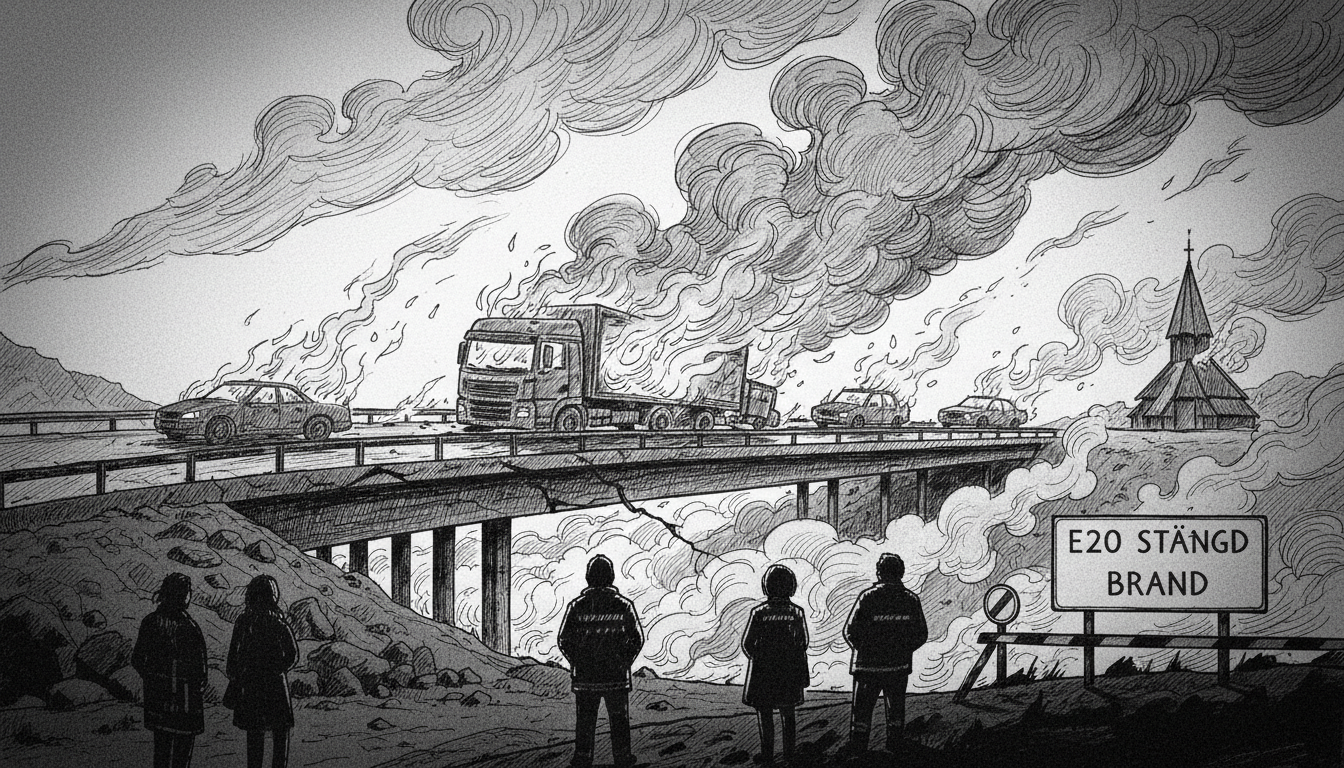
Sweden's E20 highway near Kungsör was engulfed in thick, black smoke on Tuesday evening. A truck had become a raging inferno. Emergency services rushed to the scene as traffic ground to a halt. For thousands of drivers, a routine journey turned into a long night of detours and delays. This critical artery of Swedish transport was severed. 'We received calls about a fire, and when we arrived, it was fully developed,' said Oscar Davila, a command operator with the rescue service. 'The initial fire is out, but there is enormous smoke development.' No injuries were reported. Officials estimated the cleanup would take at least two hours from around 6 p.m., paralyzing a key section of road.
Flames Disrupt a National Lifeline
The E20 is not just any road. It is a backbone of Swedish commerce and daily life. Connecting major hubs like Stockholm, Gothenburg, and Malmö, it facilitates the flow of goods and people across the country. A closure here sends immediate shockwaves. Long-distance hauliers faced costly standstills. Commuters heading home from work found themselves stuck. The disruption near Kungsör, a vital node in the network, highlighted the fragility of our interconnected mobility. Traffic experts often warn that Sweden's economic health is tied to this highway's reliability. A single incident can cause disproportionate chaos.
The immediate scene was one of controlled urgency. Firefighters battled the blaze while police managed the growing queue of vehicles. The priority was preventing any injuries and containing the environmental hazard from the smoke. For local residents in Kungsör, the event was a startling interruption to a quiet evening. Such incidents remind us how quickly normalcy can evaporate. Sweden prides itself on efficient infrastructure. Events like this test that reputation in real-time.
Economic and Cultural Ripple Effects
The stoppage had tangible costs. Logistics companies calculate delays in thousands of kronor per hour. Fresh produce deliveries to Stockholm's restaurants in Södermalm or Östermalm could be delayed. Events starting in the city might have seen late arrivals. This isn't just about traffic news. It's about the rhythm of Swedish society. Punctuality and planning are cultural cornerstones. A major highway closure disrupts the subtle social contract of being on time. It affects the worker aiming for a fika break, the family heading to a weekend stuga, and the entire supply chain.
From a societal trend perspective, Sweden's dependence on road transport is clear. Despite strong rail networks, goods movement relies heavily on trucks. This fire sparks conversations about road safety and alternative routes. Are our highways prepared for such emergencies? How quickly can recovery happen? The fact that no one was hurt is fortunate. But the economic and logistical wound remains. Analysts note that with increasing traffic volumes, the impact of such disruptions only grows. Preventive maintenance and driver training become even more critical.
A Closer Look at Truck Safety
What causes a truck to erupt in flames on a open highway? Fire safety analysts point to several common factors. Electrical faults, overheating brakes, or cargo-related issues can all be triggers. In Sweden, stringent vehicle inspections are the norm. Yet, accidents happen. This event near Kungsör will likely lead to a thorough investigation. The goal is to prevent recurrence. For the trucking industry, safety is paramount. Every fire is a potential tragedy averted only by swift response. The public rarely sees the complex work of emergency services until crisis strikes.
The response in this case was swift and effective. The rescue services' ability to prevent injuries and control the fire deserves recognition. It underscores the value of well-funded, trained emergency responders. In a broader sense, this incident touches on Swedish lifestyle and societal values. Safety, efficiency, and environmental care are all at play. The smoke plume over the E20 was a visible reminder of our vulnerability. It also showed our resilience. Services worked to restore order on a key national route.
The Human Stories Behind the Headlines
Behind the traffic reports are real people. Imagine the truck driver, shocked but unharmed. Consider the family en route to a summer festival in Bergslagen, now rerouted through minor roads. Think of the small business in Eskilstuna waiting for a delayed shipment. These human angles define the story. Swedish culture is deeply connected to the freedom of movement. The right to roam, or allemansrätten, extends to our roads. We expect to travel freely. When we cannot, it feels like a small fracture in our daily lives.
Local communities like Kungsör become unexpected hubs of activity during such closures. Cafés might see an influx of stranded travelers. Gas stations become information points. There's a temporary, unplanned community formed in adversity. This micro-society on the asphalt reflects broader Swedish traits of solidarity and patience. Yet, the inconvenience is real. For an international audience, this is a slice of Swedish life. It's not just about a fire. It's about how a modern, organized society handles the unpredictable.
Looking Ahead: Resilience and Readiness
As the E20 reopened after hours of work, normal traffic flow resumed. But the questions linger. How can Sweden better protect its vital transportation corridors? Experts advocate for improved incident management systems and public communication. Drivers need real-time data to avoid congested areas. From a cultural standpoint, this event may reinforce a growing trend towards localism and remote work. Why brave the highways if you can avoid it? Yet, the need for physical transport remains strong.
The Kungsör truck fire is a stark reminder. Our interconnected world is only as strong as its weakest link. Sweden's infrastructure is generally excellent. But it is not immune to chance events. The response demonstrated skill and professionalism. The aftermath shows our dependence on smooth logistics. For travelers and businesses alike, the message is clear. Plan for the unexpected. Value the systems that keep us moving. Next time you drive the E20, remember the thin line between routine and disruption. How will Sweden adapt to ensure this lifeline remains secure for all?