
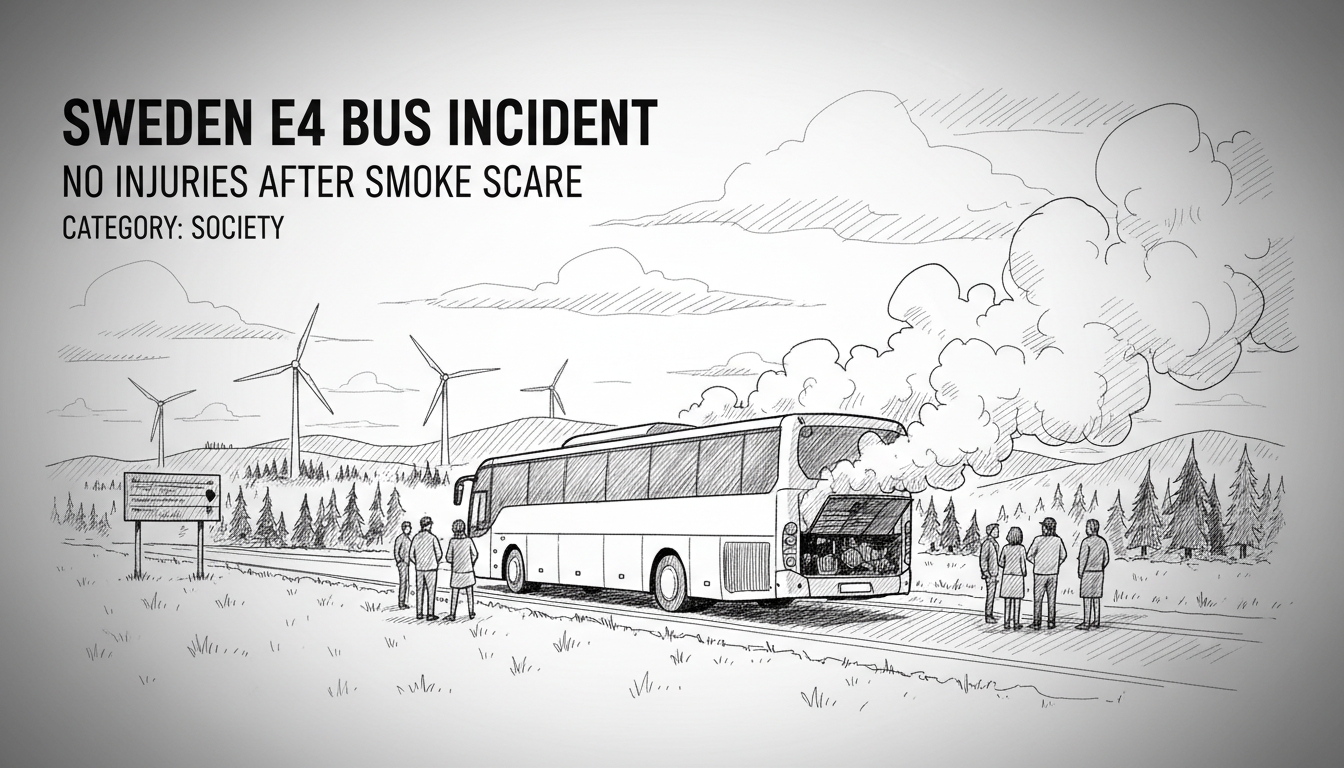
Sweden's E4 highway faced disruption early Wednesday after a bus developed smoke from an oil leak. The incident occurred near Järva Krog in Stockholm's northern suburbs just after 2:30 AM. No passengers were injured, but the event caused significant traffic delays during the morning commute.
"There was smoke development following an oil leak," said Henrik Jynnesjö, a duty officer with the rescue service. He confirmed that several people were on board when the issue began. Emergency services have now scaled back their response, though recovery vehicles remain on scene to clear the bus. Traffic is moving slowly past the area.
For the dozens of passengers aboard the night bus, it was a jarring interruption. These services are lifelines for shift workers, airport staff, and late-night travelers connecting Stockholm's suburbs to the city center. A sudden smell of smoke and the bus pulling over on the dark highway is a scenario every commuter fears.
The Artery of Swedish Transport
The E4 is more than just a road; it's Sweden's main logistical spine. Stretching over 1,600 kilometers from Helsingborg in the south to Haparanda on the Finnish border, it connects major cities like Malmö, Stockholm, and Uppsala. Thousands of trucks use it daily to move goods across the country and into the broader Nordic region. Any incident, especially during peak hours, sends ripples through the entire transport network.
This particular stretch near Järva Krog is a notorious bottleneck. It feeds into the northern approaches of Stockholm, where traffic from the E4, E18, and Route 73 merges. A stalled vehicle here during rush hour can create backups stretching for kilometers, affecting people trying to reach offices in Kista, Sweden's tech hub, or Solna's business parks.
"The economic impact of a major highway closure is immediate," explains Lars Forsberg, a traffic analyst based in Stockholm. "It's not just about the lost time for commuters. It's delayed freight, missed appointments, and increased fuel consumption from idling vehicles. The resilience of our road network is directly tied to economic productivity."
A Well-Rehearsed Emergency Response
The swift response and resolution of this incident highlight Sweden's structured approach to traffic emergencies. The rescue service, police, and the Swedish Transport Administration's (Trafikverket) traffic management center work in a coordinated system. Their goal is clear: secure the scene, assist any people involved, and restore traffic flow as safely and quickly as possible.
The mention of "TMA-fordon" (Traffic Management and Assistance vehicles) staying on site is key. These specialized trucks, often with large arrow signs and protective barriers, are deployed to create a safe zone around the incident and guide traffic past it. This allows for the slower process of towing the bus without requiring a full lane closure.
This protocol is tested regularly. Sweden's harsh winters mean authorities are adept at handling weather-related breakdowns and accidents. A summer mechanical failure, while less common, triggers the same efficient machine. The fact that no injuries were reported is the primary success, but the management of the resulting traffic chaos is a close second.
The Human Stories on the Night Bus
Behind the traffic reports are personal stories. The night bus network in Stockholm is a world of its own. It carries cleaners finishing shifts in the city center back to suburbs like Jakobsberg and Barkarby. It takes hospitality workers home after closing bars and restaurants in Stureplan or Gamla Stan. For them, a reliable bus is essential.
Anna, a nurse who works night shifts at Karolinska University Hospital and asked only for her first name, often takes similar buses. "You're just tired, wanting to get home," she says. "Something like this is scary, of course, but you also immediately think, 'How will I get to my kids' school later if I'm stuck here?' The disruption lasts longer than the incident."
This near-miss also sparks conversations about public transport reliability. Sweden has invested heavily in electrifying its bus fleets, particularly in cities. While this incident involved an oil leak from a likely diesel vehicle, it underscores the broader push towards newer, cleaner, and more mechanically reliable transport options to keep people and goods moving.
When Sweden's Main Road Slows Down
For a country famed for its efficiency and punctuality, traffic jams are a particular source of frustration. The Swedish word "köbildning" (queue formation) is a dreaded one on radio traffic updates. Incidents on the E4 are major news because they affect so many people's daily rhythm.
The culture of long-distance commuting, especially around Stockholm, means many live in suburban municipalities but work in the city. They depend on the predictable flow of the E4. An unexpected delay forces a recalculation of the entire day. It's a reminder of the delicate balance between Sweden's vast geography and its concentrated urban centers.
Events like these also test the national reliance on digital solutions. Traffic apps like Google Maps and Trafikinfo see sudden spikes in usage. Employers receive a flood of messages about delayed arrivals. The digital infrastructure holds, but the physical bottleneck on the asphalt remains a stubborn problem.
Looking Ahead: Resilience on the Road
As the bus was towed away and Wednesday's traffic slowly returned to normal, the questions turn to prevention. Regular vehicle maintenance, especially for commercial and public service fleets, is paramount. The incident serves as a small-scale drill for emergency services, confirming that protocols work when needed.
For the average Swede, it's a brief news item that may have made their morning commute 20 minutes longer. For the passengers on board, it was an alarming start to the day that ended safely. For transport planners, it's another data point in the ongoing challenge of maintaining a smooth flow on one of Europe's longest national highways.
The E4 will continue to be Sweden's backbone. It carries holidaymakers heading to summer cottages in Dalarna, timber trucks from the northern forests, and commuters into Stockholm's urban heart. Its uninterrupted flow is a quiet expectation. When that flow is interrupted, even briefly, it reminds everyone of the complex, moving system that keeps the country running. How Sweden manages these inevitable interruptions is a testament to its preparedness—and a reassurance for the next time the journey hits an unexpected stop.