
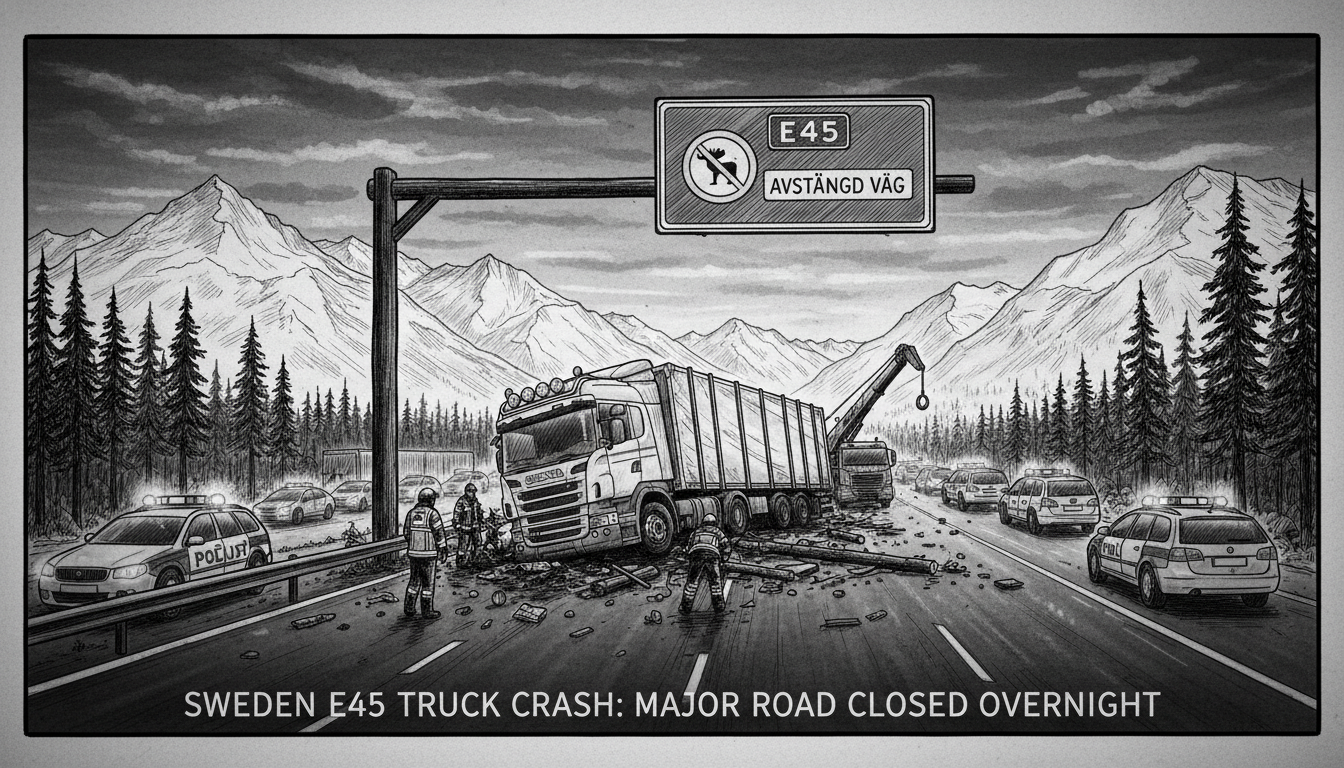
Sweden's E45 motorway is closed in both directions after a truck overturned between Brålanda and Erikstad. The key transport artery will remain shut throughout the night as recovery crews work to clear the scene, police confirmed Thursday evening. The accident has severed a vital north-south link, causing significant disruption to traffic and freight across Västra Götaland County.
For residents of the quiet locality of Brålanda, the sound of sirens cutting through the evening air signaled another major disruption on their doorstep. The E45, known as Inlandsvägen or the Inland Road, is more than just asphalt—it's the backbone of regional transport. When it closes, everything from daily commutes to national supply chains feels the impact. "It's always a big event when this road goes down," said local shop owner, Magnus Falk, reached by phone. "You can hear the silence from the missing traffic. But for the truck drivers and companies relying on it, this is a real problem."
A Long Night for Recovery Teams
Police press spokesperson Jennifer Last stated that recovery operations are underway at full capacity. "Recovery crews are working hard, but the E45 will be closed in both directions all night," Last said. The complexity of righting a heavy goods vehicle and ensuring the road is safe for travel takes time. Specialized equipment and careful procedures are required, especially when dealing with potential hazardous materials or unstable loads. These overnight closures are standard protocol for serious incidents, prioritizing worker safety and thorough clearance over speed.
This stretch of the E45, running through the municipality of Vänersborg, is a crucial corridor for transporting goods between central Sweden and the western coast. It connects major hubs like Gothenburg with inland regions. A prolonged closure doesn't just mean detours for cars; it disrupts just-in-time delivery schedules for supermarkets, factories, and ports. Logistics managers across the region are likely scrambling to reroute fleets, adding hours and fuel costs to their journeys.
The Human Factor Behind the Wheel
While the immediate cause of this particular crash remains under investigation, road safety experts consistently point to a few critical factors in heavy vehicle accidents. Driver fatigue is a perennial concern, especially on long, monotonous routes like the E45. Strict EU regulations on driving hours exist, but the pressure of tight delivery windows can be immense. "The economics of transport push for efficiency, but the human body has limits," explains Anna Lundström, a researcher in transport safety at the Swedish National Road and Transport Research Institute (VTI). "A tired driver's reaction time slows dramatically. On a fast road, that split second is everything."
Vehicle maintenance is another cornerstone of safety. Sweden has rigorous annual inspections (besiktnings), but wear and tear between checks on vehicles covering thousands of kilometers weekly is inevitable. Brake failure, tire blowouts, or shifting loads can have catastrophic consequences. For professional drivers, the cab is both office and home for long stretches. The culture of respecting their profession and ensuring good working conditions is part of a broader Swedish societal approach to safety, making such accidents particularly noteworthy when they occur.
The Ripple Effect on Swedish Society
The closure of a road like the E45 reveals the interconnected nature of modern Swedish society. A single overturned truck near Brålanda can delay components for a factory in Trollhättan, fresh produce bound for a Stockholm restaurant, or a family's online order from a warehouse in Borås. It highlights the nation's reliance on road freight, despite its famous investments in rail. For many communities along the Inlandsvägen, the road is their main connection to larger towns and services. Alternative routes often mean smaller, slower roads through village centers, increasing travel time and local traffic hazards.
There's also an environmental cost. Idling traffic and long detours burn extra fuel, increasing carbon emissions—a sensitive topic in climate-conscious Sweden. Incidents like this fuel ongoing debates about strengthening rail freight and improving road resilience. Yet, the economic reality is that trucks carry the majority of domestic goods. This accident is a stark, temporary reminder of that dependency.
Looking Beyond the Crash Barrier
As night falls over Västra Götaland, the recovery lights will glow on the closed E45. By morning, the road will hopefully reopen, and traffic will resume its flow. But the incident leaves lingering questions. Could different road design, like wider shoulders or better signage in that section, help prevent future accidents? Are there technological solutions, like mandatory fatigue monitoring systems for heavy vehicles, that should be explored more aggressively?
For now, the focus is on the practical task of clearing the wreckage. The driver's condition has not been disclosed, a reminder that at the heart of this logistical headache is a personal crisis. Swedish roads are among the world's safest, but zero accidents remains the elusive goal. Each incident prompts a quiet reflection on the balance between mobility, economy, and the safety of those who keep the country moving. When the E45 reopens, the trucks will roll again, carrying the essentials of Swedish daily life. But tonight, a silent stretch of tarmac near Brålanda tells a story of sudden interruption in the steady rhythm of the inland road.