
A quiet revolution is taking shape in Swedish backyards and neighborhoods. New changes to the national planning and building law aim to simplify the process for homeowners wanting to add space. The core idea is straightforward. Many small-scale projects will no longer require a formal building permit or even a notification. This shift could transform the look and feel of residential areas across the country.
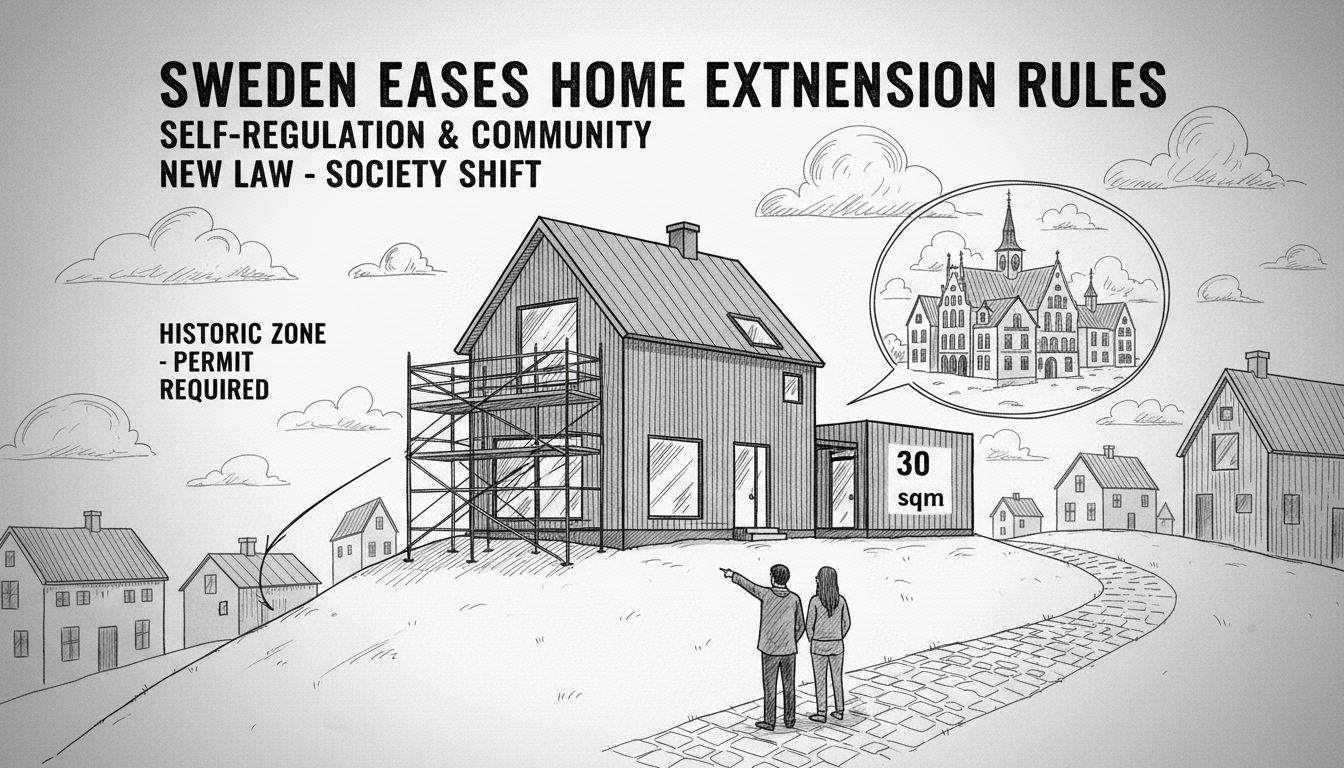
Ulrika Thalén, the building permit chief in Södertälje, explained the new approach. 'Several measures will not require a building permit or notification,' she said in a municipal statement. One major change allows for an extension of up to 30 square meters within a planned area without any permit. In simple terms, this means many property owners can now build a small house or a sizable addition on their plot. Imagine adding a guest cottage in Södertälje or a sunroom in a Stockholm suburb like Bromma with far less red tape.
This move reflects broader Swedish society trends toward deregulation and individual freedom. It empowers homeowners but also places new responsibility squarely on their shoulders. The property must still meet several key requirements. These include rules about how close you can build to the property line and maximum height limits. 'It is their responsibility to build according to the legislation,' Thalén emphasized. 'If a question comes to us, we will investigate if something has gone wrong.'
There are important cultural exceptions to this new freedom. The rules do not apply in areas deemed to have special cultural-historical value. 'There are exceptions if the property is in an area with special cultural-historical value. Then you need to apply for a permit,' Thalén noted. In Södertälje alone, several such protected zones exist in both urban and rural settings. This safeguard aims to preserve the character of historic districts, a core concern in Swedish culture news.
For international readers and expats in Sweden, this is a significant development. It simplifies the often daunting process of modifying a home. Yet, officials strongly recommend contacting the local building department early in the planning stages. Thalén predicts her unit might actually get busier. 'We believe there could be more supervision cases going forward,' she said. This hints at a potential rise in neighborly disputes. What happens if your neighbor in Vasastan builds something you find questionable? The onus is on individuals to know and follow the rules, which could lead to conflicts.
This policy change is not happening in a vacuum. It connects to ongoing debates about housing supply, urban density, and personal property rights in Sweden. While it may boost small-scale construction and support a DIY Swedish lifestyle, it also tests the famous Swedish principle of 'lagom'—moderation and consideration for others. Will this lead to a surge of creative backyard spaces, or to disputes over blocked views and compromised privacy? The answer will unfold in neighborhoods across the country in the coming months. For now, the message is clear. More freedom comes with more personal responsibility, a trade-off at the heart of many Swedish society trends.