
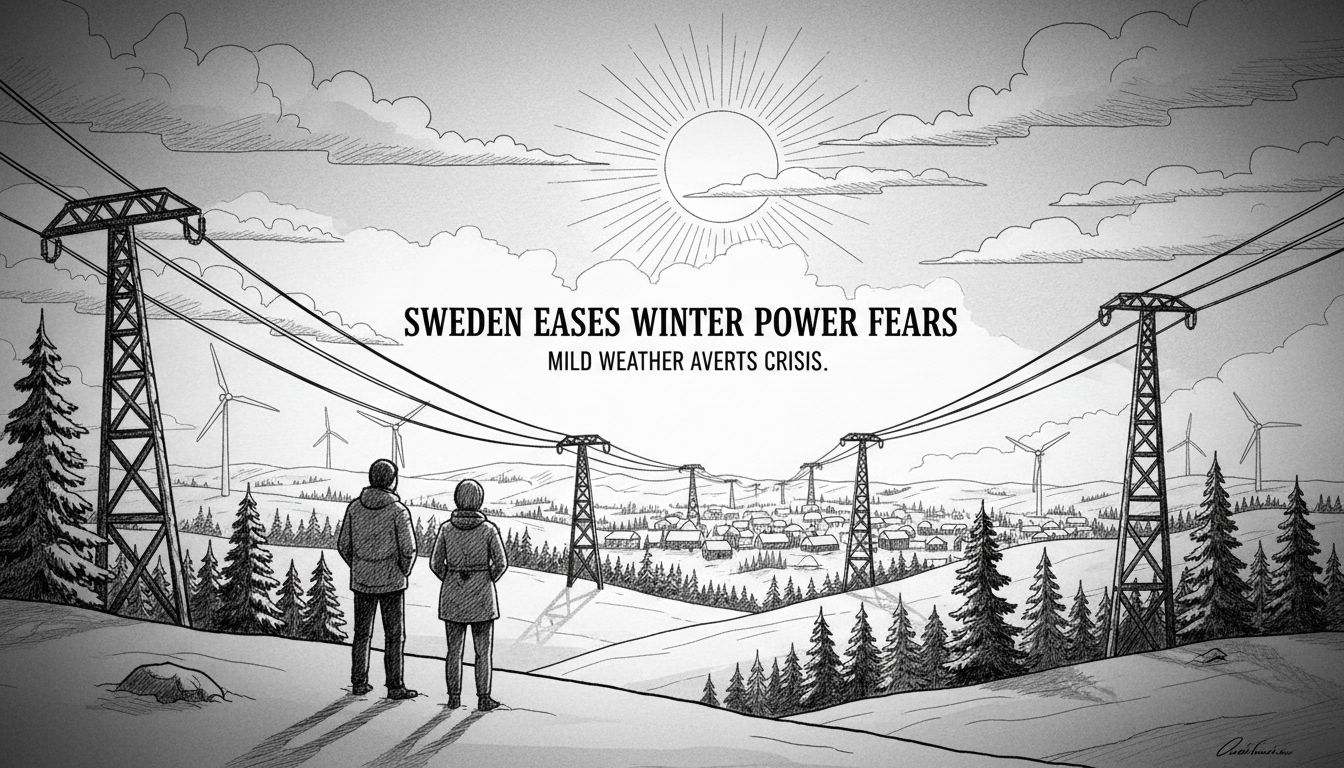
Sweden's risk of acute electricity shortages this winter has significantly decreased. The Swedish Energy Agency now reports stable prospects, a stark contrast to autumn's alarm bells. For residents like Karl in Stockholm's chilly Södermalm district, this news brings more than just lower bills—it brings a sense of security as the long Nordic winter continues.
Just months ago, the national grid operator, Svenska Kraftnät, issued a stark warning. A crucial deal to establish a strategic electricity reserve had collapsed, leaving the country potentially vulnerable. The memory of 2021's tense winter, with volatile prices and strained capacity, was fresh in people's minds. Energy security became a hot topic in fika conversations across offices and cafés from Göteborg to Malmö.
A Turn in the Weather, A Turn in Fortunes
The primary reason for the improved outlook is surprisingly simple: the weather. This winter has been unusually mild so far. "We've seen temperatures several degrees above normal for the season," notes Lars, a meteorologist familiar with Nordic patterns. This milder weather has directly dampened heating demand across homes and businesses.
Lower demand has, in turn, eased pressure on electricity prices. The agency's latest assessment points to this as a key stabilizing factor. While global energy markets remain complex, the domestic situation looks more secure. This is a relief for many, especially those living in older, less insulated apartments common in cities like Uppsala and Västerås.
The Nordic Energy Mix Steps Up
Beyond the weather, Sweden's diverse energy portfolio is performing well. The country's hydroelectric power, the backbone of its system, is in a strong position. "Water reservoirs in the northern rivers are well-filled," confirms an Energy Agency representative. Hydropower typically provides a stable base of around 40% of Sweden's electricity.
Wind power, a growing and sometimes intermittent source, has also benefited from favorable conditions. The agency highlighted that windy weather is expected to persist, securing a steady contribution from turbines dotting the coastlines and plains. According to recent official statistics from the Swedish Energy Agency, wind power's share of national electricity production has grown and now accounts for approximately 20-21%.
The Nuclear Factor Returns
A major development is the return of nuclear capacity. Four nuclear reactors, which had been temporarily offline for maintenance and upgrades, are set to resume operation shortly. This is a significant boost. Nuclear power is a crucial pillar of Sweden's electricity generation, providing a large, steady stream of power regardless of weather.
"The return of these reactors is a key piece of the puzzle," says energy analyst Anna Bergström. "It adds a predictable and substantial amount of baseload power to the grid, which reduces our reliance on imports and spot market volatility during peak demand." This move reinforces Sweden's unique energy identity, balancing a strong commitment to renewables with a pragmatic reliance on nuclear.
Interconnected Security
Sweden does not face its energy challenges alone. Its grid is deeply interconnected with those of Norway, Denmark, and Finland. This Nordic power market allows countries to import and export electricity based on need and capacity. When Swedish wind production is high, it can export to its neighbors; when Danish demand spikes, it can import Norwegian hydropower.
This system is a critical safety net. "Our energy security is a shared Nordic project," Bergström explains. "A mild winter in Sweden often correlates with similar patterns in Norway, which helps keep their hydropower reserves available. This interconnectivity is our first line of defense against local shortages."
The Human Impact Beyond the Price Tag
While market prices and megawatts dominate headlines, the human impact is felt in daily life. Stable energy supply means more than just predictable heating bills for families. It provides certainty for Sweden's significant industrial sector, from steel mills in the north to data centers in the Stockholm region.
It also affects public services. Hospitals, schools, and public transportation networks all depend on a reliable power supply. The reduced risk of emergency measures, like controlled blackouts, allows municipalities and county councils to plan with confidence. For a society that values stability and forward-planning, this reassurance is invaluable.
Looking Ahead: A Resilient Future?
The current reprieve offers a moment to reflect on long-term resilience. Sweden's energy transition—phasing out fossil fuels while expanding renewables and maintaining nuclear—is a complex balancing act. Events like the autumn's reserve crisis highlight the infrastructure and market mechanisms needed to support it.
Experts argue this situation underscores the importance of diversity: diverse power sources, diverse weather patterns across the region, and diverse contractual tools to manage the grid. The goal is a system that can withstand not just a harsh winter, but the broader challenges of climate change and geopolitical shifts.
For now, Swedes can breathe a little easier. The threat of sitting in a cold, dark apartment during the peak of winter has receded. The situation remains a reminder of the intricate dance between nature, technology, and policy that keeps the lights on. As the winter progresses, the focus will shift from crisis aversion to building an energy system that is not only clean but unshakably secure for winters to come. Can Sweden's model of hydro, nuclear, and wind become the blueprint for a stable post-fossil fuel future in the north?