
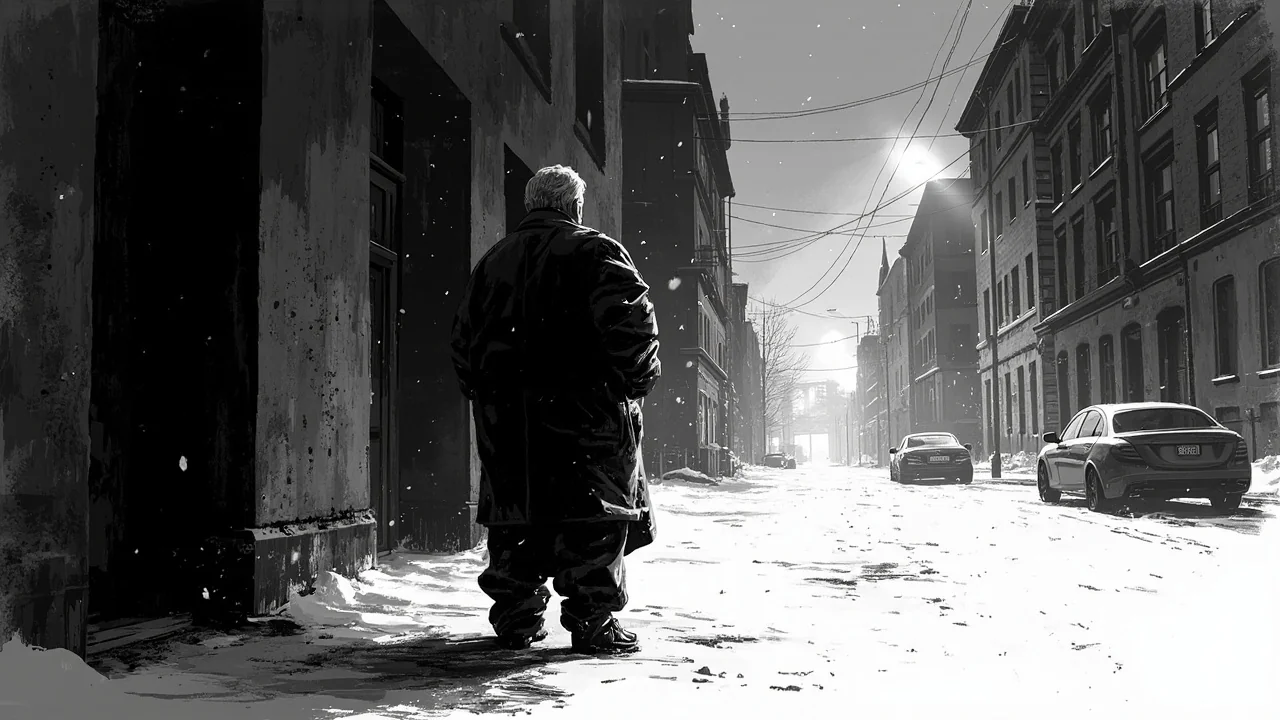
Sweden's elderly care system faces intense scrutiny after an 80-year-old man was left outside his care home overnight in freezing temperatures. Kaj, from Kungsbacka, was discharged from Varberg hospital by a medical transport service on Wednesday evening. His son, Johan Hake, says the driver dropped his father a few meters from the entrance without ensuring he got inside. Kaj’s phone battery died as he tried to call for help. Care home staff did not find him until the next morning, by which time he was severely hypothermic. He was readmitted to hospital on Friday with a high fever and pneumonia. The incident has sparked a formal investigation and a suspension.
A Night of Neglect
Johan Hake describes the event as 'för jävligt' – a Swedish phrase conveying profound anger and injustice. He is sharply critical of the protocol that allowed his father to be abandoned. 'You don't leave an elderly person in that weather,' Hake stated. 'You make sure someone receives them.' The family's experience highlights a dangerous gap in communication and responsibility between hospital discharge, transport services, and residential care facilities. While the specific weather conditions that night are not detailed, winter temperatures in Halland can easily fall below freezing, making prolonged exposure a serious health threat for anyone, especially an octogenarian.
Systemic Failure Under Investigation
Daniel Bernhardt, operations manager for special transport at the relevant traffic authority, confirmed the driver has been suspended. 'We regret what happened and the incident is being investigated,' Bernhardt said. He added that the authority and the transport company are in discussions about how to proceed with a deeper review of the case. This response indicates the incident is being treated as a major breach of procedure. However, it raises immediate questions about training, checklists, and the chain of custody for vulnerable patients during medical transfers. The investigation will need to determine whether this was a one-off human error or a symptom of wider, systemic pressures within Sweden's outsourced care and transport sectors.
The Human Cost of Efficiency
Kaj's story is not an isolated data point but a human face on a growing national concern. Sweden, praised for its social welfare model, has seen its elderly care system strained by privatization, staff shortages, and rigid cost-efficiency targets. The drive for streamlined logistics can sometimes override the fundamental duty of care. Johan Hake’s account of his father being dropped 'a couple of meters from the entrance' epitomizes a checklist mentality gone wrong. The task was technically complete – the passenger was delivered to the address – but the moral and practical objective of ensuring his safety was utterly failed. This gap between procedure and compassion is where tragedies occur.
A National Conversation on Accountability
The incident forces a uncomfortable conversation about accountability in a fragmented care chain. Where does ultimate responsibility lie? With the hospital that discharged him? The transport company and its employed driver? The care home that may not have been informed of his return? In complex systems, responsibility can become diffuse, allowing each link to point at another when failures happen. The swift suspension of the driver assigns initial blame, but a thorough investigation must examine the entire process. Were there clear handover protocols? Was the care home notified of the expected return time? Did the driver have instructions, or even the basic human impetus, to visually confirm Kaj entered the building?
The Resilience of a 'Stålgubbe'
Despite the ordeal, Johan Hake notes his father's resilience, calling him a 'stålgubbe' – a steel-old-man – who insists he is alright. This resilience, however, does not excuse the failure that put him at risk. Pneumonia and high fever in an 80-year-old are serious medical conditions directly linked to hypothermia and stress. The physical and psychological impact of being helpless and alone in the cold for hours cannot be underestimated. It shatters the sense of security that care systems are meant to provide. For families across Sweden, this story validates deep-seated fears about the vulnerability of their elderly relatives in a system that can appear impersonal and overstretched.
Looking Beyond the Immediate Fix
While the investigation will likely result in revised protocols for this specific transport provider, the incident demands a broader look. Experts in elder care and patient safety would argue for mandated, verifiable handovers for vulnerable patients being transferred between facilities. Technology, such as simple GPS-enabled check-in confirmations for drivers, could provide a safety net. More fundamentally, it requires a cultural shift that prioritizes 'care' over 'transport' in these services. Drivers must be trained and empowered to act as the final safety observer, not just a logistics operator. This costs time and money, but the alternative, as Kaj's case shows, is unacceptably high.
A Test for Sweden's Welfare Promise
Sweden prides itself on being a society that looks after its citizens from cradle to grave. Stories like Kaj's strike at the heart of that self-image. They prompt public outrage precisely because they contradict a fundamental social contract. The coming days will reveal the depth of the transport authority's investigation and what corrective actions are taken. For the Hake family, the focus is on Kaj's recovery. For the nation, it is a stark reminder that a welfare state is measured not by its budgets or policies alone, but by how it treats its most vulnerable members in their moment of need. The system failed Kaj on a cold night in Kungsbacka. The question now is what Sweden will learn from his ordeal.