
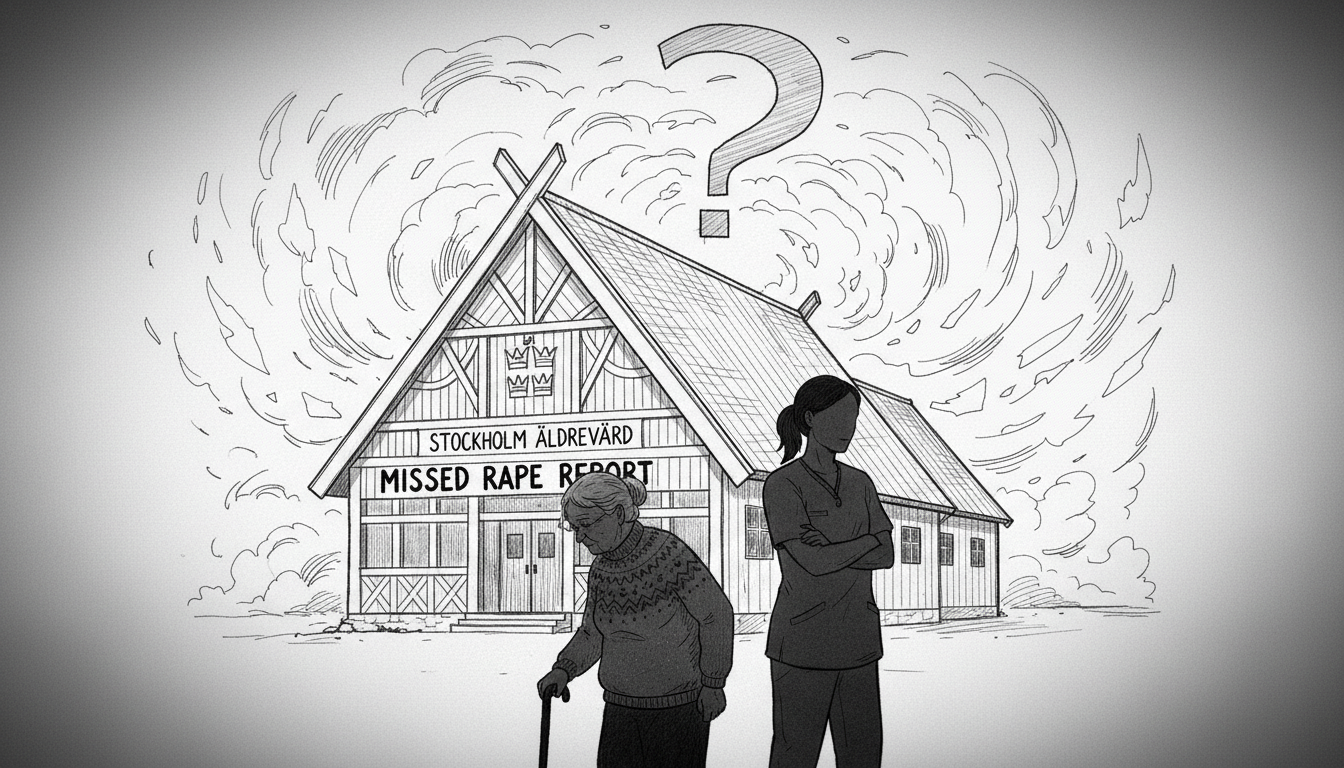
Sweden's elderly care system faces profound questions after a convicted rape of a 100-year-old woman in Stockholm city care was not immediately reported to police. The case, involving a man who worked in elderly care, has triggered a mandatory Lex Sarah investigation and exposed critical gaps in protective protocols for society's most vulnerable. Stockholm's Elderly Care Administration now admits failures in its duty to act, marking a severe institutional breakdown.
A Devastating Admission of Failure
Stockholm city authorities confirmed they did not file a police report when suspicions about the assault first arose. The crime was only investigated and prosecuted after other reporting channels were activated, leading to the man's conviction. "It is clear that this is something we need to look at and learn from," said Carl Smitterberg, communications chief for the Elderly Care Administration. He acknowledged the city must be quicker to involve police when serious suspicions emerge. This admission strikes at the core of municipal responsibility under Sweden's strict social care laws.
The convicted man was also accused of raping a 94-year-old woman in care but was acquitted in that case due to insufficient evidence. Prosecutors sought his deportation following conviction, but the district court rejected this request. These legal details underscore the complex challenges in prosecuting crimes against individuals with extreme fragility. The case unfolded within the regulated environment of Stockholm's government-distributed care facilities, designed specifically for safety.
Lex Sarah and the Duty to Report
At the heart of the city's response is the Lex Sarah law. This legislation mandates that any professional in health or social care must report incidents where a care recipient suffers serious injury or is at immediate risk. The law aims to ensure transparency and prompt corrective action. Stockholm's ongoing Lex Sarah investigation into this incident will scrutinize internal processes and reporting failures. Legal experts note that while Lex Sarah triggers internal reviews, it does not replace the fundamental civic duty to report suspected crimes to law enforcement.
"The primary purpose of Lex Sarah is quality improvement within the care system," explains Professor Anna Hollander, a legal scholar specializing in social welfare law. "It creates an internal feedback loop. However, suspected criminal acts, especially violent crimes, must simultaneously be reported to the police. One process does not excuse omitting the other. The safety of the individual is paramount." This distinction highlights a potential procedural confusion that may have contributed to the delayed police involvement.
Government Proposes Stricter Hiring Controls
In response to systemic concerns in the care sector, the Swedish government has proposed legislative changes to expand municipalities' authority. The proposal would allow municipal employers to check the criminal records of individuals applying for jobs involving contact with care recipients. The Riksdag is reviewing the measure, which could take effect from March 1, 2026, if passed. The reform aims to add a layer of security in recruitment for elderly care, child care, and disability services.
Carl Smitterberg stated Stockholm city views the government's proposal positively. He also revealed the city has already taken a pre-emptive decision to implement criminal record checks for new hires in elderly care. "Being able to check the criminal register is one thing," Smitterberg noted, "but we must continue working on how we can earlier capture concerns from the elderly and staff." This move positions Stockholm ahead of the national curve but also raises questions about why such checks were not standard procedure before a major crisis occurred.
Systemic Vulnerabilities and National Scrutiny
This case has ignited a broader debate about the protection of elderly residents in Sweden's highly decentralized care system. Municipalities bear the operational responsibility, while national government agencies set the framework. Incidents in Stockholm, the nation's capital and largest care provider, often set the tone for national policy discussions. The Swedish government, based at Rosenbad, is under pressure to ensure its proposed measures are robust enough.
Critics argue that criminal record checks, while useful, are a reactive tool. They do not prevent first-time offenses or identify individuals whose concerning behavior has not yet resulted in a conviction. "The real challenge is fostering a culture of vigilance and empowerment," says Marek Andersson, an elderly care advocate. "Staff and residents must feel confident that their concerns will be taken seriously and acted upon immediately, with police involvement being a non-negotiable step for suspected crimes."
The Stockholm case reveals a tragic paradox: a system built on trust and professional duty failed at the most basic level of reporting a violent crime. The upcoming Lex Sarah report will be scrutinized by national authorities and could influence directives from the Ministry of Health and Social Affairs. The Riksdag's decision on the proposed hiring legislation will be a key indicator of the political priority placed on reforming care safeguards.
A Question of Priority and Protection
The delayed police reporting in Stockholm represents more than a procedural error. It signals a potential failure to prioritize the legal rights and safety of elderly individuals over institutional reputation or bureaucratic process. As Sweden's population ages, the integrity of the elderly care system becomes increasingly critical. The government's policy proposals are a step, but their 2026 timeline underscores the slow pace of systemic change.
This case forces a difficult societal question: are the mechanisms designed to protect Sweden's elderly residents truly equipped to handle the severity of crimes committed against them? The conviction of the caregiver offers judicial resolution, but the city's initial inaction leaves a lasting stain. The true test will be whether this tragedy catalyzes faster reporting protocols, clearer staff guidelines, and a cultural shift that places the victim's right to justice above all else. The answer will define the safety of thousands living in state-supported care.