
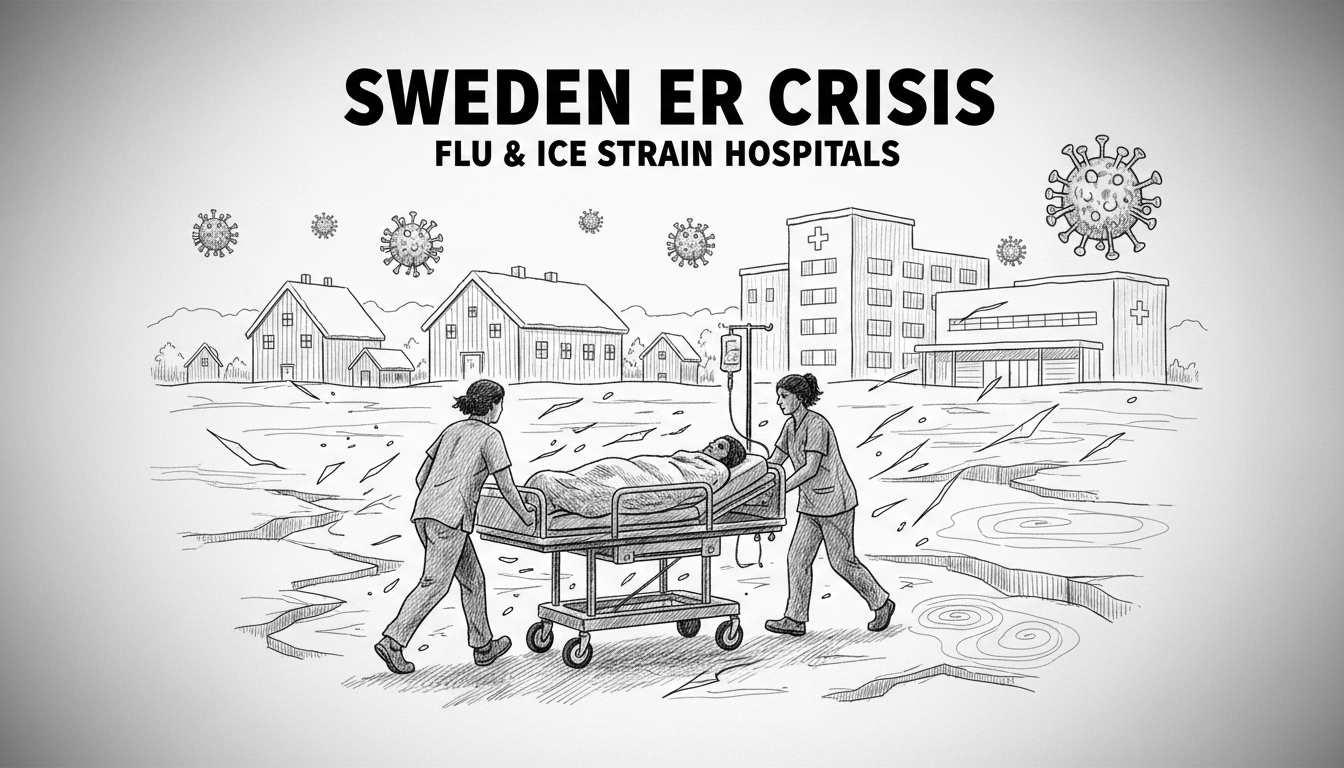
Sweden's emergency rooms are grappling with wait times over 50% longer than usual this January, as a severe flu season collides with hazardous icy streets. In Stockholm's Södersjukhuset, nurse Elin Bergström describes scenes of overcrowded corridors. "We have patients on stretchers in hallways, many elderly with flu complications, and younger people with slips on black ice," she says, her voice tired after a double shift. This winter, a perfect storm of early influenza and treacherous weather is pushing the capital's healthcare system to a critical point, forcing residents to rethink when and how they seek help.
A Winter of Double Trouble
The Thirteenth Weekend, or 'Trettonhelgen', traditionally marks a challenging period for Swedish healthcare. This year, it has escalated into a sustained crisis. Johan Bratt, chief physician for Region Stockholm, stated in a press release, 'We have a tough situation at the county's hospitals, both due to high spread of influenza and in combination with weather conditions where many slip and injure themselves.' The region has opened additional care places to manage the pressure. While capacity is described as better than last year, wait times at emergency departments remain longer than normal. For Stockholmers, this means hours spent in crowded waiting rooms, a stark contrast to the efficient care the system promises.
Why This Flu Season Hit Harder
Statistics reveal a key driver: the seasonal flu struck significantly earlier this winter. Reported cases peaked during weeks 51 and 52, around the Christmas holiday. Last winter, the peak didn't arrive until around week 9, near the sportlov school break. This early surge caught many off guard, despite vaccination campaigns. In neighborhoods like Vasastan and Östermalm, pharmacies reported runs on cold medicines and thermometers in late December. The virus, combined with a January thaw-and-freeze cycle that left sidewalks glazed with ice, has created a relentless influx of patients. From sprained wrists on Kungsholmen's slopes to pneumonia cases in elderly care homes in Nacka, the demand is universal.
The Strain on a Pillar of Society
Sweden's universal healthcare system, funded through taxes and managed by regions, is a source of national pride. Its emphasis on accessibility is now being tested. "The system is designed for high quality, but it's not infinitely flexible," explains Karin Lundström, a healthcare policy analyst. "When two major demand drivers—a respiratory epidemic and weather-related trauma—hit simultaneously, even well-prepared systems strain." In Stockholm, this manifests as ambulances queuing outside Karolinska University Hospital and GPs redirecting non-urgent cases. The regional advice is clear: call the national healthcare guide, 1177, before heading to the ER. This service, a cornerstone of Swedish healthcare, aims to direct patients to the right level of care, whether it's a local clinic or an emergency room.
Community Responses and Personal Resilience
On the ground, communities are adapting. In Värmdö municipality, safety coordinator Johan Berglind helped set up a 'trygghetspunkt' (safety point) at the Ingarö community hall with the Red Cross. Here, volunteers offer warmth, basic first aid, and guidance, potentially preventing unnecessary ER visits. Meanwhile, Stockholmers are sharing tips on social media about which clinics have shorter waits, and the culture of 'ta det lugnt'—taking it easy—is being applied to health decisions. "I slipped on my way to fika in Gamla Stan," shares Markus Lindgren, a consultant with a bandaged ankle. "1177 told me it was likely a sprain and to ice it. I avoided a six-hour wait at the ER." This pragmatic approach is what authorities are hoping for.
Expert Perspective: Prevention and Pressure Points
Healthcare experts see this crisis as a symptom of broader challenges. "An early flu peak stresses every part of the chain, from primary care to hospital beds," says Lundström. "We often discuss nurse staffing levels and bed numbers, but public behavior is crucial." She emphasizes that vaccination remains the best defense, but also notes that Sweden's aging population increases vulnerability. The weather-related injuries, a familiar winter issue, compound the problem. Unlike the predictable flu season, ice conditions can change daily, making resource planning a guessing game. The system's ability to handle such dual pressures is under scrutiny, with lessons for future winters.
Navigating the Crisis as a Resident
For now, the message from healthcare leaders is one of managed urgency. Johan Bratt's plea is repeated on regional websites and radio broadcasts: "I want to urge our residents to call 1177 for advice if you feel sick, so that you get care in the right place." This isn't just about reducing wait times; it's about ensuring that critical cases receive immediate attention. As the flu season hopefully wanes and warmer weather stabilizes the streets, the system will catch its breath. But this winter's crunch serves as a reminder of the delicate balance in a society that values both outdoor winter life and dependable healthcare. Can Stockholm's system emerge stronger, or will this become the new normal for Januarys to come? The answer may lie in how well the city prepares for the next perfect storm.