
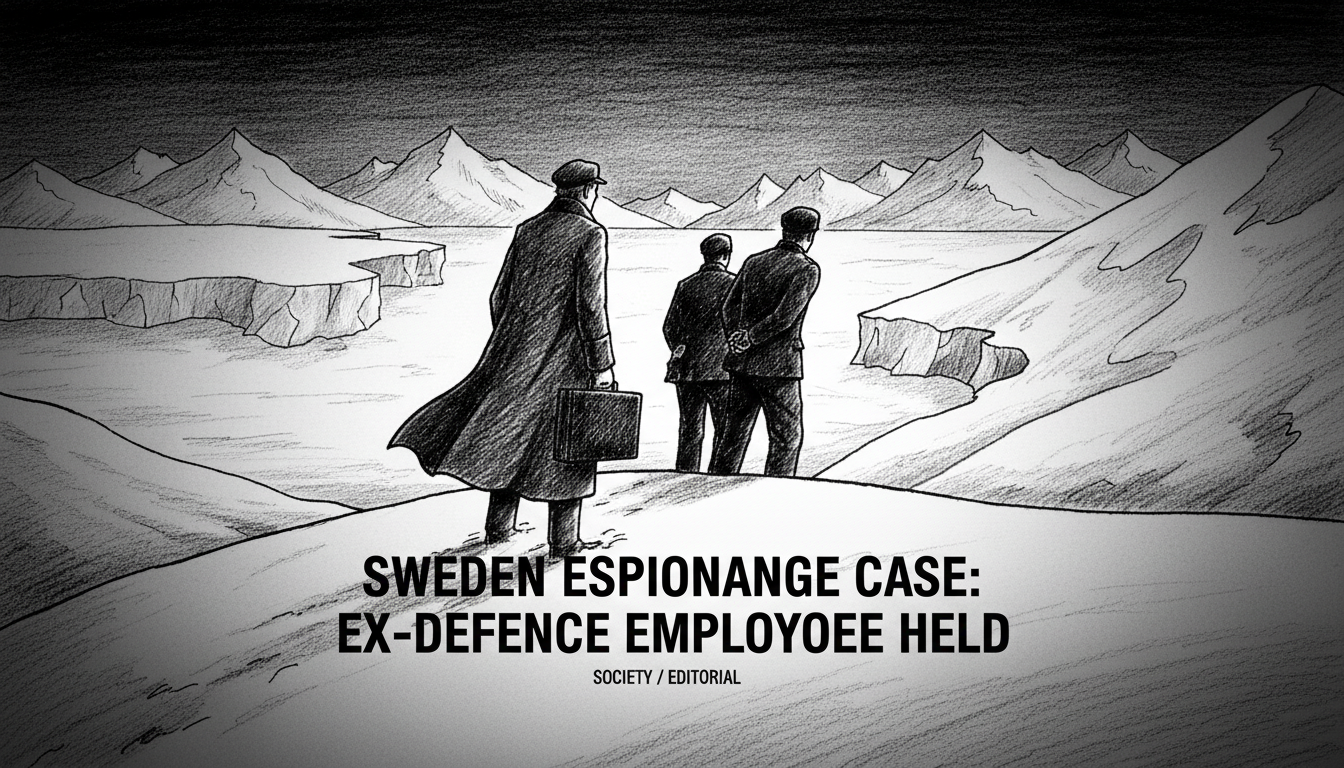
Sweden's security apparatus is reeling from a suspected insider breach after a former defence employee was arrested and remanded in custody on Sunday. The man, in his 30s, is suspected of espionage against Sweden between 2023 and 2024. The Swedish Security Service, Säpo, led the investigation that culminated in his arrest outside a Stockholm district court. "My client denies the crime. Otherwise, I have no comment. Now the investigation must run its course," defence lawyer Hanna Lindblom told reporters gathered on the courthouse steps. The case sends a chill through a nation still adjusting to its new NATO membership and heightened security posture.
A Quiet Arrest in Stockholm
The arrest unfolded with little public drama on a Sunday afternoon. According to the prosecutor, the man was apprehended around 2 PM. By Wednesday, the Stockholm District Court had ruled to remand him in custody, citing probable cause for the serious allegation of espionage. Prosecutor Mats Ljungqvist outlined the charge during the hearing. "It is requested that NN be detained on probable cause suspected of espionage, during the period 2023 to 2024," Ljungqvist stated. Flanking him in the courtroom were three investigators from Säpo, a visual testament to the case's high priority. The suspect's former employer, the Swedish Armed Forces (Försvarsmakten), quickly confirmed his past employment but offered no further details, referring all questions to the security service.
The Shadow Over Försvarsmakten
The suspect's link to the Swedish military is the core of the scandal. While his specific role and clearance level remain classified, any breach within the Armed Forces represents a worst-case scenario for security officials. The Försvarsmakten is integral to national defence and, now, to the collective security of the NATO alliance. This case forces an uncomfortable introspection. How does a trusted insider become a suspected asset for a foreign power? Security experts point to a mix of potential motives: ideology, financial gain, or coercion. "The human factor is always the weakest link, even in the most advanced security systems," says Karl S. J. Nilsson, a retired Swedish military intelligence officer and now a security consultant. "An insider with access doesn't need to hack a firewall. They just need to walk out the door with information in their mind or on a device." The alleged two-year timeframe, from 2023 to 2024, suggests a potentially sustained period of intelligence gathering, amplifying the potential damage.
Säpo's Silent War
The Swedish Security Service operates largely in the shadows, its successes often measured by crises that never happen. This public remand hearing is a rare glimpse into their constant counter-espionage efforts. Sweden's historic policy of neutrality made it a prime hunting ground for foreign intelligence services during the Cold War. That tradition of espionage never truly vanished; it evolved. With Sweden's NATO application and subsequent membership, the strategic value of Swedish defence and foreign policy information has skyrocketed. "Sweden is a high-priority target," explains Dr. Lisa Öberg, a professor of political science specializing in security policy. "We possess advanced military technology, detailed knowledge of the Baltic Sea region, and now, intimate insight into NATO's northern flank. For a state like Russia, penetrating the Swedish defence establishment is a major intelligence objective." Säpo's challenge is monumental, requiring them to monitor not just traditional spies but also cyber operations and the subtle cultivation of contacts within government and industry.
The Cultural Shock of Betrayal
For Swedes, this case strikes at a deep-seated cultural value: tillit, or trust. Swedish society functions on a high level of institutional and interpersonal trust. A betrayal from within a revered institution like the military feels particularly jarring. It contradicts the national self-image of transparency, fairness, and collective responsibility. In coffee shops from Östermalm to Södermalm, the news prompts uneasy conversations. "You assume people serving in the military are the most loyal," says Erik, a teacher in Stockholm. "It makes you question what's real." This sentiment echoes a broader societal tension. Sweden is navigating a new reality where vigilance must balance with openness, where security protocols can sometimes feel at odds with the famous Swedish öppenhet (openness). The case is a stark reminder that the geopolitical storms raging beyond the Baltic Sea are no longer distant threats. They have manifested in a Stockholm courtroom.
What Comes Next?
The legal process will now move behind a veil of secrecy. Espionage investigations are among the most classified in the Swedish judicial system. Public court documents will be heavily redacted, and the trial, if it proceeds to one, may be held wholly or partially behind closed doors. The immediate focus for Säpo will be damage assessment. Investigators will work to determine exactly what information was compromised, to whom it was delivered, and the methodology used. This forensic process is critical for plugging security gaps and preventing future breaches. For the Swedish Armed Forces, a thorough internal security review is inevitable. It will scrutinize vetting procedures, access controls, and the culture within units handling sensitive information. The case also has diplomatic ramifications. While the prosecutor did not name a suspected recipient country, such investigations often strain international relations. Sweden's allies in NATO will be seeking assurances that the breach is contained.
A Nation's Awakening
Ultimately, this alleged espionage case is more than a criminal proceeding. It is a symptom of Sweden's rapid and sometimes uncomfortable transition from neutral buffer to frontline NATO state. The fairy-tale innocence of being a peaceful nation untouched by great power intrigue is gone. The events in that Stockholm courtroom signal that the silent war is here, and it is active. The case tests the resilience of Swedish institutions and the public's understanding of the new world they inhabit. It asks a difficult question: in an age of hybrid threats and hidden loyalties, how does a society built on trust protect itself without losing its soul? The answer will shape Sweden's security and identity for years to come. As the investigation continues, one thing is clear: the era of naive serenity is over.