
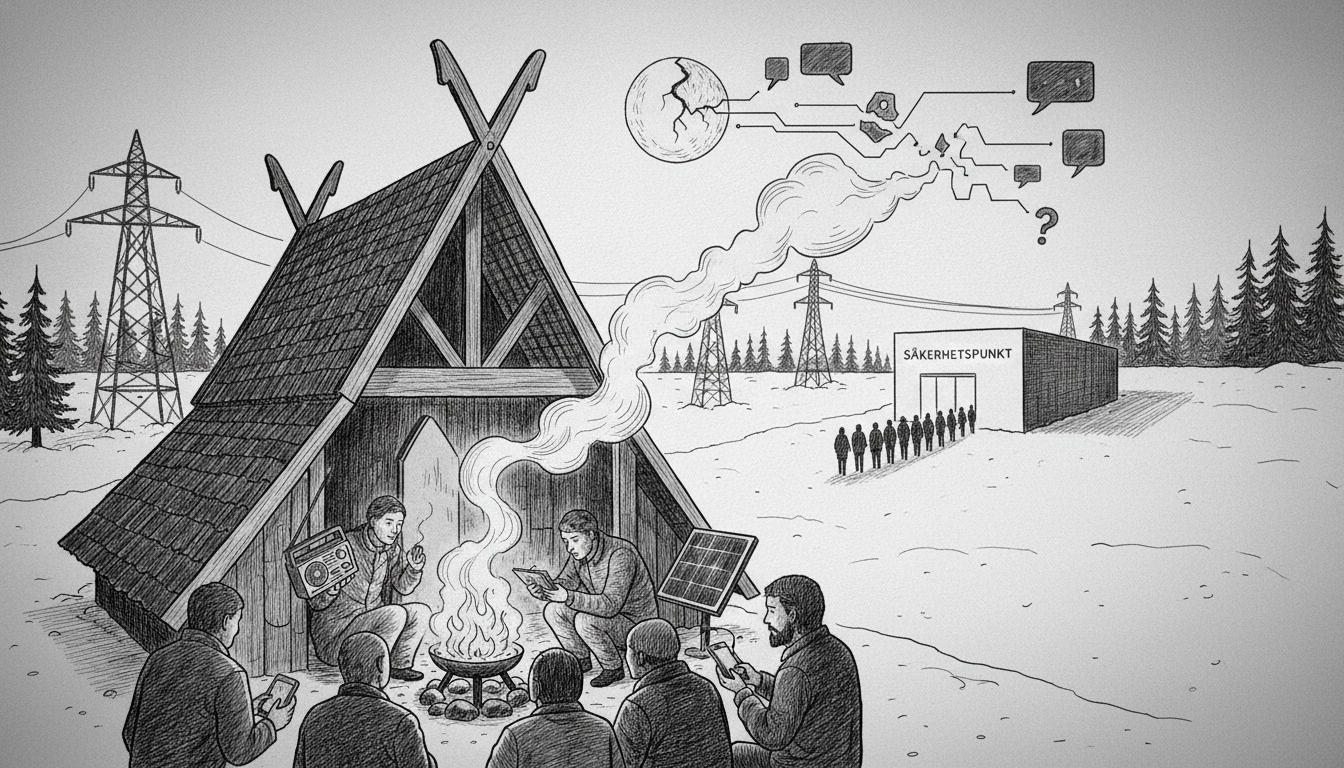
Sweden faces more frequent and longer power outages as grid reliability declines. When electricity and internet services fail simultaneously, residents must rely on personal preparedness.
Professor Misse Wester from Lund University's Risk Management Division explained the reality. "Nobody has a crystal ball, not even professors or officials," she said. "During outages, people might live in uncertainty for hours or days. Municipalities bear the information responsibility."
Cities have established safety points for emergency assistance during extended blackouts. Stockholm operates about 30 such locations that residents should identify in advance.
Wester noted that government preparedness primarily supports vulnerable operations, not general comfort. "During Covid we saw people step up, but situations can turn chaotic," she observed. "Today, nobody keeps phone directories in their hallway. How many still have the MSB brochure at home?"
The professor suggested cities consider using vehicles with megaphones to broadcast information, noting that Stockholmers typically seek information outdoors during crises, which spreads rumors both good and bad.
Moa Karlsson, unit manager at the County Administrative Board, called the megaphone vehicle concept "an interesting idea" but noted she hadn't heard of such plans being implemented.
Municipalities must provide public information within their regular budgets, leading to varying priority levels across regions. This decentralized approach creates potential gaps in crisis communication when Swedes increasingly depend on digital channels that fail during power outages.
The situation reveals a troubling disconnect between modern digital dependency and emergency preparedness requirements that assume analog communication methods.