
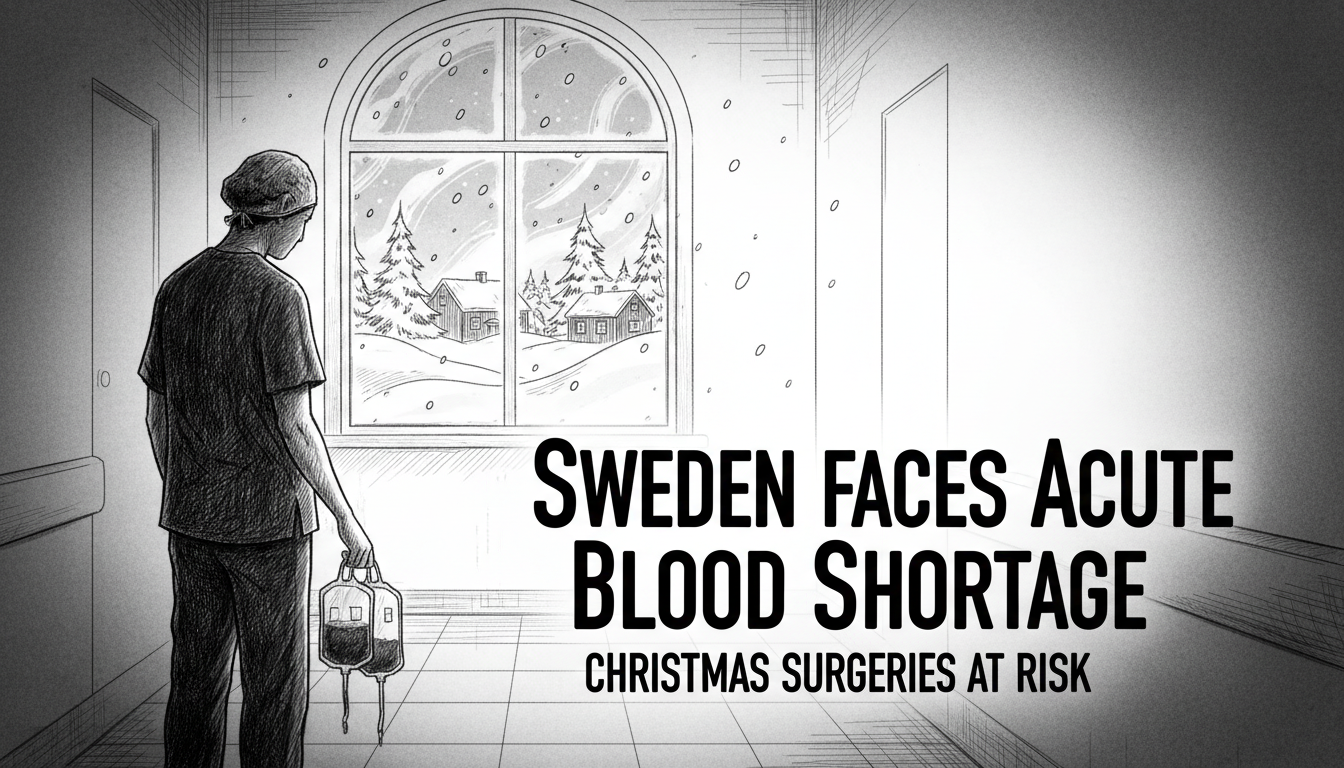
Sweden's Västra Götaland region is warning of an acute blood shortage that could force hospitals to cancel planned surgeries over the Christmas holidays. Blood levels across all blood types are critically low, creating a perfect storm of festive cheer and medical crisis. 'The risk is that we will have to postpone planned operations,' says Anna Wiberg, head physician for Geblod, the region's blood donation service.
For many, the upcoming holiday is a dream schedule. A long stretch of red days on the calendar promises extended rest. For the healthcare system, this traditional slowdown is a nightmare. 'It's a bit unfortunate for us,' Wiberg explains. 'We cannot be open on public holidays, and many people travel away.' The region, which includes Gothenburg and a large part of western Sweden, is now in a race against time to replenish stocks before the holiday closure.
A Seasonal Challenge with Serious Consequences
This is not a new problem, but the severity this year is particularly acute. Blood donation services in Sweden operate on a regional basis, and maintaining supply is a constant logistical puzzle. Demand from hospitals for surgeries, cancer treatments, and emergencies never takes a holiday. Yet the pool of available donors shrinks dramatically as people focus on family, travel, and celebration. 'We have low stocks of all blood groups relative to our desired levels,' Wiberg states. The concern is specifically acute for the Christmas and New Year holiday.
The potential impact is direct and personal. Non-emergency, yet planned and important, surgeries could be pushed into the new year. These might include joint replacements, certain cancer operations, or other procedures that require guaranteed blood availability. While emergency care will always be prioritized, the backlog created by cancellations adds strain to a system already under pressure.
The Human Stories Behind the Stock Levels
In a quiet neighborhood of Gothenburg, 42-year-old teacher Lars Bengtsson is a regular donor. He has an appointment next week. 'I saw the appeal online, and it just clicked,' he says, sipping coffee after his donation. 'You get your Julmust and pepparkakor afterwards, and you know it's going to a good cause. It's a small thing for me, but if my O-negative can help someone spend Christmas out of the hospital, that's the best gift.' Donors like Lars are the backbone of the system, but there simply aren't enough appointments booked before the holidays.
The call for donors is especially urgent for those with O-negative blood, the universal donor type crucial for trauma and emergency situations when there's no time to test a patient's blood group. However, Geblod's warning is clear: all groups are needed. The seasonal dip coincides with a period where accidents, unfortunately, do not decline. The Swedish tradition of driving to celebrate with relatives across the country can sometimes lead to an increase in certain types of emergencies.
How Swedish Culture Collides with Healthcare Needs
The structure of the Swedish holiday itself is part of the challenge. Swedes guard their collective time off fiercely, a hard-won right in the work-life balance. The string of public holidays—Christmas Eve, Christmas Day, Boxing Day, and New Year's Day—means most public institutions, including blood donation centers, are closed. This cultural commitment to rest, while beneficial for the population's well-being, creates an annual bottleneck for essential services that must run continuously.
'It's a paradox,' reflects Karin Edström, a sociologist at the University of Gothenburg. 'We have built a society that highly values personal time and family during Jul. This is positive. Yet, the same societal model requires a high degree of individual responsibility to function during these shutdowns. Donating blood before a holiday is a classic example of that social contract.' She notes that public appeals often successfully tap into this sense of collective responsibility, a cornerstone of the Swedish welfare state model.
A System Built on Voluntary Giving
Unlike some countries, Sweden's blood supply relies entirely on voluntary, unpaid donations. This model is a point of national pride, emphasizing altruism and community. Organizations like Geblod work year-round to build stable donor bases and communicate needs. They use local community centers, mobile donation units, and fixed sites to make giving accessible. Yet, the pre-Christmas period remains a stubborn hurdle.
Experts point to the need for more flexible donation systems and advanced planning. 'The challenge is predictable, so the response must be too,' says Dr. Erik Lundgren, a transfusion medicine specialist. 'We need to encourage people to see donation as a pre-holiday ritual, like buying presents or baking saffron buns. The messaging can't just be about crisis; it must be about stable, routine generosity that safeguards the system.' He emphasizes that regular donors are the most reliable buffer against such shortages.
The Race Against the Holiday Clock
As of now, Geblod's centers across Västra Götaland are extending hours and urging people to book appointments. The call is going out on social media, local news, and through community groups. The goal is to build up reserves that can act as a buffer through the silent days of the holiday. Each donation can help up to three patients, making the mobilization of donors a highly efficient way to address the shortfall.
The situation in Västra Götaland often serves as a bellwether for other regions. While not all areas may be at critical levels yet, the holiday pattern is a national phenomenon. Stockholm's blood service, for instance, also typically runs campaigns urging donations before major holidays and the summer vacation period. The difference this year may be the particularly low starting point as the holidays approach.
What Happens If the Blood Doesn't Come?
If stocks are not sufficiently replenished, hospital departments will receive formal notifications. Surgical teams will then have to triage their planned lists. Patients awaiting procedures that are deemed 'planned but urgent' face uncertainty and disappointment. The emotional toll of a postponed surgery, especially during a time meant for celebration, is significant. Furthermore, it creates administrative chaos and backlog that can take weeks to resolve in January.
The healthcare system is forced into a reactive, rather than proactive, stance. Resources are diverted to manage cancellations and rescheduling. This inefficiency has a cost, both financial and in terms of staff morale. Nurses and doctors want to provide care, not deliver postponement notices.
A Call to Action in the Spirit of Jul
The solution, as always, lies with the public. The appeal from Geblod is straightforward: if you are eligible, please book a donation now. They are targeting former donors who haven't given in a while and reminding regulars that this is a key time. The process in Sweden is known for being calm, efficient, and followed by the classic post-donation fika—a cup of coffee and a snack.
For international residents in Sweden, this is also a direct way to engage with and support the community. Donation eligibility has specific residency and health criteria, but many long-term visitors and new citizens can participate. Checking eligibility on the regional blood service website is a simple first step.
As the Christmas markets glow in Gothenburg's Liseberg and families prepare their Lucia celebrations, a parallel, quieter preparation is needed. The act of giving blood requires no wrapping paper, but its value is immeasurable. It is the gift of time, health, and peace of mind for strangers. This year, the most precious item on Sweden's Christmas list might just be a few hundred extra units of blood, ensuring that the holiday remains merry and bright for everyone, especially those in a hospital bed.