
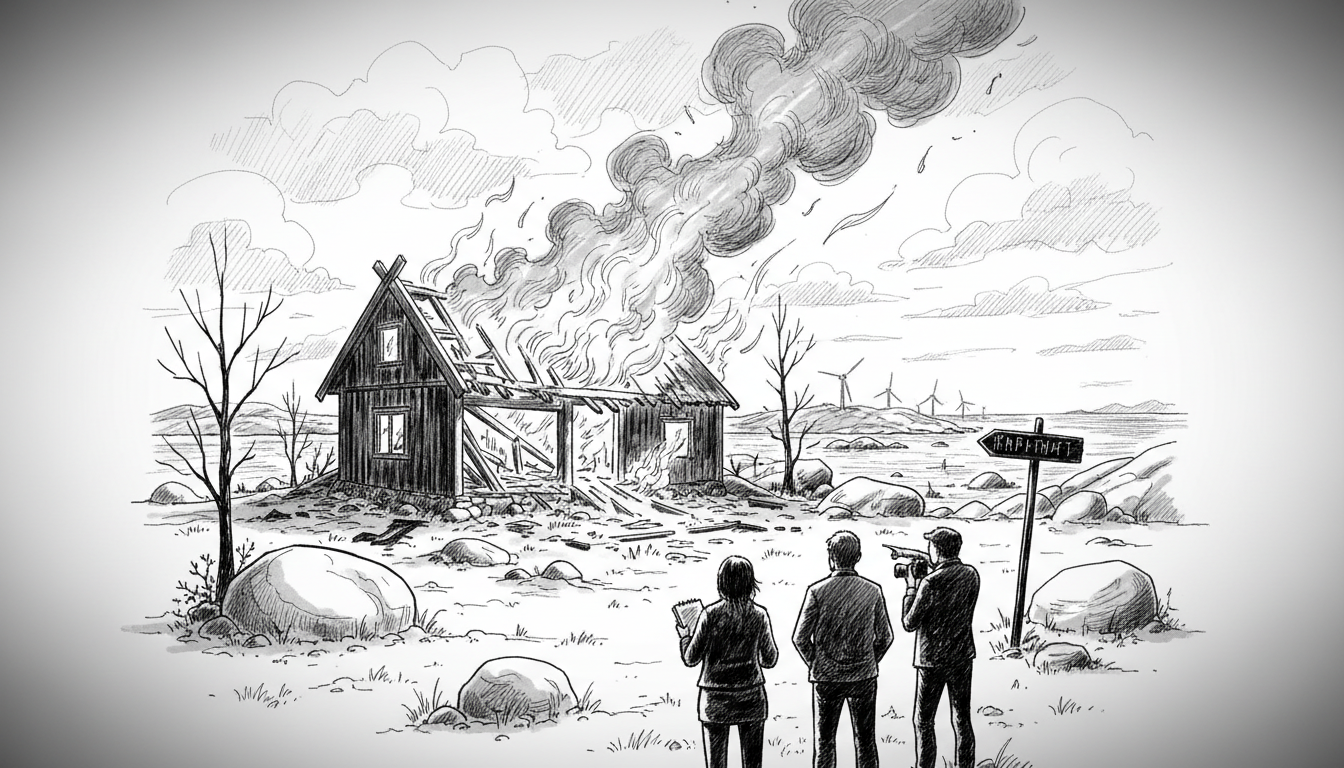
Sweden fire crews are monitoring a massive blaze in Gothenburg after an abandoned house in Torslanda was engulfed in flames. The building, described by rescue services as an 'ödehus' or deserted house, is expected to burn completely to its foundations. Firefighters from the municipal rescue service will remain on site throughout the day to contain the situation and prevent any spread. The incident highlights ongoing challenges with vacant properties in urban and semi-urban areas across Sweden.
For residents in the quiet Torslanda district, the plume of smoke was an alarming sight. The area, a mix of residential neighborhoods and light industry west of central Gothenburg, is not accustomed to major emergencies. The specific location of the fire has not been disclosed, but the presence of an abandoned structure points to a broader narrative in Swedish suburbs. Vacant buildings can become magnets for vandalism and unauthorized use. "We will remain there during the day and keep watch," said Erika Skog of the rescue service, confirming the controlled monitoring approach.
This strategy is common for fires in derelict structures where the primary risk is containment rather than salvage. The safety of firefighters takes precedence over saving a building already deemed lost. The focus shifts to protecting adjacent properties, infrastructure, and ensuring no one is inside. Abandoned houses often contain unknown hazards, from unstable floors to toxic materials burning in the smoke.
The Allure and Danger of the 'Ödehus'
The Swedish term 'ödehus' carries a certain cultural weight. It conjures images of forgotten places, often romanticized in folklore and media. In reality, they are significant safety and societal concerns. Fire safety experts point to the compounded risks these structures present. "An abandoned building is a perfect storm for fire," explains Lars Bengtsson, a retired fire safety inspector based in Stockholm. "You often have accumulated debris, dry timber, and sometimes evidence of trespassing. The fire load can be immense, and the structural integrity is a complete unknown to responding crews."
Bengtsson notes that response protocols for such fires are deliberately cautious. Firefighters make an exterior attack, focusing on creating a defensive perimeter. The goal is to let the fire burn itself out within the confines of the structure, using water and foam to cool surrounding areas and prevent embers from spreading. This method protects lives first. It also reflects a pragmatic assessment of property value when a building is already scheduled for demolition or is beyond reasonable repair.
A Suburban Puzzle in Gothenburg
Torslanda itself is a district of contrasts. It is home to family houses, apartment blocks, and industrial parks, all situated near the major transportation links of the Götaälv bridge and the road to Gothenburg Landvetter Airport. The presence of an abandoned house here is less common than in post-industrial inner cities, but it speaks to specific local dynamics. It could be a property tied up in inheritance disputes, a development project stalled by permits, or a simple case of long-term neglect.
Such properties become unintended landmarks. Local children might see them as places of adventure, while neighbors view them as blights that lower property values and attract trouble. In Swedish society, where order and communal well-being are highly valued, a visibly neglected building stands out. It represents a breakdown in the social contract of maintenance and care for one's environment. The fire, while destructive, also becomes a violent and final solution to a lingering neighborhood issue.
The Bigger Picture of Urban Safety
This single fire in Torslanda connects to national conversations about housing, urban planning, and safety. Municipalities across Sweden grapple with managing vacant properties. They pose fire risks, as seen today, but also can become shelters for those without housing, potentially leading to dangerous use of open flames for heating or cooking. The responsibility for securing these buildings often falls between cracks—between private owners, banks, and local authorities.
From a fire service perspective, incidents like this consume resources that must be ready for other emergencies. A crew tied up monitoring a controlled burn is a crew not immediately available for a traffic accident or a residential fire. This operational reality pushes many rescue services to advocate for stricter oversight of derelict buildings. They call for better boarding-up, more frequent checks by property owners, and clearer legal pathways for municipalities to intervene when a building becomes a demonstrable hazard.
After the Smoke Clears
Once the last embers in Torslanda are cold, the process of investigation will begin. Determining the cause of a fire in a gutted, abandoned building is notoriously difficult. Potential causes range from an accidental ignition by trespassers to an electrical fault in a never-disconnected system, or even intentional arson. The rescue service's initial report will classify the cause if possible, but 'undetermined' is a frequent conclusion in such complex scenarios.
The lot will eventually be cleared. What happens next is the real question for the community. Will it remain an empty, charred plot? Will it be quickly sold for new development? In a growing city like Gothenburg, pressure on land is high. This fire may inadvertently pave the way for new housing or commercial space, transforming a point of concern into a site of future growth. That is the paradoxical cycle of urban landscapes: destruction sometimes enabling renewal.
For now, the story is one of control and watchfulness. The firefighters on site in Torslanda are performing a necessary, if grim, duty. They are ensuring a private property disaster does not become a public catastrophe. Their steady presence is a reassurance to the community, a professional buffer between danger and normal life. The smoke will dissipate, the trucks will leave, and the quiet rhythm of suburban Gothenburg will return. But the blackened foundation will remain, a stark reminder of the latent energy contained in neglect, and the ever-present need for vigilance in the spaces we have forgotten.