
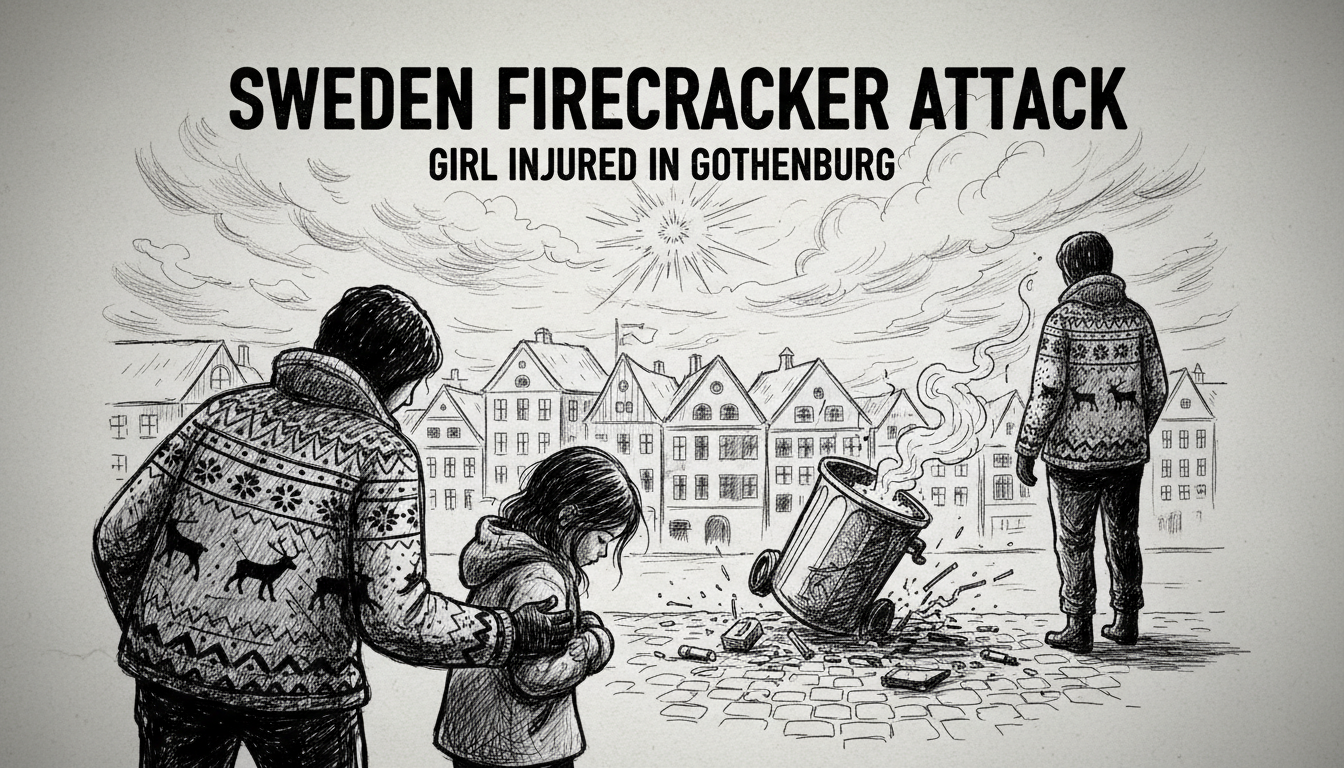
Sweden police are investigating a firecracker attack that injured a teenage girl in Gothenburg. The incident occurred Tuesday evening on the schoolyard of Frejaskolan in the Tynnered district. Officers were called to the scene around 7 PM after reports of youths throwing firecrackers at each other. A girl in her early teens was struck. Police have launched an investigation for causing bodily harm but have not yet identified a suspect.
"There was also a risk that others could be hit. We are there talking with individuals and trying to sort out what happened," said police press spokesperson Adam Isaksson Samara. He confirmed officers spent considerable time in the area, speaking with several youths, but could not directly link anyone to the specific act that caused the injury. The case highlights ongoing concerns about youth safety and the misuse of pyrotechnics outside of traditional holiday periods.
A Quiet Evening Shattered
The schoolyard at Frejaskolan, typically empty on a Tuesday evening, became the site of a disturbing confrontation. Tynnered, a district in southwestern Gothenburg, is a community of contrasts. It's known for its green spaces and family homes, but also faces socio-economic challenges common to many suburban areas. Incidents like this send ripples of anxiety through the neighborhood. Parents worry about where their children are safe. The local community center, a hub for after-school activities, often works to provide alternatives to street gatherings. Yet, as the days grow longer, public spaces become focal points for young people.
This was not a random act of holiday celebration gone wrong. New Year's Eve is months away. The use of firecrackers at this time of year suggests a different, more deliberate intent. In Sweden, the legal age to purchase category F2 and F3 fireworks is 18. Their use is strictly regulated to private properties during specific hours around New Year's. Using them in a public space, and certainly aiming them at people, is a clear violation of both safety laws and public order ordinances. The police classification of 'vållande till kroppsskada' indicates they are treating the incident as a serious assault, not mere mischief.
The Blurred Line Between Play and Danger
Why would teenagers engage in such dangerous behavior? Experts point to a complex mix of factors. "Access to illegal fireworks is unfortunately not very difficult, especially online or through older contacts," says a youth outreach worker in Gothenburg who asked not to be named due to the sensitivity of his work. "For some young people, it's about thrill-seeking or showing off. For others, it can be part of escalating conflicts that start online and spill into the real world." The social dynamics in schoolyards can change rapidly. What begins as playful teasing can, with the introduction of a dangerous item like a firecracker, turn violent in seconds.
The Swedish National Board of Health and Welfare tracks injuries from fireworks, which peak dramatically around New Year's Eve. However, sporadic incidents throughout the year are a growing concern for police and social services. The physical risks are severe: burns, eye injuries, hearing damage, and trauma. The psychological impact on the victim, and even on bystanders, can be profound. Being targeted in this way in a place meant for learning and play—a schoolyard—violates a fundamental sense of security.
Community Response and Preventative Steps
In the aftermath, the response extends beyond the police investigation. School administrators at Frejaskola will likely need to address the event with students, reinforcing messages about safety and conflict resolution. Community police officers, a fixture in many Swedish neighborhoods, often increase their visibility after such incidents. Their role is not just to deter but to build trust, making it easier for young people to report concerns before they escalate.
Local politicians in the Gothenburg city district of Askim-Frölunda-Högsbo, which includes Tynnered, frequently debate funding for youth recreation. "It's easy to say we need more activities for teenagers," says a local council member. "The harder part is creating programs that they actually want to attend, that compete with the pull of the group on the street. It requires consistent investment and listening to what young people themselves want." Successful initiatives often involve sports, music, or mentorship programs that give teens a sense of belonging and achievement.
A Broader Look at Youth and Public Safety
This incident in Tynnered is a single event, but it connects to wider discussions in Swedish society about youth, public space, and safety. How do communities create environments where young people can socialize safely without supervision? What is the balance between preventative social work and effective policing? The conversation often turns to integration and opportunity, especially in diverse suburbs where gaps in employment and education can fuel frustration among teenagers.
The police's difficulty in identifying a suspect is not uncommon in these situations. Group dynamics and fear of retaliation can create a wall of silence. Solving the case may depend on someone from within the group, or a parent, coming forward with information. The charge of causing bodily harm carries potential penalties that underscore the gravity of the act. It is a reminder that what might be dismissed as a 'prank' can have serious legal and human consequences.
As the investigation continues, the girl's recovery is the primary concern. Her experience is a jarring reminder that safety is fragile. For the residents of Tynnered, the hope is that this event becomes a catalyst for greater dialogue and cooperation between families, schools, and authorities. The goal is to ensure the schoolyard at Frejaskolan, and all public spaces, are places where the only explosions are the joyful sounds of children at play, not the dangerous crack of pyrotechnics aimed in anger or recklessness. The coming weeks will test the community's ability to turn a moment of fear into a longer-term commitment to its young people's wellbeing.