
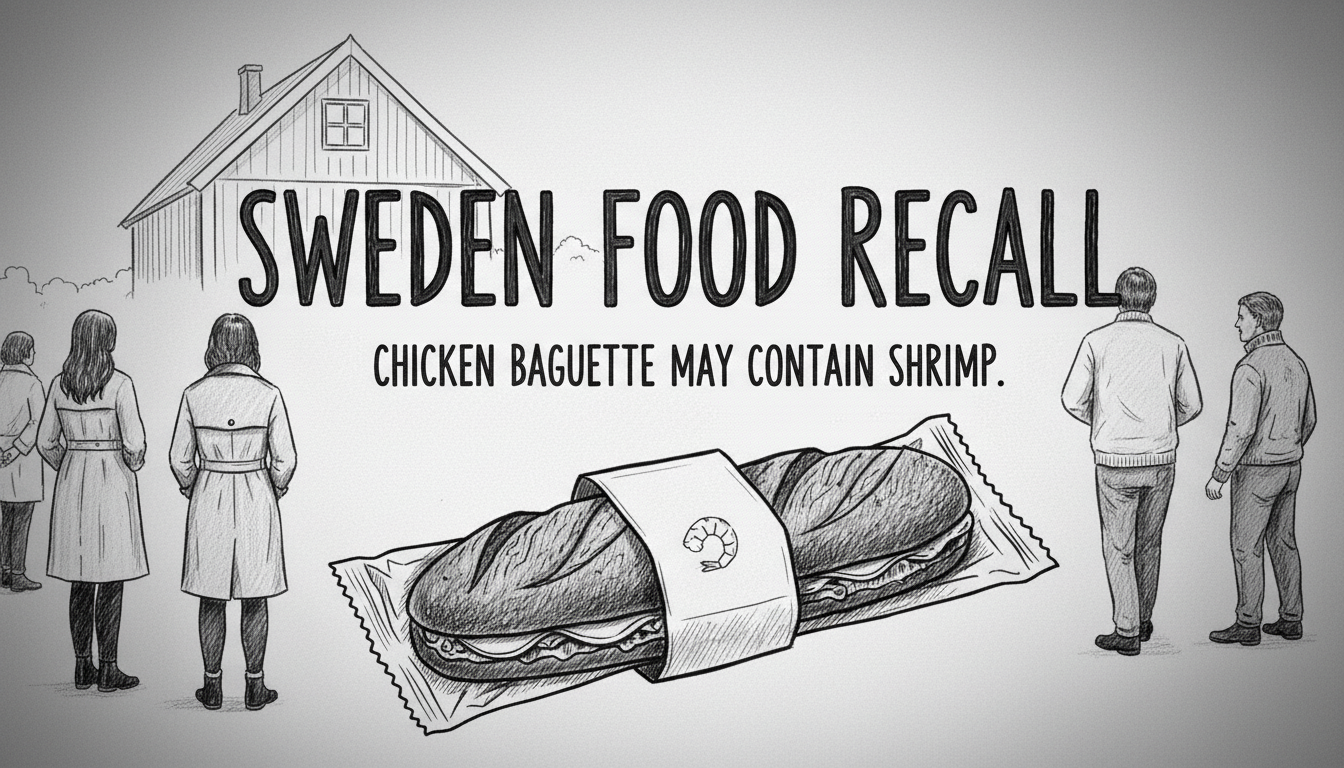
Sweden's latest food recall involves a mislabeled chicken baguette that may contain undeclared seafood allergens. Nyhléns Hugosons has recalled its "Baguette Kyckling" after discovering a potential packaging mix-up with its "Baguette Räkor" (Shrimp Baguette). The company initiated the recall as a precautionary measure, stating the product only poses a risk to consumers with specific seafood allergies.
A Precautionary Pull from Shelves
The recall targets product number 3370, "Baguette Kyckling," with a best-before date of December 20, 2025. According to the company's statement, the chicken baguette may have been incorrectly packaged as a shrimp baguette. This error means the product could contain undeclared fish, crustaceans, and mollusks. For the vast majority of consumers, this presents no health risk. For those with allergies to these seafood ingredients, however, accidental consumption could trigger a serious reaction. The Swedish Food Agency (Livsmedelsverket) published the recall notice, which is standard procedure for such alerts.
"The product is recalled as a precautionary measure," the company wrote. "The product only poses a possible risk to consumers who are allergic to fish, shrimp, and mollusks. We regret what has happened." This direct communication is typical of Swedish food safety protocols, where transparency is prioritized to maintain public trust. The company has not yet disclosed how many units are affected or where the products were distributed, though such details often follow initial announcements.
The Swedish System of Food Safety
Food recalls are a routine, if infrequent, part of Sweden's robust food safety landscape. The Swedish Food Agency sets strict regulations and provides guidance, but companies are primarily responsible for the safety of their products. Most recalls in Sweden are initiated voluntarily by the food producers themselves. This proactive approach is seen as a key strength of the system. Companies understand that swift action to correct a potential problem protects consumers and safeguards their brand reputation more effectively than waiting for regulatory enforcement.
"Accurate labeling is a critical component of food safety, especially for allergen management," explains a food safety expert familiar with Nordic regulations. "In Sweden, there's a strong culture of corporate responsibility in this area. A company-initiated recall isn't necessarily an admission of gross negligence; it's often a demonstration of a functioning internal control system catching an error before it causes harm." This system relies on high traceability standards, allowing producers to quickly identify and isolate potentially affected batches.
The High Stakes of Allergen Labeling
The recall highlights the life-or-death importance of accurate food labeling for allergy sufferers. For someone with a severe shellfish allergy, consuming even a trace amount can cause anaphylaxis—a rapid, whole-body reaction that can be fatal without immediate treatment. In Sweden, an estimated 2-4% of adults and 4-8% of children have a food allergy, with shellfish being a common trigger. This makes clear, correct labeling not just a legal requirement but a vital public health tool.
Swedish and EU regulations mandate the clear declaration of 14 major allergens, including crustaceans, fish, and mollusks. These must be emphasized on ingredient lists, often in bold or a different font. The potential mislabeling in this case represents a failure in the final packaging verification step. Such errors can occur during production line changeovers or due to human error in the factory. The fact that the two products—chicken and shrimp baguettes—are likely similar in appearance but vastly different in allergen profile makes the mistake particularly hazardous.
Consumer Response and Industry Implications
For consumers, the advice is clear: check your pantry. If you have product number 3370 "Baguette Kyckling" with the specified date, do not consume it if you have a seafood allergy. Return it to the point of purchase for a refund. Even those without allergies may choose to return the product as a precaution or on principle. The incident serves as a reminder for all shoppers to remain vigilant about checking product labels and best-before dates, especially for pre-packaged foods.
The recall may have financial and reputational consequences for Nyhléns Hugosons. The costs include retrieving the product, investigating the root cause of the mix-up, and potentially halting production lines. More significant is the potential impact on consumer trust. Swedish consumers generally have high expectations for food safety and corporate accountability. How the company handles the aftermath—its transparency about the cause, the steps taken to prevent recurrence, and its communication with the public—will influence how quickly that trust is restored.
A Global Issue in a Local Context
While this is a localized recall, it touches on a global challenge in complex food supply chains. Mislabeling and cross-contamination are persistent risks in food manufacturing worldwide. Sweden's response system is designed to mitigate these risks quickly. The Swedish Food Agency's public database of recalls ensures information is accessible, a model praised for its transparency. Compared to some countries, Sweden's recall notices are notably clear and direct, focusing on actionable consumer advice rather than legal jargon.
This event is unlikely to trigger major regulatory changes, as the existing framework is designed for such scenarios. It may, however, lead to increased inspections or audits for the involved company. It also reinforces the importance of internal checks and balances within food production facilities. Many companies use automated vision systems and barcode scanners at packaging stages to prevent exactly this type of error.
Looking Ahead: Trust and Transparency
The final impact of this recall will be determined in the coming weeks. Will Nyhléns Hugosons provide a detailed root-cause analysis? Will the Swedish Food Agency issue any follow-up findings or sanctions? The answers will shape the narrative. For now, the system appears to be working as intended: a potential hazard was identified, a company acted proactively, and authorities disseminated the information to protect public health.
This incident underscores a simple truth in modern food consumption: trust is the most important ingredient. It is built through consistent safety and shattered by errors that reach the supermarket shelf. In Sweden's highly regulated environment, a single mislabeled baguette becomes a test of an entire ecosystem of responsibility. The swift recall is the first step in passing that test, but the work to restore full confidence is just beginning. For allergy sufferers and their families, this work is not about corporate image—it is about ensuring the food they buy is exactly what the label promises, every single time.