
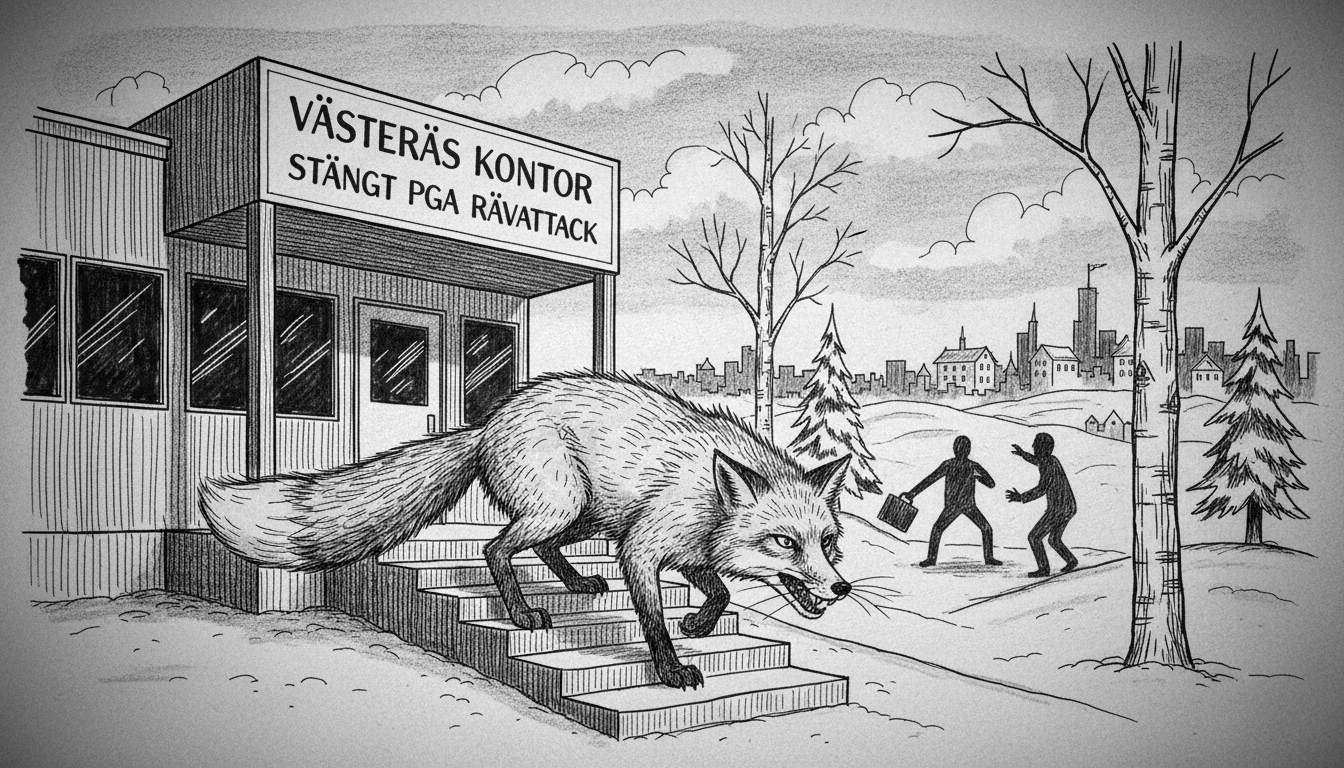
Sweden's normally tranquil urban wildlife scene was disrupted when an aggressive fox forced the evacuation of a Västerås office building. Police received an emergency call at 9:38 AM after staff members, who had attempted to shoo the animal away with brooms and tools, were met with threatening behavior. The incident required intervention from both law enforcement and a municipal hunter, who ultimately euthanized the fox due to visible signs of illness.
An Unusual Urban Intruder
The red fox (Vulpes vulpes) is a common sight across the Swedish landscape, including its cities. These adaptable creatures have learned to thrive in urban environments, where food sources like discarded waste and small rodents are plentiful. Encounters are frequent, but direct conflicts with humans remain statistically rare. This makes the event in Västerås particularly noteworthy. The fox's reported aggression and its decision to enter a populated office building during business hours represent a significant deviation from typical cautious behavior.
Police spokesperson Wayne Seretis described the scene. "A large number of staff tried to drive the fox out using equipment, brooms, and similar items," Seretis said. "The fox is then said to have made attacks, and they chose to call the police for help." This escalation from a mere nuisance to a perceived threat triggered the official response. Two police patrols were dispatched to the location to secure the area and assist, highlighting the seriousness with which authorities treated the situation.
The Decision to Euthanize
With the police on scene, the next step was to call in specialized expertise. The municipal hunter, or 'kommunjägare', was summoned. This role exists in many Swedish municipalities specifically to handle human-wildlife conflicts that fall outside normal police duties. After assessing the animal, the hunter made a decisive call. "The police have left but the hunter is on site and will take care of the fox," Seretis confirmed. "A decision has been made to euthanize as the fox appears sick; its tail is drooping."
The drooping tail, or 'limber tail', is a critical detail observed by the hunter. In canids, this symptom can indicate several underlying conditions. It is often associated with severe mange, a parasitic skin disease that causes intense itching, fur loss, and general deterioration. It can also be a sign of neurological issues, severe injury, or advanced rabies, though rabies has been virtually eradicated in Sweden since the 1980s thanks to widespread oral vaccination programs targeting foxes. The hunter's decision was based on a professional assessment of animal welfare and public safety, concluding the fox was suffering and posed a continued risk.
Expert Analysis of Wildlife Behavior
Wildlife biologists point to several potential factors behind such an incident. While foxes are inherently wary, sickness can dramatically alter their behavior. An animal suffering from mange, for instance, may become desperate, disoriented, and less fearful of human spaces as it searches for food or relief. Mating season, which peaks in winter, can also make animals more bold and territorial. However, the combination of entering a building and showing aggression towards a group of people strongly suggests an illness affecting the animal's normal aversion to humans.
"The key lesson here is to never attempt to handle or corner a wild animal yourself," says a Swedish wildlife management expert familiar with such cases. "What might seem like helping can be perceived as a threat, triggering a defensive attack. The staff's initial reaction, while understandable, inadvertently escalated the situation. The correct procedure is always to distance yourself, secure the area if possible, and contact authorities who have the training and legal mandate to intervene." This incident serves as a stark reminder that wild animals, even those familiar in city parks, are not domesticated and can be unpredictable, especially when unwell.
Public Safety and Urban Wildlife Policy
This event in Västerås touches on broader questions of urban wildlife management in Sweden. As cities expand and green spaces are integrated into urban planning, interactions between humans and animals like foxes, badgers, and deer increase. Swedish policy generally promotes coexistence, emphasizing public education over culling. The National Veterinary Institute (SVA) and the Swedish Environmental Protection Agency provide guidelines focused on securing waste, not feeding wildlife, and understanding animal behavior.
The use of a municipal hunter represents a standardized, localized response protocol. These hunters are licensed professionals authorized to make on-the-spot decisions regarding wildlife that poses an immediate danger. Their actions are governed by laws on animal welfare and hunting, ensuring a quick resolution that prioritizes both human safety and, where possible, animal welfare. In this case, euthanasia was deemed the only viable option given the fox's condition and aggressive state.
A Broader Look at Fox Populations
Foxes are incredibly successful urban adapters. Studies have shown that urban fox populations can reach higher densities than their rural counterparts due to the abundance of food and lack of natural predators. They play a valuable ecological role by controlling rodent populations. Most urban foxes live their lives largely unnoticed by humans, active primarily at dawn and dusk. Incidents of aggression are the exception, not the rule, but they understandably capture significant public attention and concern.
The health of a fox population can often be gauged by the prevalence of diseases like mange. Sarcoptic mange, caused by mites, can spread quickly and cause significant suffering. Wildlife monitoring programs sometimes track such outbreaks. While not typically a direct threat to human health, a mange outbreak in the local fox population can lead to more desperate animals appearing in public spaces, as may have been the case in Västerås. This incident could prompt local environmental officials to check if other sick animals have been reported in the area.
Lessons from a Morning Disruption
The closure of an office building over a single fox may seem disproportionate to some. Yet, the swift response by Västerås authorities illustrates a prudent approach to risk management. An unwell, cornered wild animal in a confined space with people presents a clear hazard. The potential for bites or scratches, which could require medical treatment and disease testing, justified the operational response. It also prevented possible injury to the already suffering animal from further frantic attempts to capture it.
For the international audience, this incident offers a window into Sweden's structured approach to public safety and wildlife. It demonstrates a chain of responsibility: from citizens alerting authorities, to police securing the scene, to a specialized municipal expert making the final disposition. The system worked as designed to resolve a dangerous situation efficiently. However, it also underscores a universal truth: our expansion into natural habitats guarantees more frequent, and sometimes fraught, encounters with the wild creatures who call those habitats home. The challenge for modern societies is managing these encounters with both compassion and caution, a balance Sweden is continually navigating. Will our cities learn to better coexist with their wild inhabitants, or will such conflicts become a more regular feature of urban life?