
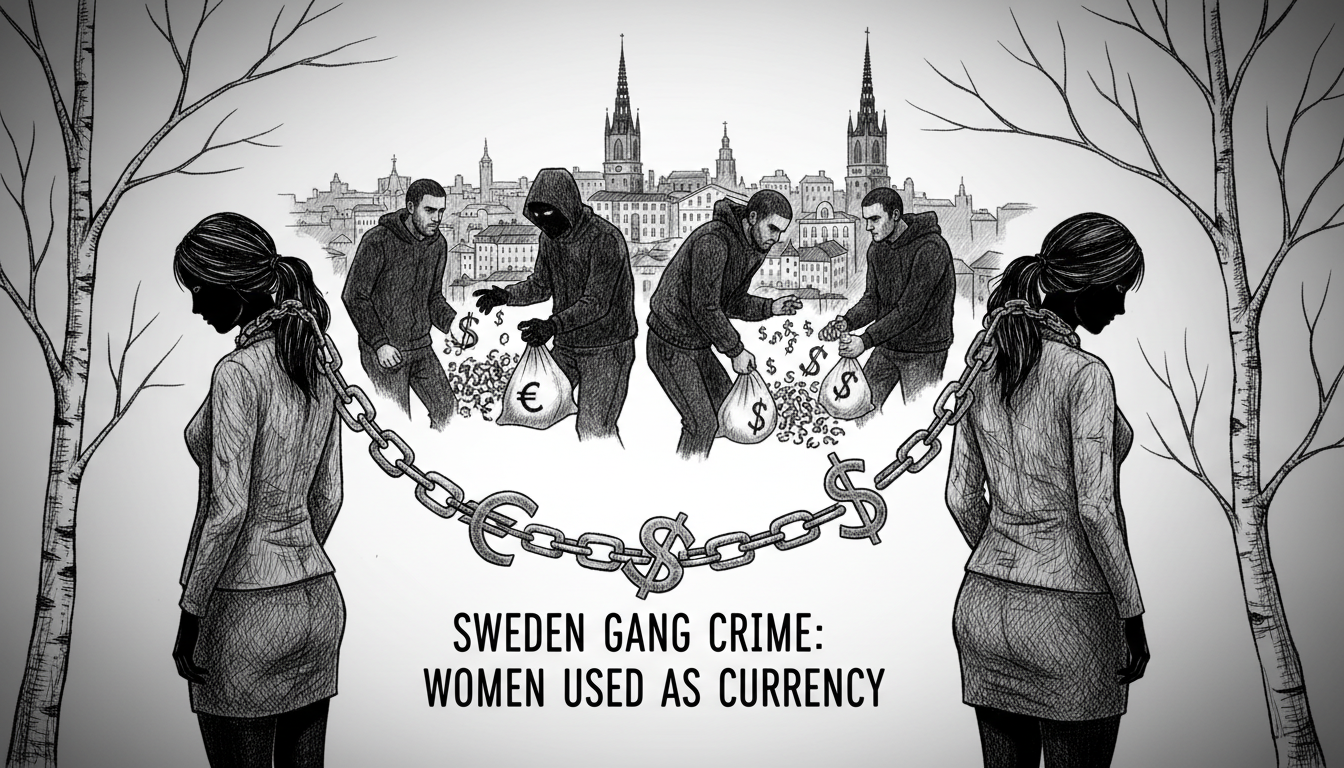
Sweden gang crime is exploiting a hidden currency: vulnerable women and girls. In Stockholm's marginalized suburbs and online, criminal networks are using sexual exploitation as a tool for payment, punishment, and control. This grim reality, described by frontline workers, reveals a brutal side of the country's ongoing struggle with organized crime.
Anneli Sundgren, a midwife at the MSÖ Pilen youth clinic in Stockholm, sees the human cost daily. Her work involves supporting young women living in sexual vulnerability. The descriptions are stark. "They can end up in a situation where men are lined up to receive oral sex," Sundgren says, outlining a reality far removed from Sweden's image of gender equality. Her clinic is a rare safe space in neighborhoods where fear and silence often prevail.
The Underground Economy of Exploitation
Experts say sexual exploitation has become integrated into gang operations. It functions as a form of payment for drug debts, a method of punishment for transgressions, or a commodity to be traded between groups. The victims are often young women from already vulnerable backgrounds, including those with ties to the gangs themselves or from families struggling with socio-economic challenges. This exploitation thrives in the shadows of communities grappling with segregation and inequality.
"It's a brutalization of social relations," explains a criminologist familiar with gang structures, who spoke on condition of anonymity due to the sensitivity of their work. "When the normal rules break down, everything becomes a potential asset—including people's bodies. For these groups, it's about power and asserting dominance as much as it is about transaction." The problem is not confined to one city. Reports from Malmö, Gothenburg, and Uppsala echo similar patterns, suggesting a nationwide issue linked to the rise of gang criminality.
A System Under Strain
Swedish law clearly criminalizes sexual exploitation and trafficking. Penalties can be severe. Yet, frontline workers and police note the immense difficulty in prosecuting these cases. Fear of reprisal keeps victims from reporting. The psychological grip of the perpetrators, often combined with complex dependencies, creates walls of silence. Stockholm's initiatives, like increased police presence and victim support services, face the challenge of reaching those too afraid to seek help.
According to the Swedish National Council for Crime Prevention (Brå), reported sexual offenses have trended upward. While this may reflect greater willingness to report, experts worry it also signals a rise in violence. Studies consistently show that women from disadvantaged backgrounds bear the brunt of this risk. The gang environment magnifies existing societal vulnerabilities.
Beyond Law Enforcement: The Need for a Social Response
Anneli Sundgren's perspective from the youth clinic highlights the gap between legal frameworks and on-the-ground reality. "We meet the girls where they are," she says. "They often don't see themselves as victims in a way that fits a legal definition. They are trapped in a situation, in relationships, or in debts that have spiraled into something horrific." Her work focuses on building trust, offering health services, and providing a non-judgmental exit route—a model experts say needs massive expansion.
Comprehensive strategies are urgently needed. These must blend targeted law enforcement against the perpetrators with robust, well-funded social interventions. Early intervention programs in schools, improved economic opportunities in marginalized areas, and specialized support centers that can ensure safety for those who come forward are all cited as critical pieces. "You cannot arrest your way out of this," the criminologist states. "You have to dismantle the conditions that allow gangs to wield this kind of power over individuals. It's about social work, education, and economic inclusion as much as it is about police work."
The Human Cost in Stockholm's Neighborhoods
The impact reverberates through families and communities. In suburbs like Rinkeby, Tensta, or Husby, whispers of these ordeals create climates of fear and distrust. The stigma for victims is profound, often locking them further into the abusive dynamic. Community leaders express frustration, feeling that the state's response is too focused on the symptoms of crime—like shootings and explosions—and not enough on these hidden, interpersonal violations that devastate lives.
Cultural context matters. In some cases, gangs exploit traditional norms around honor and shame to enforce silence. A young woman's ordeal may be seen as a family disgrace, making reporting unthinkable. This manipulation of cultural values adds another layer of complexity for support services trying to bridge communities.
A Call for Visibility and Action
The testimony from professionals like Anneli Sundgren is a powerful call to action. It forces a confrontation with an uncomfortable aspect of Sweden's gang crisis. While headlines focus on drug turf wars and gun violence, this systematic exploitation of women and girls represents a profound human rights abuse occurring in parallel.
Addressing it requires giving the issue visibility. It demands listening to the social workers, nurses, and youth counselors on the front lines. Their insights are crucial for shaping effective policy. Investing in organizations like MSÖ Pilen that provide sanctuary and support is a direct and practical step. Ultimately, protecting the most vulnerable is a key measure of a society's health. As Sweden continues its fight against gang crime, the question remains: how quickly can it mobilize a response to protect those being used as its darkest currency?