
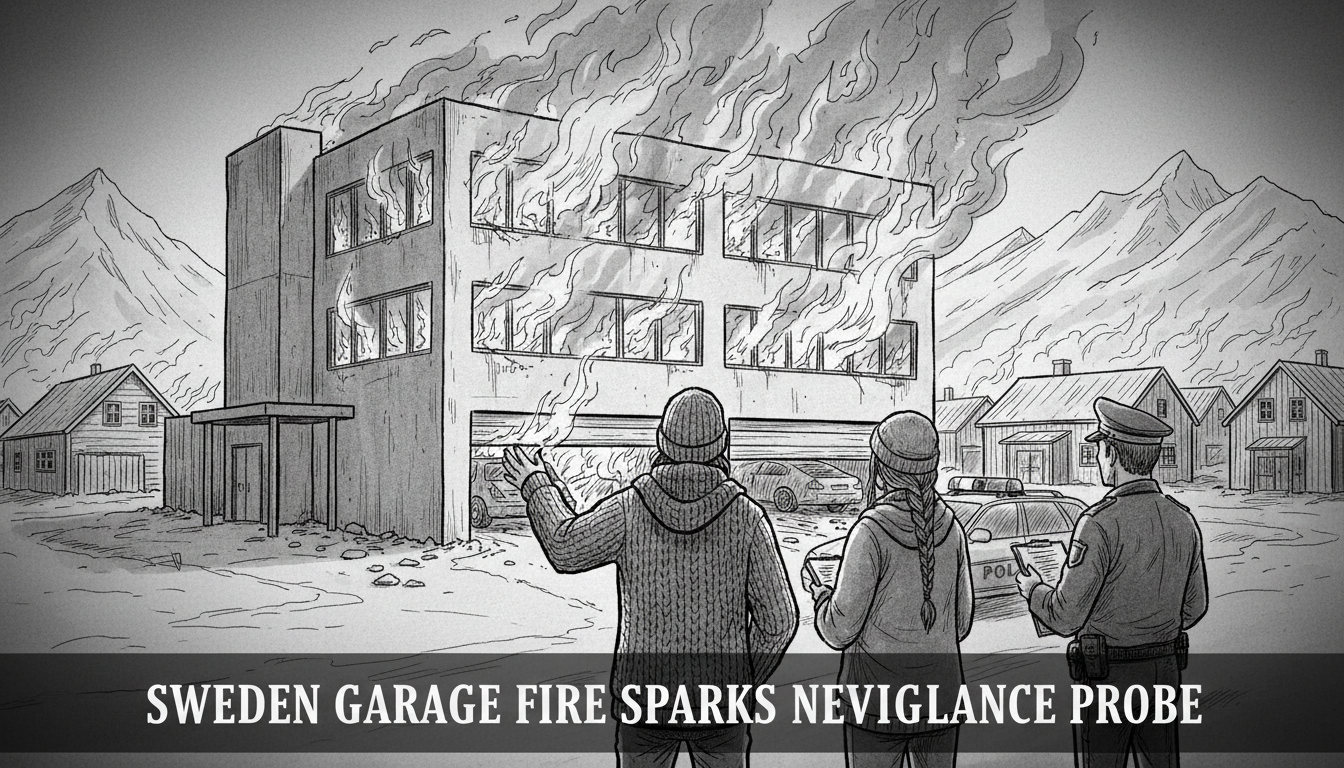
Sweden fire safety protocols were put to the test in Hallstahammar this week. A garage building was engulfed in flames by the time emergency services arrived. The decision by the fire brigade to let the structure burn down under controlled conditions highlights a pragmatic, safety-first approach common in Swedish emergency response. No one was injured, but the incident has triggered a police investigation into suspected publicly dangerous carelessness, known in Swedish law as 'allmänfarlig vårdslöshet'.
This small industrial town in Västmanland County is now grappling with questions of responsibility and prevention. The event, while contained, touches on broader themes of regulation, community safety, and the quiet diligence that defines Swedish civil protection. For residents, it’s a jarring reminder that fire risk is never far away, even in a nation famed for its order and safety standards.
A Controlled Burn in a Controlled Society
When the call came in, the garage was already fully involved. Open flames licked at the structure, making an interior attack by firefighters too risky. Faced with this reality, the incident commander made a calculated choice. They would contain the fire, protect exposures, and allow the building to burn itself out under their watch. This tactic, while dramatic to witness, is a standard operational procedure when a structure is deemed a total loss and saving it would unnecessarily endanger personnel.
“The priority is always human life, then preventing the spread, then property,” explains Lars Bengtsson, a retired fire safety engineer from Stockholm. “In a detached garage or industrial shed with no life hazard, the safest course can be to manage the burn. It minimizes the risk of a firefighter getting hurt in a collapse or from a sudden flare-up.” This clinical efficiency is a hallmark of Sweden’s highly professional rescue services. Emotion is set aside for a systematic assessment of risk and resource allocation.
The Legal Reckoning: 'Allmänfarlig Vårdslöshet'
The smoke had barely cleared when the police announced their investigation. The legal concept at the heart of the probe, 'allmänfarlig vårdslöshet', is a serious charge. It translates roughly to 'publicly dangerous carelessness' and falls under Sweden’s penal code. It applies when an act or omission, through negligence, creates a tangible danger to the public or property. It’s not about intending to cause a fire; it’s about failing to take the care a reasonable person would to prevent one.
This could mean improper storage of flammable materials, faulty electrical work done without a permit, or neglecting essential maintenance on heating equipment. In a community like Hallstahammar, with its mix of older industrial plots and residential areas, the potential causes are numerous. The investigation will meticulously work to rule out accidental causes before negligence can be confirmed. “It’s a process of elimination,” says Malin Öberg, a legal scholar focusing on Swedish safety law. “They look for the source of ignition, the fuel, and the chain of events. If they find a clear breach of a safety regulation or a blatant disregard for obvious risk, then the case for carelessness strengthens.”
Hallstahammar: A Community at the Crossroads
To understand the local context, one must look at Hallstahammar itself. Situated on the shores of Lake Mälaren in Västmanland, it’s a town shaped by industry. For decades, the massive Hallstahammar metalworks was the economic heart. While heavy industry has receded, the town retains its practical, blue-collar character. Garages, workshops, and small industrial units are common features on residential properties. This blend of living and tinkering is part of the local culture but brings inherent risks.
“Everyone has a garage or a shed full of projects,” says Erik, a lifelong resident who asked not to use his full name. “Winter projects, summer projects, old cars, woodworking tools. It’s just what we do.” This DIY spirit is celebrated in Sweden, but it exists in tension with the country’s famously comprehensive rulebook. Building codes (byggregler) and fire safety regulations (brandskyddsföreskrifter) are extensive. Permits are often required for electrical work or installing certain types of heating in outbuildings. The gap between common practice and strict regulation is where trouble can start.
The Swedish Model of Fire Safety
The incident serves as a microcosm of the Swedish approach to risk management. Sweden has one of the lowest rates of fire deaths in the world. This achievement is not accidental. It is the result of a multi-layered system combining strict building codes, rigorous product safety standards for furniture and electronics, widespread smoke alarm mandates, and a powerful, well-trained fire service. Public education campaigns, like the annual “Brandvarnarveckan” (Smoke Alarm Week), reinforce the message.
Prevention is deeply embedded in the design phase. Materials, escape routes, and compartmentalization are all regulated. For a new garage or workshop, the rules are clear. The challenge often lies with older structures, built before current codes, and with the habits of the people using them. “Complacency is the enemy,” states Bengtsson. “We build safe buildings, but we must also maintain safe behaviors. Storing gasoline next to a water heater, overloading electrical circuits, letting dust accumulate in a woodshop—these are the everyday choices that lead to headlines.”
Beyond the Ashes: What Comes Next?
For the property owner involved, the immediate future involves insurance assessments and conversations with the police. For the community, it’s a moment for reflection. Local fire services often use such events as catalysts for outreach. It would not be surprising to see Hallstahammar’s rescue service offer free safety inspections or host a community information session in the coming months.
The legal process will be slow and methodical. If the police find sufficient evidence of negligence, the case will be forwarded to a prosecutor. A conviction for publicly dangerous carelessness can result in fines or, in severe cases, imprisonment. More than the penalty, however, the social stigma of being found negligent in causing a public danger is significant in Sweden’s consensus-driven society.
This garage fire in a small Swedish town is more than a local news brief. It is a story about balance. It highlights the balance between personal freedom and collective safety, between practical tradition and modern regulation, and between aggressive emergency intervention and calculated risk management. The controlled burn was a success; the fire did not spread, and no one was hurt. The ultimate test now lies with the community and the legal system to determine if this was a tragic accident or a preventable failure of care—a question that gets to the very heart of Sweden’s social contract.
As the investigation continues, residents will likely look at their own workshops and garages with a more critical eye. In a nation built on the principle of 'folkhemmet'—the people’s home—where society is responsible for the welfare of all, ensuring one’s own property isn’t a threat to the neighbors is more than a legal duty. It’s a cultural expectation. The ashes in Hallstahammar are cold, but the conversation about responsibility is just being rekindled.