
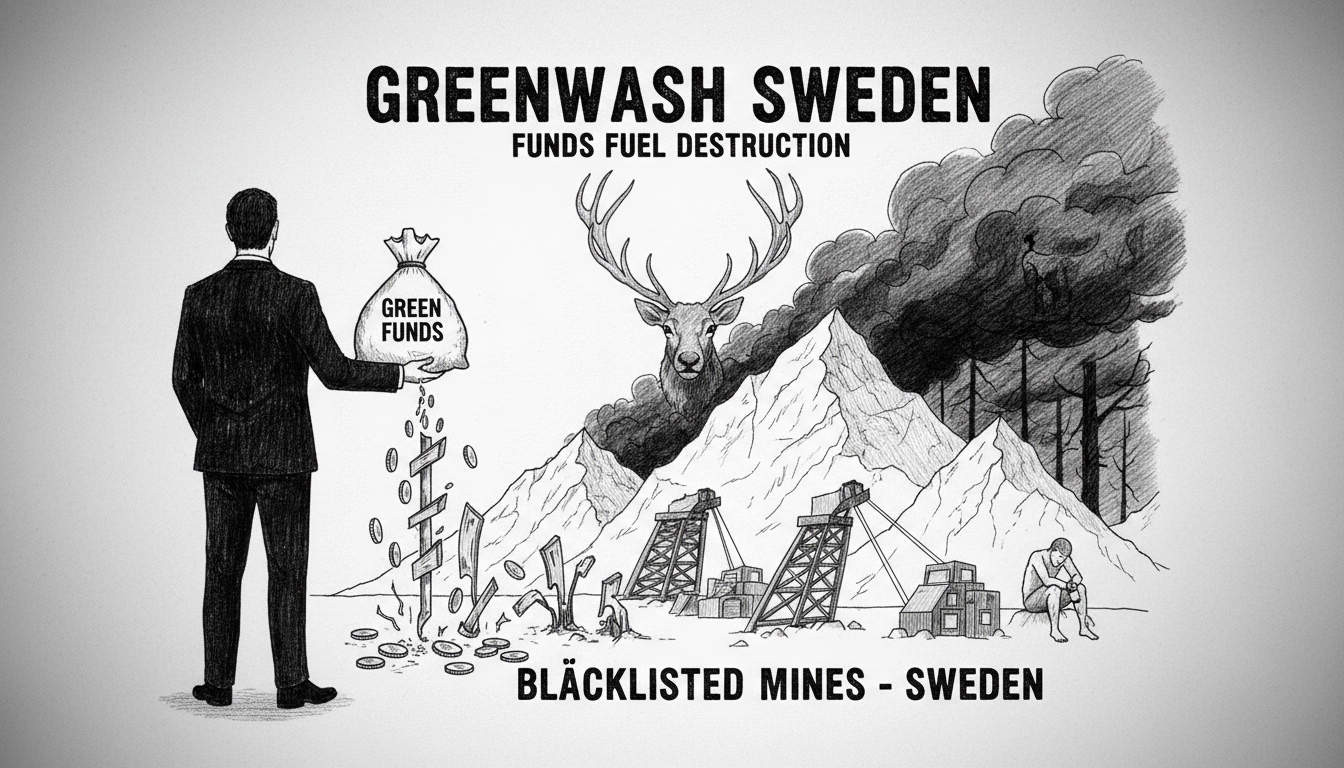
Swedish funds and banks are investing billions in controversial mining projects through green investment funds. A new investigation reveals this troubling contradiction in sustainable finance.
Fair Finance Guide and the Swedish Society for Nature Conservation conducted the research. They found Swedish financial institutions have 33.7 billion Swedish kronor invested in mining extraction. Jakob König from Fair Finance Guide expressed understanding for frustrated savers. He said making truly green fund choices remains challenging for ordinary investors.
The demand for critical minerals drives these investments. Copper, lithium, and nickel are essential for renewable energy expansion. They power fossil-free technology like electric vehicles and solar panels. But several mines receiving investments face serious allegations. Environmental destruction and human rights violations plague their operations.
This situation highlights a fundamental problem in sustainable investing. Green funds marketed as environmentally friendly sometimes support destructive industries. Savers trusting these funds may unknowingly finance projects they would normally oppose.
Sweden has positioned itself as a global leader in sustainability. The country promotes green technology and environmental protection. Yet its financial institutions continue funding problematic mining operations. This creates a significant credibility gap for Sweden's green reputation.
International readers should understand Sweden's unique position. The country balances mining interests with environmental goals. Sweden contains Europe's largest deposits of many critical minerals. This creates tension between economic opportunity and ecological responsibility.
The Swedish pension system adds another layer. Many citizens invest through national pension funds. These funds often prioritize returns over ethical considerations. Ordinary people become indirect investors in controversial projects through their retirement savings.
What happens next matters for sustainable finance globally. Pressure is mounting on financial institutions to practice what they preach. True green investing requires thorough due diligence. It demands transparency about where money actually goes.
Consumers face real challenges identifying genuinely sustainable options. Greenwashing remains widespread in financial products. The investigation shows even well-intentioned investors can fund destructive practices. This undermines trust in the entire sustainable investment sector.
The situation affects Sweden's mining regions particularly. Northern areas see increased mining activity for critical minerals. Local communities and indigenous Sami people often bear the environmental costs. Their concerns frequently get overlooked in the rush for green transition materials.
This report should trigger broader discussion about ethical investment standards. It raises questions about what truly constitutes green finance. The findings challenge Sweden's financial sector to align investments with stated environmental values.