
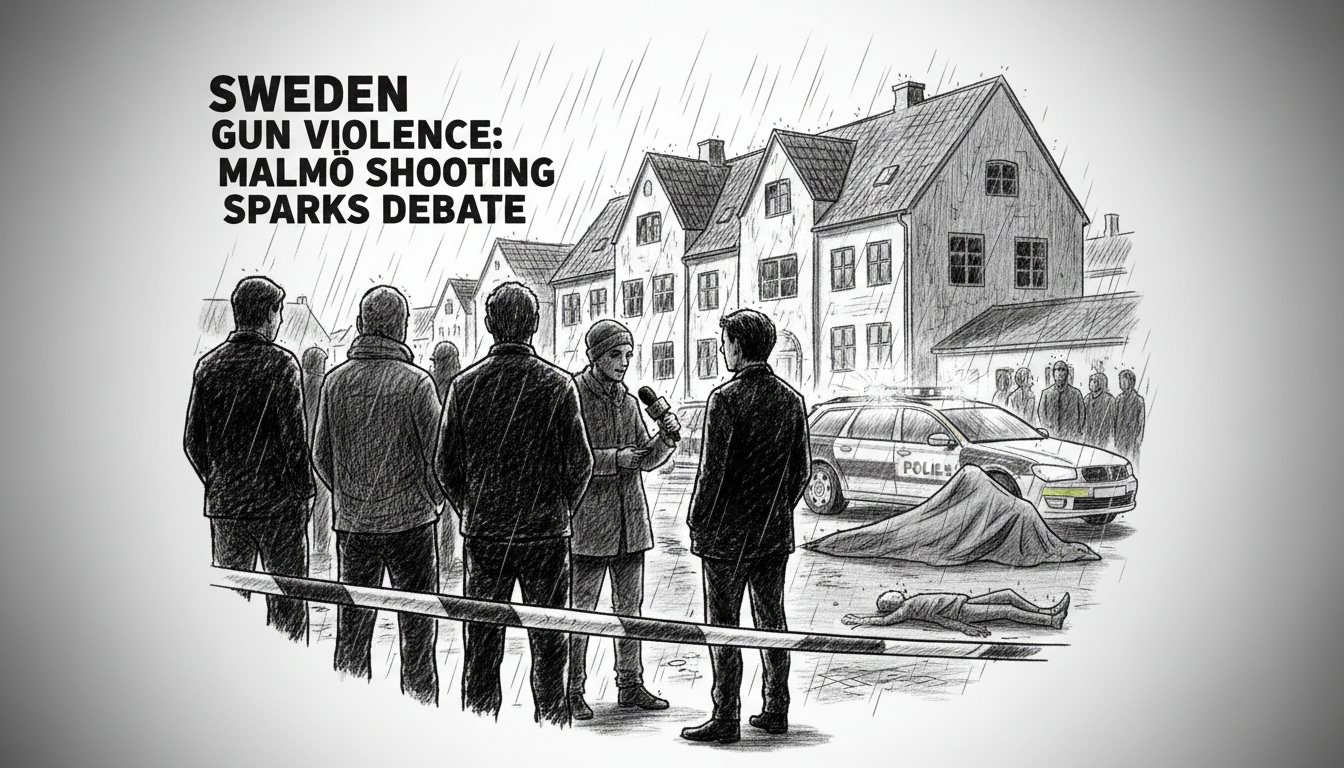
Sweden gun violence returned to the streets of Malmö last night. Police were called to Sperlingsgatan in the Fosie district just before 8 p.m. after reports of loud bangs. Officers found three empty bullet casings on the street. No one was injured, and no property was damaged. The scene was cordoned off for a forensic investigation. The case is being treated as a 'grovt vapenbrott' – an aggravated firearms offense. This crime carries a potential prison sentence of two to five years in Sweden.
For residents of Fosie, the sound of gunfire is an unwelcome familiarity. The district has faced persistent challenges with crime. This latest incident adds to a troubling national statistic. Sweden recorded 366 shootings in 2023, with 44 of those proving fatal. Malmö, the country's third-largest city, consistently reports a higher rate of gun violence than Stockholm or Gothenburg. The sound of sirens on Sperlingsgatan tells a story that stretches far beyond one quiet street.
A City's Persistent Struggle
Malmö's relationship with gang violence is complex and deeply rooted. The city is a vibrant cultural hub, known for its striking architecture and diverse food scene. Yet beneath this surface, a parallel reality exists for some neighborhoods. Socioeconomic disparities, lack of opportunity for youth, and entrenched gang rivalries create a volatile mix. Illegal firearms remain readily available despite repeated police crackdowns. "Each shooting, even without injuries, is an act of terror against a community," says Lars Trägårdh, a sociologist who studies urban violence in Sweden. "It tells people they are not safe in their own neighborhoods. The goal is often to demonstrate power and control."
Community outreach workers in Malmö describe a sense of fatigue. Programs aimed at steering young people away from gangs exist, but funding is often inconsistent. "We build relationships, we offer alternatives – football, music, mentorship," says Anya Petrova, who runs a youth center in Rosengård, another district familiar with violence. "But when a 16-year-old can earn more in a week through crime than his parents do in a month, the pull is powerful. We are fighting against an economy, not just a choice."
The National Picture of Violence
The shooting on Sperlingsgatan is a single data point in a worrying national trend. While Sweden's overall crime rate is comparable to its European neighbors, its rate of fatal shootings is notably higher. Experts point to a transformation in organized crime over the past decade. Groups have become more fragmented and prone to violent internal disputes. These conflicts frequently play out in public spaces, using military-grade weapons. The violence is highly concentrated in specific vulnerable areas within a handful of cities. For most Swedes, the risk of being caught in gunfire is extremely low. For those living in the affected areas, the threat feels ever-present.
Police strategies have evolved in response. Increased patrols, specialized task forces, and tougher sentencing for gun crimes are now standard. Yet, as last night's event shows, the shootings continue. "Law enforcement is crucial, but it is a reactive tool," argues Professor Erik Amnå from Örebro University. "It deals with the symptoms. We have been less successful in treating the causes: segregation, school dropout rates, and the hollowing out of the legitimate labor market for young men in these areas. A bullet casing on the street is the end result of a long chain of failures."
Life in the Aftermath
For those who live where shootings occur, the impact is measured in more than statistics. It is in the parent who calls their child home earlier. It is in the local shopkeeper who hesitates to invest in new signage. It is in the collective sigh when the police tape goes up, again. "You hear the pops, you wait for the sirens, and then you just feel this heavy sadness," says Marcus, a long-time Fosie resident who asked not to use his full name. "It's not fear, exactly. It's more like disappointment. This is our home. We want better for it."
This community resilience is often overlooked in national debates. Neighborhood associations organize night walks. Parents coordinate to keep playgrounds active. Cultural venues like Malmö's famous libraries and community centers work to provide safe, engaging spaces. The city's famous Möllevångstorget market square, a melting pot of cultures, stands as a testament to Malmö's integrated potential. The challenge is making that integration a reality in every district, on every street.
Searching for Solutions Beyond Policing
The political discourse around violence in Sweden often becomes polarized. One side calls for even tougher policing and stricter immigration controls. The other demands massive investment in social programs and systemic change. In reality, most experts agree the solution lies somewhere in the difficult middle. "It requires a 'double strategy'," says Trägårdh. "You need a strong, legitimate police force that can ensure immediate security and investigate crimes effectively. But you simultaneously need schools, social services, and businesses working in concert to create a credible alternative life path. One without the other will fail."
Some promising local initiatives are emerging. In Malmö, a project called "Pulse" brings police, social workers, and community leaders together for real-time intervention when tensions flare. Another program, "Switch," offers individualized support and job training for individuals actively trying to leave criminal networks. Their success rates are cautiously positive, but they are small in scale. The question is whether these models can be scaled up with sustained funding and political will.
The Road Ahead for Malmö
As the forensic team packed up from Sperlingsgatan this morning, life slowly returned to normal. The police tape was removed. People walked to work. The physical evidence was gone. The psychological residue, however, lingers. Each shooting erodes trust – in institutions, in the future, and sometimes, in neighbors.
Malmö is a city of contrasts. It is the city of the Turning Torso skyscraper and the historic cobblestones of Gamla Staden. It is a city of innovation and, in some pockets, profound neglect. The path forward is not about finding a single magic solution. It is about the hard, unglamorous work of improving schools block by block. It is about creating real job opportunities. It is about police earning trust through consistent, respectful presence. Last night's empty casings on a Fosie street are a reminder that this work is far from finished. The ultimate measure of success will be a night when the loud bangs heard in Malmö are only fireworks, celebrating something, rather than gunshots taking something away.