
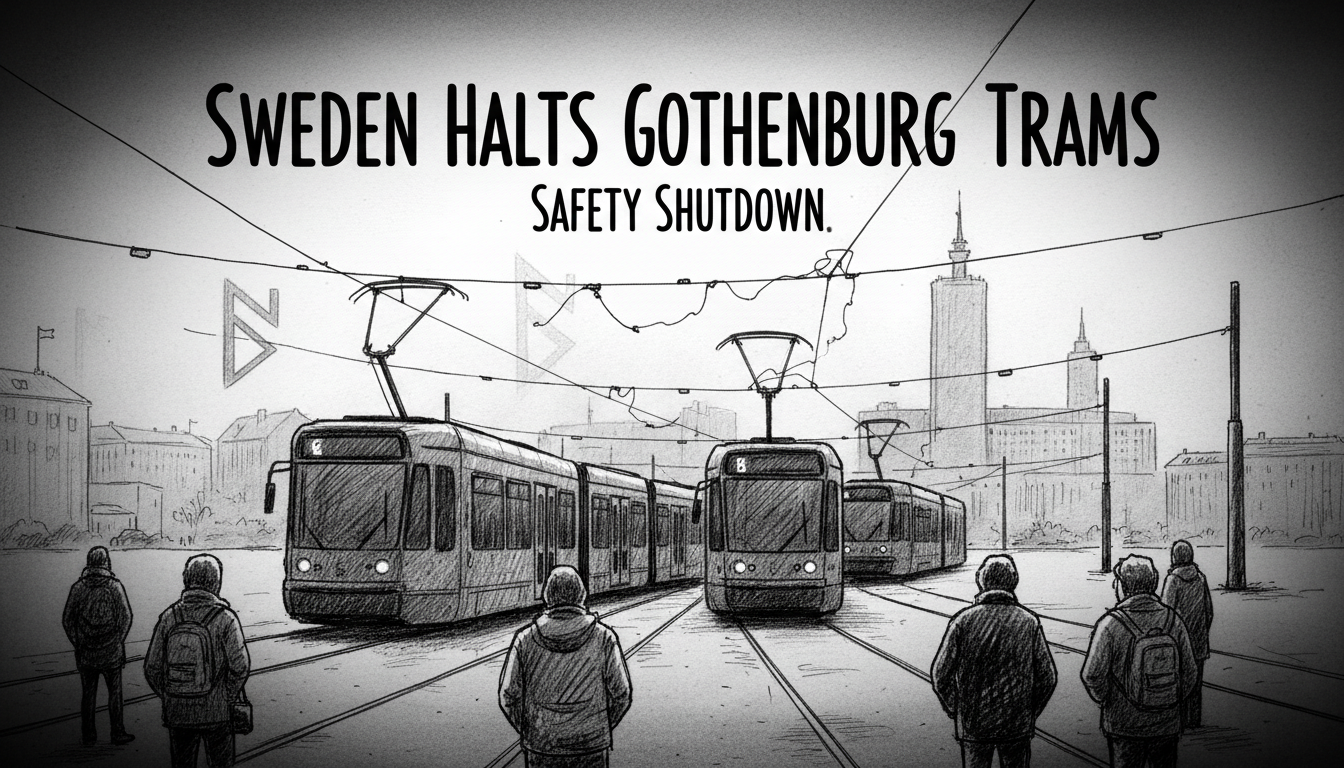
Sweden's public transport operator Västtrafik canceled every tram service in Gothenburg after an orange weather warning declared conditions too dangerous. This unprecedented decision stranded thousands of commuters in the nation's second-largest city. By afternoon, most services had resumed, but the disruption revealed vulnerabilities in urban mobility. As a society and culture reporter, I see this as more than a traffic alert—it's a story about Swedish resilience, weather culture, and how cities adapt.
The Morning Commute That Never Was
Imagine leaving your apartment in Majorna, expecting the familiar rumble of tram number 11. Instead, you find silent tracks and crowded bus stops. That was the reality for Gothenburg residents. Västtrafik's announcement came early, citing an orange warning from SMHI, Sweden's meteorological institute. The warning predicted strong winds, heavy rain, or snow—enough to risk derailments or accidents. All tram lines, from the bustling Korsvägen hub to quiet neighborhood stops, were suspended. Many bus routes faced cancellations too. For a city where trams carry over 200,000 daily passengers, the impact was immediate and widespread.
Workers missed shifts. Students arrived late to university. Hospital staff scrambled for alternatives. At Järntorget square, normally alive with tram bells, people huddled under awnings checking phones. "I've lived here 20 years and never seen all trams stop," said Erik Lund, a teacher trying to reach his school in Hisingen. "It shows how much we rely on them." This dependency is a hallmark of Swedish urban life. Gothenburg's tram network, one of Europe's largest, is not just transport—it's a cultural icon, featured in films and daily routines.
Decoding the Orange Warning
What does an orange warning actually mean? In Sweden's three-tier system (yellow, orange, red), orange signals "severe weather that could pose a danger to the public." SMHI issues these alerts based on wind speeds, precipitation, or temperature extremes. For trams, high winds can blow debris onto tracks or topple overhead wires. Icy rails reduce braking efficiency. Västtrafik's decision to halt all services was proactive, prioritizing safety over convenience. This caution reflects a deep-seated Swedish value: 'trygghet' or security. Public agencies often err on the side of caution, especially when lives are at risk.
Historically, Swedish cities have weathered storms without full shutdowns. But climate change is increasing extreme weather frequency. Last winter, Stockholm saw similar disruptions. The orange warning in Gothenburg might have involved wind gusts exceeding 70 km/h, enough to sway trams. SMHI's role is crucial here—their data drives decisions from school closures to transport halts. By heeding the warning, Västtrafik avoided potential accidents. Yet, the shutdown also exposed communication gaps. Many passengers learned via social media, not official channels, causing confusion.
Ripple Effects Across Swedish Society
The tram stoppage disrupted more than travel. It affected the economy, healthcare, and social rhythms. Small businesses in Linnéstaden reported fewer customers. Delivery delays hit restaurants. Parents faced childcare dilemmas. Sweden's efficient society relies on punctuality, and this event challenged that norm. Cultural venues like the Göteborgs Konstmuseum saw lower footfall. Public reactions mixed understanding with frustration. "I appreciate safety first, but why weren't buses ready?" asked Lena Forsberg, a nurse at Sahlgrenska Hospital. Her comment highlights a key issue: integrated contingency planning.
Community response showcased Swedish solidarity. People shared real-time updates on neighborhood forums. Cyclists offered lifts. Cafés became makeshift waiting rooms. This collective adaptability is a Swedish strength, often seen during harsh winters. However, the shutdown also underscored inequalities. Those with cars or flexible jobs coped better. Immigrants and low-income workers, who depend on public transport, faced tougher choices. Sweden's immigration news often touches on integration—events like this test support systems for vulnerable groups.
Analyzing the Infrastructure Challenge
Gothenburg's tram network is aging, with some lines dating back decades. While well-maintained, it's susceptible to weather extremes. Investment in modernization has been steady, but this event raises questions. Are there enough backup buses? Can trams be made more resilient? Comparative insights from other Nordic cities offer lessons. Helsinki uses snow-melting rail technology. Oslo prioritizes all-weather bus corridors. Sweden might need similar innovations. Västtrafik's quick restoration of most services by afternoon shows operational skill. Yet, the total shutdown suggests a brittle system under stress.
Expert perspectives would emphasize balanced risk management. Over-caution can paralyze cities; under-caution risks accidents. Swedish authorities typically navigate this well, but climate change is shifting the calculus. Future orange warnings may become more common. This shutdown serves as a drill for bigger crises. It also reflects Swedish society trends towards sustainability—trams are eco-friendly, so protecting them aligns with environmental goals. The incident will likely spur discussions in city hall about infrastructure upgrades and emergency protocols.
Cultural Reflections and Moving Forward
Swedes have a unique relationship with weather. 'Fika' breaks are planned around rain showers. Summer festivals celebrate sunshine. This tram shutdown adds to that cultural narrative. It reminds us that nature still dictates daily life, even in advanced societies. Stories from this day will enter local lore, much like the great snowstorms of past decades. For visitors following Stockholm events today, note that Gothenburg's experience is a window into Swedish adaptability. The city's spirit, from the historic Haga district to modern Nordstan, remained unbroken.
Looking ahead, Västtrafik may invest in weather-proofing measures. Public communication could improve via apps or alerts. Community preparedness workshops might emerge. This event also ties into broader Swedish lifestyle trends—remote work flexibility reduced some impact, showing how society evolves. As a journalist, I see this as a moment for reflection. How do we build cities that are both safe and functional in a changing climate? Sweden's approach, blending caution with innovation, offers clues. The trams are running again, but the questions linger.
Will Gothenburg's tram network become a model for weather resilience? Only time will tell. For now, the orange warning has passed, but its lessons remain. In a country proud of its efficiency, this shutdown was a humble reminder. Nature, not schedules, is ultimately in charge. That's a truth every Swede understands, from the Arctic north to the cobbled streets of Gothenburg.