
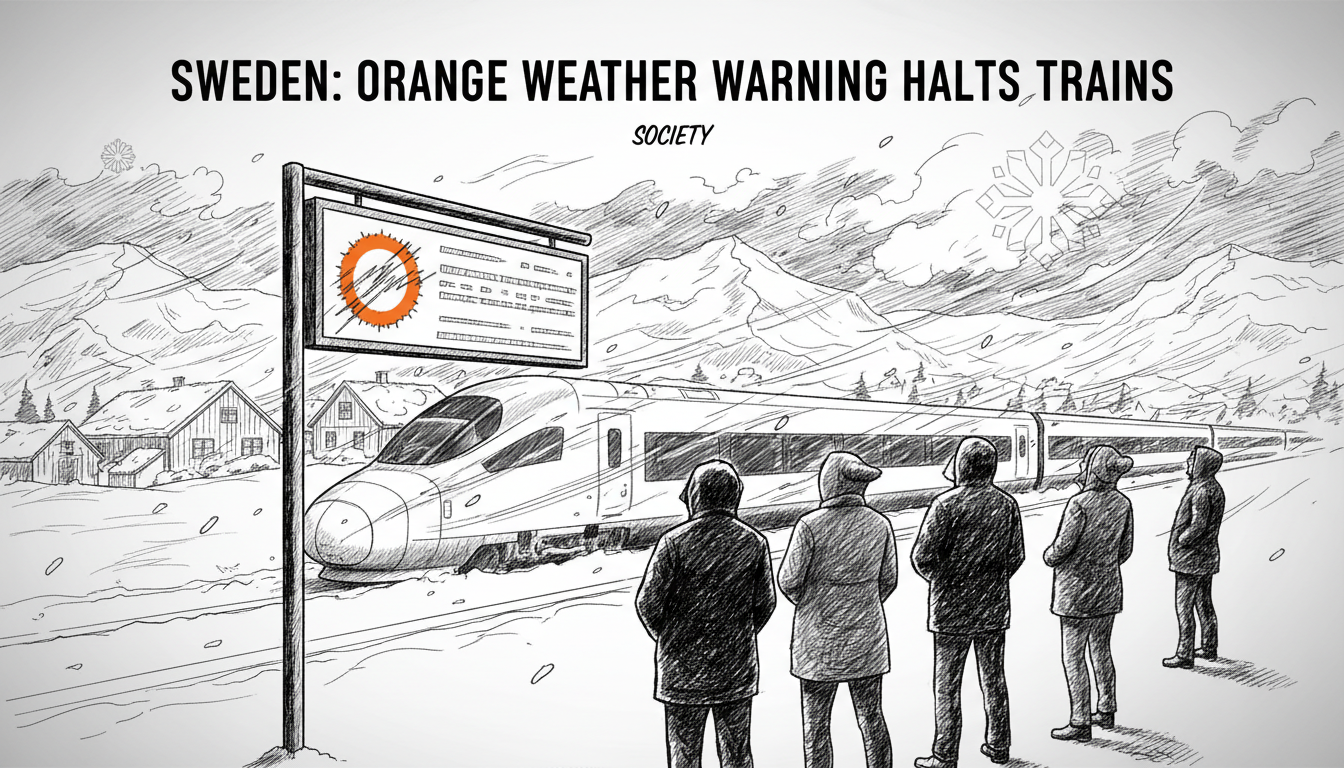
Sweden train cancellations have stranded hundreds of passengers this weekend after the Swedish Meteorological and Hydrological Institute (SMHI) issued an orange-level weather warning. Multiple fully booked trains between Duved and Stockholm were cancelled, with further disruptions on the Bräcke to Storlien line affecting travel to popular ski resorts like Åre. The decision, made by operators SJ and infrastructure manager Trafikverket, underscores the serious safety protocols activated during severe Nordic winters.
I spoke with travelers at Stockholm Central Station, where the atmosphere was a mix of frustration and resigned understanding. Emma Lindgren, a teacher from Södermalm, was hoping to reach her family in Östersund for a pre-arranged weekend. 'We planned this for months,' she said, checking her phone for updates. 'But you can't argue with the weather. It's part of life here.' Her sentiment echoes a common Swedish attitude: a deep respect for nature's power, even when it disrupts the best-laid plans.
The Science Behind the Shutdown
SMHI's orange warning is the second-highest alert, indicating hazardous conditions with high potential for damage. This specific warning covers wind combined with snow in the mountain regions of Jämtland, Dalarna, Norrbotten, and Västerbotten. 'An orange warning means we take immediate action,' explained Leila Fogelholm of SJ in a statement. 'Our priority is passenger safety.' Trafikverket, which controls the rail network, made the final call to stop traffic on critical sections. This proactive shutdown is standard procedure, designed to prevent accidents like derailments or passengers becoming stranded in remote areas.
These disruptions are not just about trains. Ferry services are also affected, creating a ripple effect across transportation networks. For international visitors, it's a stark introduction to Sweden's operational realities during winter. The country's extensive railway is a lifeline, but it faces recurring challenges from October to April. Investment in winter-proofing infrastructure is ongoing, yet extreme weather often wins.
A Cultural Perspective on Winter Disruption
From a Swedish culture news angle, this event touches on core societal values. The concept of 'förebyggande' or prevention is deeply ingrained. Cancelling trains preemptively aligns with the societal trust in authorities like SMHI and Trafikverket. There's little public debate about these decisions; safety consistently trumps convenience. This weekend also highlights a key Swedish lifestyle trend: the winter pilgrimage to the mountains. Åre, in particular, is a hub for skiing and winter sports, with many Stockholmers planning trips during school breaks.
The cancellations disrupt not only travel but also local economies in these regions. Hotel bookings, restaurant reservations, and activity rentals all feel the impact. Yet, there's a collective understanding. 'It's better to be safe,' said Mikael Borg, a café owner in Åre I contacted by phone. 'We see this every few years. People rebook, they come another time. The mountains aren't going anywhere.' This resilience is a hallmark of Swedish society trends, especially in northern communities accustomed to harsh conditions.
Expert Analysis: Safety Versus Mobility
Transportation experts emphasize that these cancellations, while inconvenient, are a necessary trade-off. 'The economic cost of a major incident far outweighs the cost of cancelled services,' says Dr. Lena Holm, a transportation analyst at Lund University. 'Sweden's system is designed to err on the side of caution.' She notes that climate change may increase the frequency of such severe weather events, testing the infrastructure's limits. Continuous investment in resilient technology, like improved weather forecasting and rail heating systems, is crucial.
However, the human cost is real. For every cancelled train, there are stories of missed birthdays, postponed business meetings, and disrupted holidays. Social media fills with alternative travel tips, like taking buses or driving, though these options are also hampered by the same weather. The Swedish Transport Administration's real-time app becomes the essential tool for thousands, a digital lifeline in the storm.
What This Means for Travelers and Residents
For those affected, the advice is clear: check official sources before traveling. SJ and Trafikverket provide updates on their websites and apps. Travel insurance that covers weather disruptions is highly recommended, especially for international visitors. Within Stockholm, events today may see lower attendance as people stay put. Cultural venues like the Fotografiska museum or the Vasa Museum might benefit from locals seeking indoor alternatives.
Looking ahead, this event is a reminder of Sweden's relationship with its environment. The winter beauty comes with logistical challenges. As the climate evolves, so must the strategies for keeping the country moving. The orange warning will pass, the trains will run again, and the discussion will continue about how to build a transportation network that is both safe and reliable in the face of nature's whims.
In the end, a cancelled train is more than a schedule change. It's a moment where Swedish society's priorities are laid bare: collective safety, trust in systems, and a respectful acknowledgment that some forces are beyond our control. As the snow falls over the silent tracks near Storlien, that lesson holds true for every traveler waiting for the all-clear.