
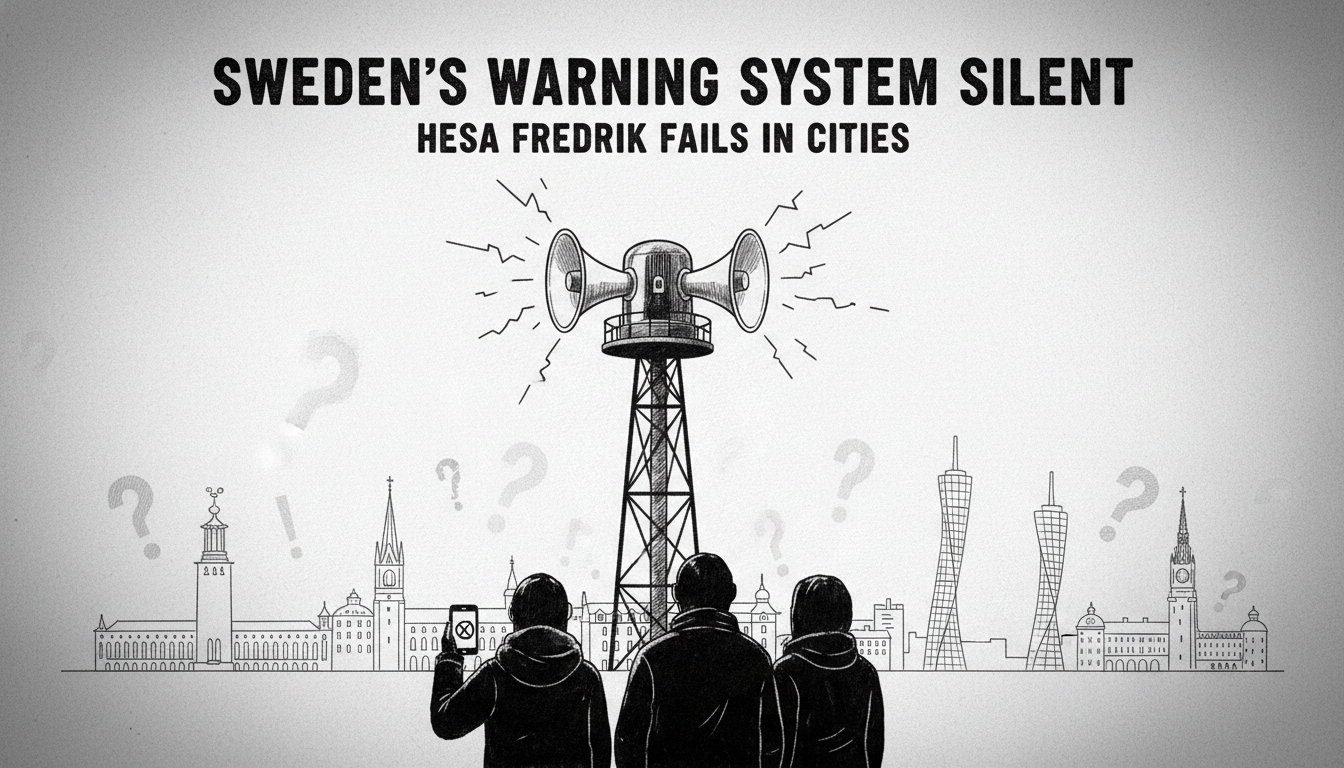
On a recent Monday, a familiar sound was supposed to echo across Sweden. It is the quarterly test of the national public warning system, affectionately known as 'Hesa Fredrik' or 'Hoarse Fredrik'. This time, however, silence fell over several important cities. The critical alert system, designed to warn citizens of imminent danger, experienced technical failures during its routine check.
The test is a regular event, happening every three months to ensure the sirens and signals work perfectly. This particular test revealed problems in the Östergötland region. In the cities of Linköping, Norrköping, and Söderköping, the signal simply did not go out as planned. Officials confirmed the issue on social media, stating the system would now be debugged. They emphasized that the very purpose of these quarterly tests is to find and fix such weaknesses before a real crisis occurs.
For international readers and new residents, this story touches a core part of Swedish societal trust. 'Hesa Fredrik' is more than a siren. It is a cultural touchstone, a symbol of the country's long-standing commitment to civil defense and public safety, shaped by decades of preparedness planning. The system's nickname itself, personifying the alarm with a human name, reflects a uniquely Swedish approach to a serious topic. A failure, even during a test, resonates deeply in a society that highly values order, reliability, and collective security.
So what does this mean for people living in Stockholm, Gothenburg, or Malmö? For most, Monday passed as normal. In Stockholm's Södermalm or Vasastan neighborhoods, life continued uninterrupted. But the incident raises practical questions. Sweden's population includes many newcomers who may not be familiar with the warning protocols. The test failures highlight the importance of having multiple information channels, like radio, TV, and the official 'Krisinformation' app, especially in a diverse society.
The authorities have a clear point. Finding flaws in a controlled test is far better than discovering them during an actual emergency, like a major fire, industrial accident, or extreme weather event. The system's reliability is paramount for everyone, from families in suburban housing areas to tourists visiting cultural venues like the ABBA Museum or the Vasa Museum. This minor stumble serves as a reminder. It underscores the ongoing work required to maintain the infrastructure of safety in a modern nation, work that often goes unnoticed until a test like this brings it to light. The response from officials was swift and transparent, which aligns with the public's expectation for accountability in Swedish governance.