
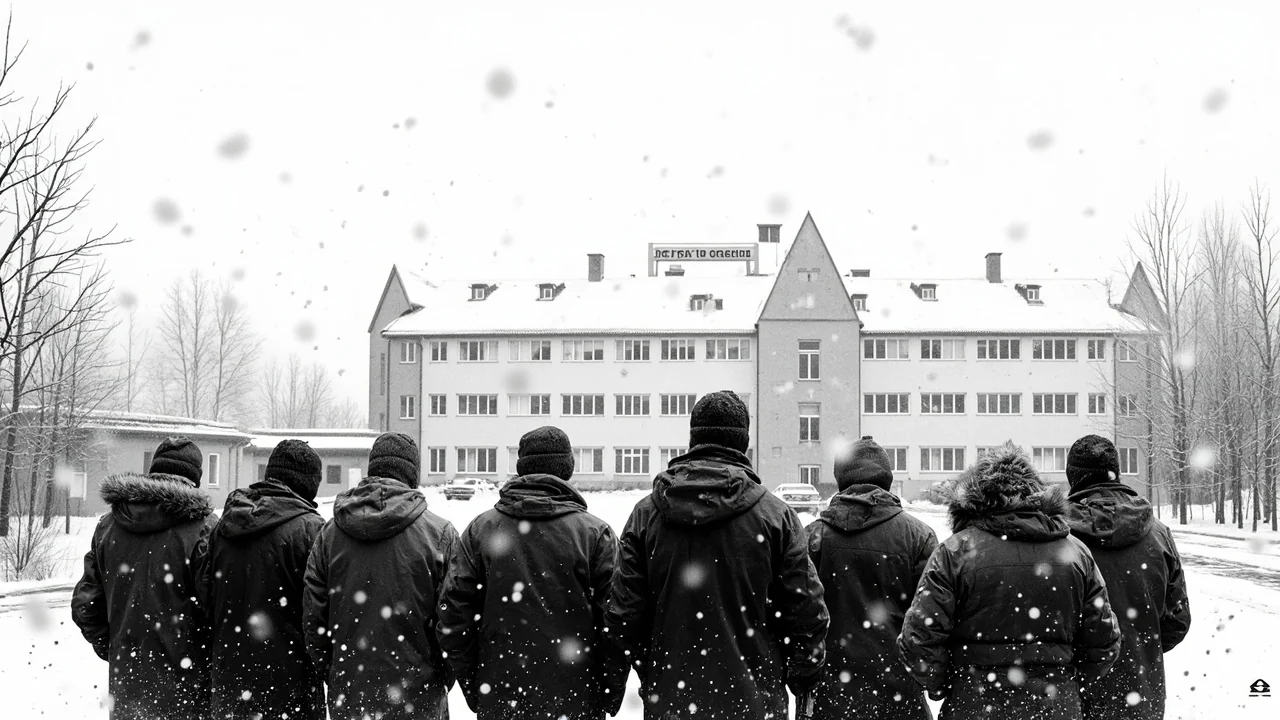
Sweden's Sahlgrenska University Hospital has cut pay for hundreds of staff who could not make it to work during February's historic snowstorm. The decision has ignited a fiery debate about employee treatment, workplace culture, and the moral responsibility of Sweden's largest employers. As healthcare workers battled impossible commutes to care for patients, management held digital meetings from home and later enforced strict clock-in rules.
"The staff are fighting to get to work to care for the patients," one employee wrote in a message seen by Nordics Today. "Meanwhile, management sits at home in digital meetings with their colleagues and decides the employees will only get paid for the time they are at their workplace." This sentiment echoes across wards, where many see the move as a betrayal of the collective spirit that defines Swedish work life.
A Perfect Storm of Frustration
The snowfall in early February was exceptional, even for Sweden. Gothenburg, where Sahlgrenska is located, was brought to a near standstill. Public transport faltered, roads became impassable, and for the hospital's thousands of employees, the simple act of getting to work became a heroic effort. Nurses, orderlies, and assistant nurses shared stories of hour-long treks on foot, begging neighbors for tractor rides, and sleeping at the hospital to ensure they could work their next shift. Against this backdrop, the announcement of pay deductions for lateness or absence felt, to many, like a cold administrative calculation ignoring human reality.
Madelene Johansson, a director at Sahlgrenska, stated the hospital is following existing legislation and agreements. "We apply the rules that exist," she said in an email statement. This technical correctness is at the heart of the conflict. The Swedish Association of Health Professionals (Vårdförbundet) confirms the hospital is likely within its legal rights. However, the union sharply criticizes the decision as "morally questionable" to penalize care staff in an extraordinary situation beyond their control.
The Gap Between Rule and Principle
This incident highlights a growing tension in Swedish society between formal rules and informal social contracts. The principle of lagom—moderation and fairness—and a deep-seated trust between employer and employee are cornerstones of the Swedish model. For many, the hospital's actions represent a departure from this, prioritizing rigid policy over mutual responsibility. "It's about decency," a nurse from the Högsbo neighborhood told me. "We give so much, especially during crises like the pandemic and this storm. To then have kronor clawed back because a bus couldn't get through the snow... it breaks something."
Analysts point to a wider trend of increasing formalization in large Swedish organizations. "There is a risk that an over-reliance on digital systems and strict rulebooks erodes the human-centric leadership Sweden is known for," says Olof Bergström, a workplace culture expert based in Stockholm. "When management is physically removed from the operational reality—working digitally from home during a crisis—it becomes easier to make decisions that are legally sound but culturally tone-deaf."
A Test for Swedish 'Folkhemmet'
The concept of folkhemmet, or "the people's home," where society functions as a supportive family, still resonates in Swedish welfare institutions. A state-funded hospital like Sahlgrenska is seen as a pillar of this ideal. Its handling of this situation is therefore seen as a bellwether. Will the welfare state's internal culture protect its carers, or will it adopt a more transactional, corporate stance? The union's use of "morally questionable" is a direct appeal to this shared societal ethos. It frames the issue not as a labor dispute, but as a failure of collective care.
Conversations with staff reveal a sense of exhaustion that goes beyond this single event. The post-pandemic period has left healthcare workers feeling undervalued despite public applause. This pay dispute, over what might be a relatively small sum for the institution, feels symbolic. It's interpreted as a message: your extraordinary effort is noted, but not honored. The administrative machinery, they feel, is indifferent.
Looking Beyond the Snow
The fallout continues. While the immediate snow has melted, the resentment has not. Union representatives are discussing the matter further with hospital management, not necessarily to reverse this decision, but to establish clearer, more humane guidelines for future extreme weather events. The goal is to prevent a repeat scenario where employees must choose between a perilous commute or losing a day's pay.
This story is fundamentally about trust. Sweden's high-functioning society is built on a high level of trust between citizens, employees, employers, and the state. Incidents like this can subtly erode that foundation. As climate change makes extreme weather more frequent, the question of how Swedish workplaces adapt becomes urgent. Will they offer flexibility and understanding, or will paychecks become contingent on the weather forecast? For the healthcare workers at Sahlgrenska, and for observers of Swedish society, the answer will define what kind of workplace culture survives the storm.
Ultimately, the Sahlgrenska case poses a challenging question for Sweden: In the pursuit of efficiency and legal compliance, is it losing sight of the human compassion that makes its system worth preserving in the first place? The way this conflict is resolved will send a clear signal to every nurse, teacher, and civil servant about their value in the new Swedish economy.