
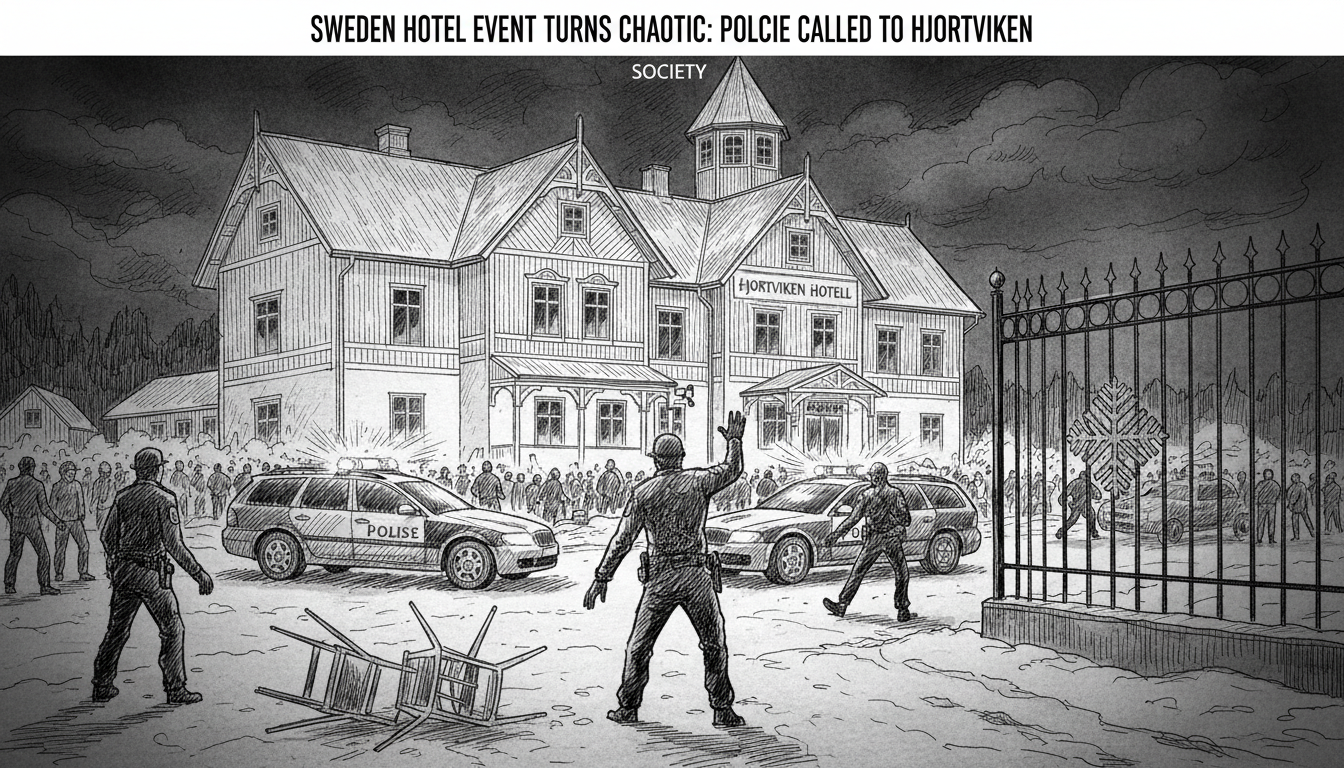
Sweden's Hjortviken Country Club required police intervention late Thursday evening after a private event descended into chaos. The incident, involving a heated verbal altercation and vandalism at the bar, highlights the fine line between celebration and disruption in Sweden's hospitality sector. It raises questions about event security and the social pressures that can surface during gatherings in the country's popular conference venues.
A Peaceful Evening Turns Sour
Located in Hindås, roughly 30 kilometers east of Gothenburg, Hjortviken Country Club typically hosts weddings, corporate conferences, and private parties. The venue is part of the bustling Västra Götaland region, a key economic area where business and leisure often mix. Last Thursday night, what began as a standard event took an unexpected turn. According to Göran Carlbom, the police duty officer for the region, the situation escalated beyond the control of on-site security. "It was a party or some form of conference that got out of hand there," Carlbom explained. "It was a bit too chaotic for a single security guard to handle alone, so we were called to the scene."
The core of the incident was a loud, multi-person verbal argument. Tensions reportedly boiled over, leading to acts of vandalism within the bar area. The police response culminated in the removal of one individual from the premises. A formal report was filed for the property damage. Marcus Martinsson, the commercial manager at Hjortviken Country Club, confirmed the incident via email but declined to provide further details about the nature of the event or the guests involved.
The Ripple Effect on Sweden's Event Culture
This disturbance at a well-known venue is more than a local police blotter entry. It touches on broader themes within Swedish society and its celebrated culture of hosting. Sweden prides itself on orderly social functions, from midsummer celebrations to corporate retreats. Incidents like this, while isolated, can cast a shadow. They challenge the perception of Sweden as a place where events always proceed with a sense of calm and collective responsibility, or 'lagom'.
Experts in Swedish hospitality management point to several critical factors. "Every venue, regardless of its prestige, must have a clear security protocol that scales with the size and nature of the event," says Elin Strömberg, an event safety consultant based in Stockholm. "A single security guard for a large party is rarely sufficient. It's about risk assessment and having the resources to de-escalate situations before police involvement becomes necessary." She also emphasizes the role of responsible alcohol service, a cornerstone of Swedish licensing laws, in maintaining a safe environment.
Reputation at Stake for Swedish Venues
The potential for reputational damage is significant. In an age of online reviews and instant social media sharing, news of a police call-out can spread quickly. For a venue like Hjortviken, which likely relies on word-of-mouth and repeat business from corporate clients and families planning weddings, maintaining a spotless record is crucial. A single incident can make future clients think twice. "Trust is the currency of the events industry," Strömberg adds. "Clients need to know their guests will be safe and that the venue can manage any situation professionally. A public disturbance undermines that trust instantly."
This incident also reflects a subtle tension in modern Swedish social life. As the country becomes increasingly diverse and social norms evolve, gatherings can sometimes become flashpoints. Whether it's a high-stakes corporate event, a tense family celebration, or a party where alcohol flows freely, the potential for conflict exists. The challenge for venues is to create an atmosphere where joy is encouraged, but boundaries are firmly and visibly in place.
Looking Beyond the Bar Fight
While the police focused on the verbal altercation and vandalism, the story invites us to consider the human elements often hidden behind such reports. What sparked the argument? Was it a personal grievance, business-related tension, or simply too much drink? The individual removed from the venue faced not only embarrassment but potential legal consequences for property damage. For the staff at Hjortviken, the night shifted from service to crisis management, likely ending in a lengthy cleanup and paperwork.
For the local community in Hindås and the wider Gothenburg area, this serves as a reminder that idyllic country settings are not immune to urban-style disruptions. It blurs the line between the peaceful Swedish countryside and the dynamics of the nearby city. The response from local police was swift, demonstrating the coordinated service expected across Sweden, but the very need for that response is what makes the event noteworthy.
A Call for Preparedness, Not Alarm
This incident should not be seen as a sign of declining standards in Swedish hotels or a wave of disorder. Instead, it is a case study in preparedness. It underscores the importance of investing in trained security personnel, not just as a cost, but as an essential part of customer service and venue integrity. For event planners and companies booking conferences across Sweden, it's a prompt to ask venues about their security plans and staff-to-guest ratios.
As Sweden continues to be a premier destination for international conferences and a vibrant locale for local celebrations, the balance between freedom and control at events remains key. The goal is to ensure that the only thing spiraling out of control at a Swedish country club is laughter and good times, not the evening itself. The true test for Hjortviken Country Club and similar venues will be how they learn from this Thursday night, reinforcing their protocols to ensure that their next event is remembered only for the right reasons.