
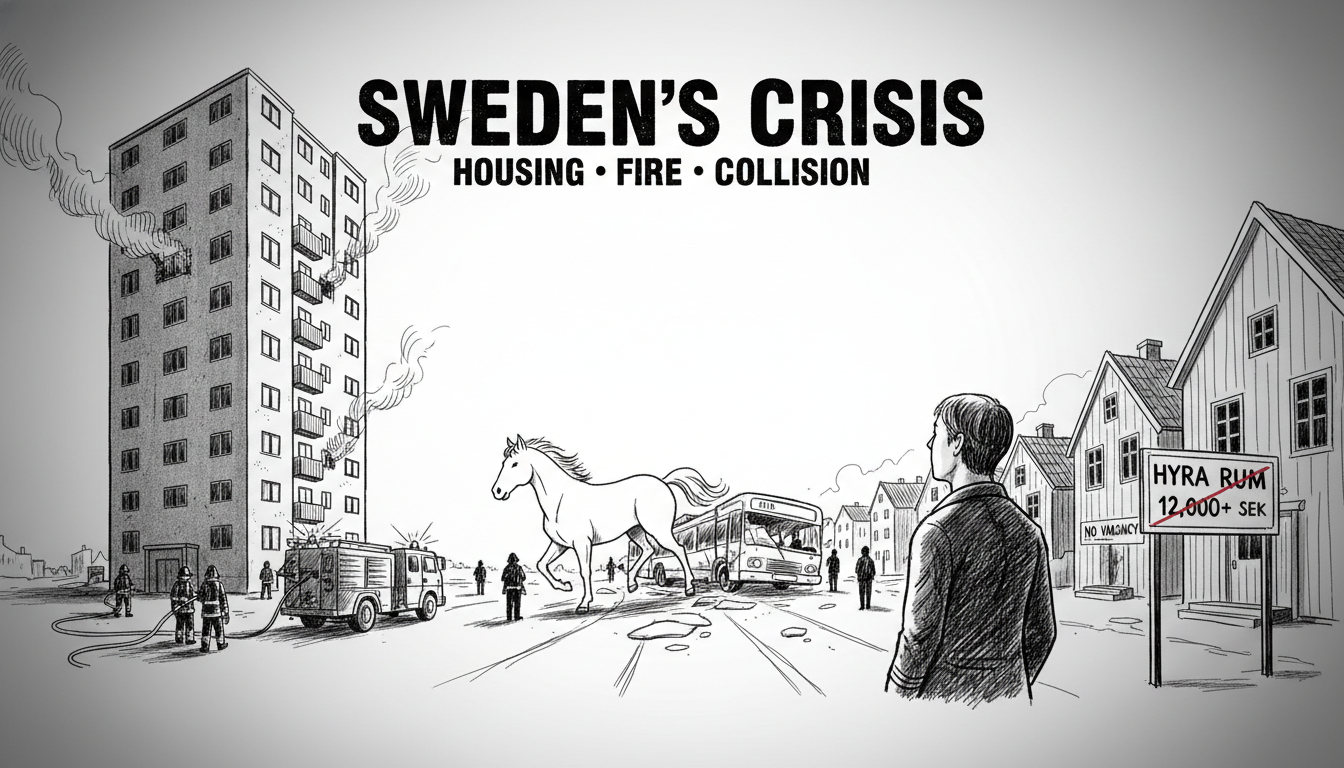
A young woman named Rachel pays over 12,000 Swedish kronor monthly for a single room in a two-bedroom apartment. This rental situation highlights Sweden's deepening housing crisis. Rental prices in major urban areas continue to climb beyond what many residents can afford. The housing shortage affects students, young professionals, and low-income families most severely. Many Swedes now spend over half their income on housing costs. This creates financial strain and limits mobility for workers. The situation appears particularly acute in southern Sweden where demand outpaces supply.
Emergency services responded to an apartment fire in Malmö that required hospital transport. The blaze damaged multiple units in the residential building. Firefighters contained the flames before they could spread to adjacent structures. No serious injuries were reported among residents. The incident raises questions about building safety standards in older Swedish apartment blocks. Fire safety has become a growing concern as construction costs rise and maintenance budgets shrink. Many municipalities struggle to enforce regular safety inspections.
A horse died after colliding with a bus on the E22 highway near Hörby. The bus driver sustained injuries in the accident. Emergency crews closed sections of the highway during the response. The incident occurred during morning hours when traffic typically flows heavily. Animal collisions present ongoing challenges on Swedish rural highways. This marks the third large animal accident in Skåne county this season. Highway authorities face increasing pressure to improve wildlife fencing and warning systems.
Why does Sweden's housing market remain so tight despite government interventions? Rental regulations intended to protect tenants sometimes limit new construction. Municipal zoning processes often delay projects for years. Meanwhile, population growth in urban centers continues unabated. The housing shortage affects economic development as companies struggle to attract workers who cannot find affordable homes. Some experts suggest Sweden needs to reform its rental system while maintaining tenant protections.
The consecutive emergency incidents in southern Sweden reveal strain on public services. Fire departments face staffing challenges while handling increased call volumes. Highway maintenance crews work with limited resources despite growing traffic. These events occur as municipalities debate budget priorities for the coming year. Public safety officials warn that stretched resources could mean longer response times during major incidents.
What happens next with Sweden's housing situation? Market analysts predict continued price pressure in major cities. Some suggest the government may need to intervene more directly in the rental market. Others argue for removing construction barriers to increase supply. The debate continues as more Swedes find themselves priced out of the housing market entirely.