
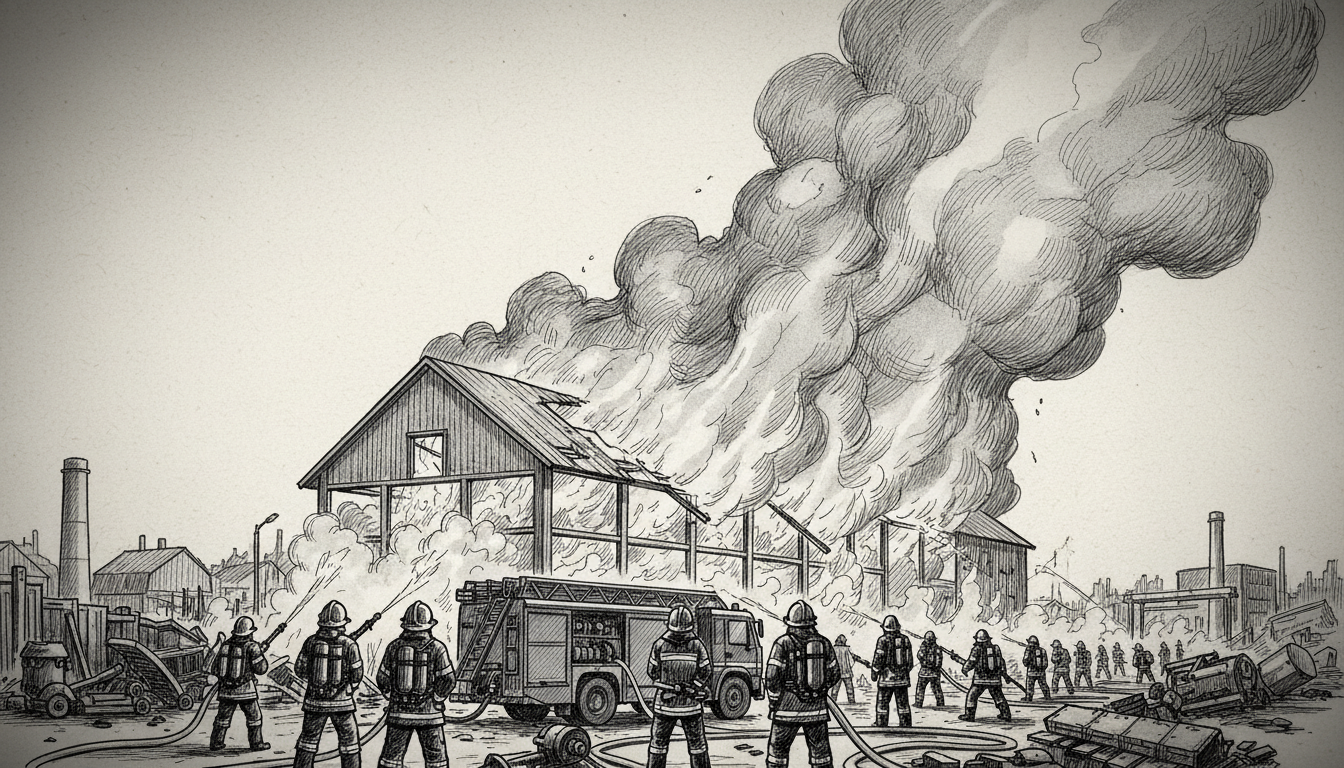
Sweden fire crews are battling a major industrial blaze in Täby, north of Stockholm, with 40 firefighters on scene working to prevent the flames from spreading. The fire, described as fully developed, is not yet under control according to the rescue service. Thick plumes of smoke were visible across the affluent northern suburbs on Tuesday, drawing concerned residents to their windows and balconies.
"We have 40 personnel on site and the fire is not under control," said Göran Norman, a command operator with the rescue service. The operation is focused on containment, aiming to stop the fire from spreading within the industrial building and to nearby structures. The specific cause of the fire and the type of business affected were not immediately released by authorities.
A Suburban Hub Facing an Urban Challenge
Täby presents a unique setting for such an incident. It's a municipality often associated with spacious villas, high-end shopping at Täby Centrum, and green spaces. Yet, like many Stockholm suburbs, it contains carefully zoned industrial areas that support local businesses and services. A fire here challenges the stereotype of a quiet, purely residential community. It thrusts the reality of industrial risk into a neighborhood context.
"Industrial fires in suburban areas create a complex dynamic," explains Lars Bengtsson, a retired fire safety engineer I spoke to. "You have the immediate dangers of the fire itself, but also secondary concerns. Smoke drift over residential areas, potential traffic disruption on key commuter routes, and questions about what materials are stored on site. The response has to consider all these layers."
This incident echoes concerns raised after other industrial fires in the Stockholm region in recent years. Each event sparks a renewed public conversation about safety protocols, zoning regulations, and emergency preparedness in areas where homes and industry exist in close proximity.
The Tactical Battle Against the Flames
The statement from the rescue service that the fire is "not under control" indicates a significant and active incident. Deploying 40 firefighters suggests a major operation, likely involving multiple engines, ladder trucks, and specialized equipment. The priority, as stated, is preventing spread—a tactic that often involves creating firebreaks, aggressively cooling adjacent structures, and managing water supply in areas not always designed for large-scale firefighting.
Industrial buildings can be particularly treacherous. They may contain flammable liquids, chemicals, or gases. Their layouts can be vast and labyrinthine, hiding the fire's true seat and creating pockets of intense heat. Roof fires, as indicated in the initial report, are especially dangerous as they can weaken structural integrity rapidly. Firefighters must balance aggressive attack with caution for their own safety.
Local resident Elin Karlsson, who lives several blocks away, described the scene to me. "First I just noticed this incredible smell, like strong burning plastic. Then I went out on the balcony and saw this huge, dark column of smoke rising. It's unsettling. You don't expect this here," she said. Her sentiment reflects the jarring nature of such an event in a community not accustomed to industrial emergencies.
Community Impact and Safety Reflections
Beyond the immediate danger, fires like this have a ripple effect. Roads around the industrial zone are likely closed, disrupting local traffic. Businesses in adjacent units face potential damage from smoke, water, or the fire itself. Employees of the affected business face an uncertain immediate future. For the broader community, it serves as a stark reminder of the infrastructure that supports their daily lives.
Sweden has stringent fire safety codes, particularly for industrial and commercial properties. These include requirements for fire alarms, sprinkler systems, compartmentalization of spaces to slow fire spread, and clear evacuation plans. The investigation that will follow this blaze will scrutinize whether all such measures were in place and functional. It will also look at the nature of the materials stored inside, which can dramatically alter a fire's behavior.
"Prevention is always the first line of defense," Bengtsson, the fire safety engineer, emphasizes. "Regular inspections, proper storage protocols for hazardous materials, and employee training are non-negotiable. When a fire does start, the building's design and installed systems buy crucial time for occupants to escape and for firefighters to respond."
Looking Ahead: Investigation and Recovery
Once the final embers are extinguished, the process of investigation and recovery begins. Fire investigators will work meticulously to determine the point of origin and the cause. This process can take days or weeks. The property owner and insurance companies will assess the structural and financial damage. For a small or medium-sized enterprise, a fire like this can be an existential threat, wiping out inventory, equipment, and workspace in one catastrophic event.
The community of Täby will also reflect. Local politicians may face questions about industrial zoning and safety oversight. Residents may inquire about community alert systems for such incidents. It becomes a moment for collective learning and potentially for strengthening local resilience protocols.
As of now, the focus remains on the firefighters working at the scene. Their goal is to bring a dangerous, unpredictable situation to a safe conclusion with no injuries to the public or to themselves. The sight of smoke over Täby is a powerful reminder that safety is a shared responsibility, woven into the fabric of building codes, business practices, and emergency response. The coming days will reveal the full story of this fire, but its initial lesson is clear: vigilance is a permanent necessity, even in the most tranquil of suburbs.
Will this event lead to a broader review of industrial safety in Stockholm's suburban municipalities? Only time will tell. For tonight, the hope across Täby is for a favorable wind, skilled firefighters, and a swift end to the danger.