
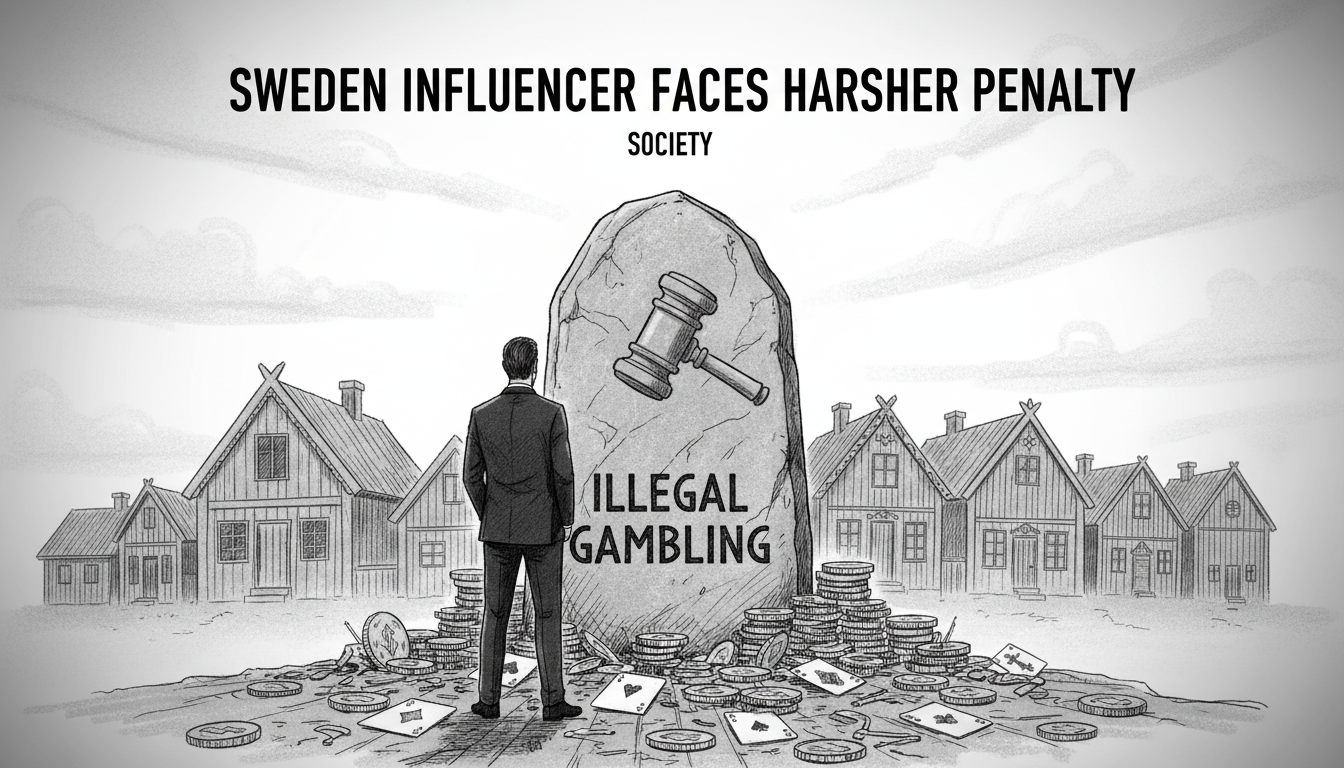
Sweden's legal system is preparing to review the case of a prominent influencer convicted of serious financial crimes, including promoting illegal gambling. The potential for a harsher sentence on appeal sends a clear message about the consequences of flouting the country's strict gambling regulations. For Christofer Lundström, known online as 'Chrippa', a recent conviction is not the end of the story. The Linköping District Court sentenced him to prison, but the Court of Appeal may now increase that penalty. This case sits at the intersection of Sweden's evolving digital culture and its rigid legal framework for gambling.
It is a story about fame, finance, and the significant responsibility carried by those with large online audiences. Lundström built a massive following on YouTube, becoming one of the most discussed Swedish-language personalities on the platform. His content, lifestyle, and opinions reached hundreds of thousands of viewers, primarily young people. This influence is now central to his legal troubles, transforming his online persona from entertainer to convicted criminal.
The Charges and The Conviction
The Linköping District Court found Lundström guilty of multiple aggravated financial crimes. The most notable charge was for the aggravated promotion of illegal gambling. In Sweden, gambling is a tightly controlled activity. The state-owned company Svenska Spel long held a monopoly, and while the online market has opened to licensed international operators, the rules remain strict. Promoting unlicensed gambling operations is a serious offense. The court determined that Lundström used his substantial platform to direct his followers to these illegal services, bypassing the regulated system designed to protect consumers.
His other convictions involve a range of serious financial crimes, painting a picture of systematic fraud. The details of these crimes, while not fully public, contributed to the court's decision to impose a prison sentence. This legal outcome marks a dramatic fall for a figure who once commanded attention and admiration in the digital sphere. It also reflects a growing trend of Swedish authorities scrutinizing the business activities of high-profile online personalities.
A Culture of Influence Under Scrutiny
The 'influencer' model is deeply embedded in Swedish youth culture, particularly in Stockholm's trendy neighborhoods like Södermalm and Östermalm. Brands collaborate with these digital creators to reach coveted demographics. However, Lundström's case highlights the dark side of this ecosystem. When influence is monetized without regard for legal boundaries, the consequences can be severe. A popular podcast series previously examined his activities, coining the term 'Badfluence' to describe the negative impact of such behavior.
Furthermore, a major documentary series featured Lundström in an episode titled 'Hatet' (The Hate), exploring online hostility and its real-world effects. This media attention underscores how his public persona was already associated with controversy. The transition from controversial figure to convicted felon, however, is a significant leap. It forces a conversation about ethics in digital marketing. Where is the line between aggressive promotion and illegal activity? This case suggests Swedish courts are willing to draw that line firmly.
The Stakes of Promoting Illegal Gambling
Sweden's approach to gambling is rooted in a philosophy of harm reduction. The regulated system, with licensed operators, includes strict rules on advertising, mandatory spending limits, and support for problem gambling. By promoting unlicensed sites, influencers like Lundström undermine this entire protective structure. These offshore sites often lack the required consumer safeguards, leaving young and impressionable followers vulnerable to exploitation and significant financial loss.
Legal experts point out that the 'aggravated' classification of this crime is crucial. It indicates the promotion was conducted systematically and on a large scale, leveraging his considerable audience. The potential for the Court of Appeal to increase his sentence is a warning to the entire influencer industry. The Swedish state is signaling that treating illegal gambling promotion as a minor marketing misstep is a grave miscalculation. It is being treated as a serious financial crime with real victims.
The Human Impact Beyond the Headline
While the defendant is a public figure, this case is about more than one influencer's downfall. It affects the thousands of followers who may have engaged with the promoted gambling services. Problem gambling is a serious social issue in Sweden, as it is across the Nordic region. Family tragedies and personal bankruptcies can stem from addiction. By channeling his audience toward unregulated platforms, the illegal promotion potentially exacerbated these risks for countless individuals.
The case also impacts the legitimate Swedish gambling and advertising industries. It creates an atmosphere of distrust around influencer partnerships. Responsible brands and licensed gambling operators must now work harder to distance themselves from this kind of scandal. For content creators, it's a stark lesson in due diligence. Accepting sponsorship requires understanding the product and its legal status. 'I didn't know' is unlikely to be a successful defense in a Swedish court.
What a Harsher Sentence Would Signal
The original prison sentence from the district court was a strong statement. If the Court of Appeal decides to sharpen the penalty, the message becomes unequivocal. It would confirm that the Swedish judiciary views the misuse of digital influence for serious financial crime as a top-tier offense. This could set a precedent for future cases involving other influencers or online personalities who dabble in the gray areas of finance and promotion.
It also aligns with a broader societal shift. The initial, often permissive, era of social media fame is giving way to a period of accountability. From tax evasion to fraudulent endorsements, authorities are catching up with the digital economy. Sweden, with its high digital penetration and strong rule of law, is at the forefront of this reckoning. The outcome of this appeal will be closely watched by content creators, media lawyers, and marketing agencies across the country.
A Look at the Road Ahead
The case now moves to a higher judicial level, where arguments will be refined and the original judgment scrutinized. Lundström's defense will likely challenge the severity of the charges and the characterization of his actions. The prosecution will argue for the societal need for a deterrent penalty. This legal back-and-forth will unfold away from the YouTube lights and podcast microphones, in the formal setting of the Court of Appeal.
For the public, and especially for young Swedes, this saga is a real-time education in media literacy and legal responsibility. It demonstrates that online actions have offline consequences. The glamorous facade of influencer wealth can hide significant risk. As Sweden continues to navigate its relationship with global digital trends and its own protective social policies, cases like this become critical landmarks. They define the limits of acceptable behavior in the public square of the internet. The final judgment from the Court of Appeal won't just determine one man's future; it will help shape the boundaries of Sweden's digital marketplace for years to come.