
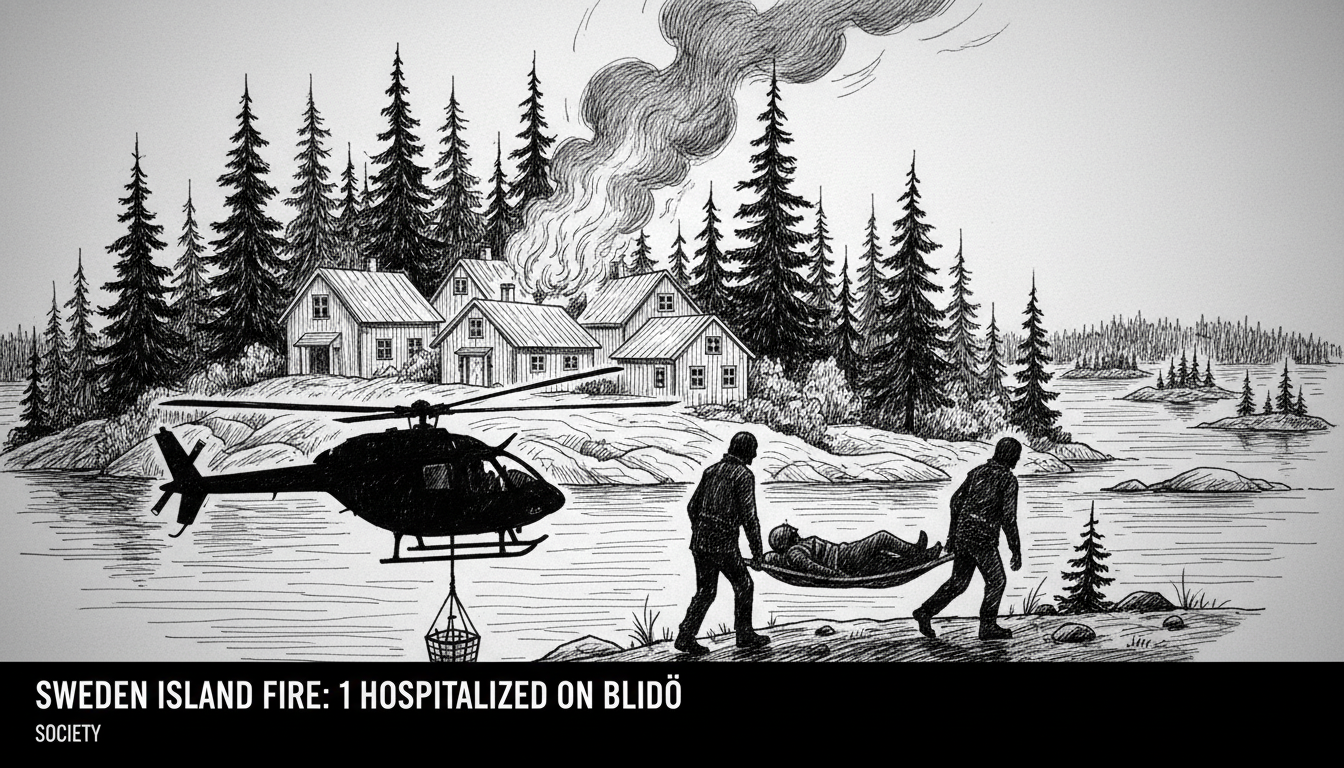
Sweden's beloved Stockholm archipelago faces a stark safety reminder after a dramatic villa fire on Monday left one person hospitalized. Firefighters performed a daring rescue, pulling a victim from the burning home on Blidö island as flames completely engulfed the wooden structure.
A Distant Island, A Sudden Emergency
The call came in just before 5 PM on a quiet Monday afternoon. For residents of Blidö, an island in Norrtälje municipality about 70 kilometers northeast of Stockholm, the sight of smoke and the sound of sirens disrupt the typical late-summer calm. The villa was already fully ablaze when the first responders arrived. Their immediate priority shifted from saving the property to saving a life. Firefighters, acting as smoke divers, entered the dangerous conditions and successfully rescued one person from inside the home. That individual was rushed to a hospital for treatment, the full extent of their injuries unknown.
“It’s every archipelago dweller’s nightmare,” said Erik Lundström, a year-round resident of a neighboring island who witnessed the response. “You’re surrounded by water, but the threat of fire feels more isolating than ever. You’re acutely aware that help is coming by boat, not by road.” The rescue operation highlights the immense challenges faced by emergency services in this unique landscape.
The Unique Fire Risks of Archipelago Life
The Stockholm archipelago, with its roughly 30,000 islands and islets, is a summer paradise for thousands of Swedes. Charming red wooden cottages and larger villas dot the rocky shores. Yet this idyllic setting conceals specific dangers. Many homes are classic timber constructions, often decades old, situated on islands with narrow, winding roads or no vehicle access at all. Water supply can be limited to a single household well, and the nearest full-time fire station may be a lengthy boat ride away.
“Fires in remote locations like this escalate quickly,” explained fire safety consultant Lars Pettersson, who has studied rural fire response. “Response times are longer, and initial attack resources are often what’s available locally. The focus becomes life safety and containment, as protecting the structure is frequently not possible by the time crews arrive.” The Blidö fire required a significant mobilization of resources. External firefighting efforts only began at 6:30 PM, over an hour and a half after the initial alarm, and were expected to continue for many hours into the night to fully extinguish the blaze and prevent reignition.
This incident is not isolated. Every summer, several significant fires occur in the archipelago, often linked to electrical faults in older wiring, unattended fireplaces, or barbecues. The seasonal population surge, with part-time residents opening up summer homes, can also lead to oversight. Many people arrive, turn on power that has been dormant for months, and may not have updated their smoke alarms or fire extinguishers.
Community and Culture in the Face of Crisis
Beyond the logistics, such events cut to the heart of Swedish cultural identity. The sommarstuga (summer cottage) is a sacred institution, representing a deep connection to nature, simplicity, and family tradition. A loss like this is profoundly personal, erasing not just a building but a repository of memories and a generations-old retreat. The community on islands like Blidö is tightly knit, especially among year-round residents who number only a few hundred. They rely on each other, forming local volunteer räddningstjänst (rescue service) groups that are often first on the scene.
“There’s an unspoken pact here,” said Anette Bergman, who runs a small guesthouse on Blidö. “When the alarm sounds, everyone who can help, does. People grab their own portable pumps, form water chains, or prepare to guide the professional crews. You feel a shared vulnerability, but also a shared responsibility.” This community spirit is a cornerstone of life outside the urban centers, a modern echo of the byalag (village covenant) that historically governed rural Swedish life.
A Look Ahead: Safety in a Seasonal Landscape
The fire on Blidö will inevitably reignite conversations about safety standards and preparedness in remote areas. Experts advocate for several measures: mandatory modern smoke and heat alarms with long-life batteries, accessible external water sources for firefighting, and clear marking of properties for emergency access. Some municipalities have initiated subsidy programs for homeowners to install sprinkler systems or update electrical panels.
For the thousands of Stockholmers and international visitors who cherish the archipelago, this event is a somber pause. It underscores the delicate balance between enjoying unspoiled nature and managing the risks that come with remoteness. As the investigation into the cause of the Blidö fire begins, the community will start the process of supporting those affected. The physical recovery will be slow, involving insurers and builders who must navigate the same logistical hurdles. The emotional recovery, tied to the loss of a personal sanctuary, will take longer.
This fire leaves a scar on the landscape of Blidö and a question for all who treasure the archipelago lifestyle: In our pursuit of peaceful retreat, have we done enough to protect it? The charred remains of one villa stand as a stark reminder that paradise requires careful guardianship, not just appreciation.