
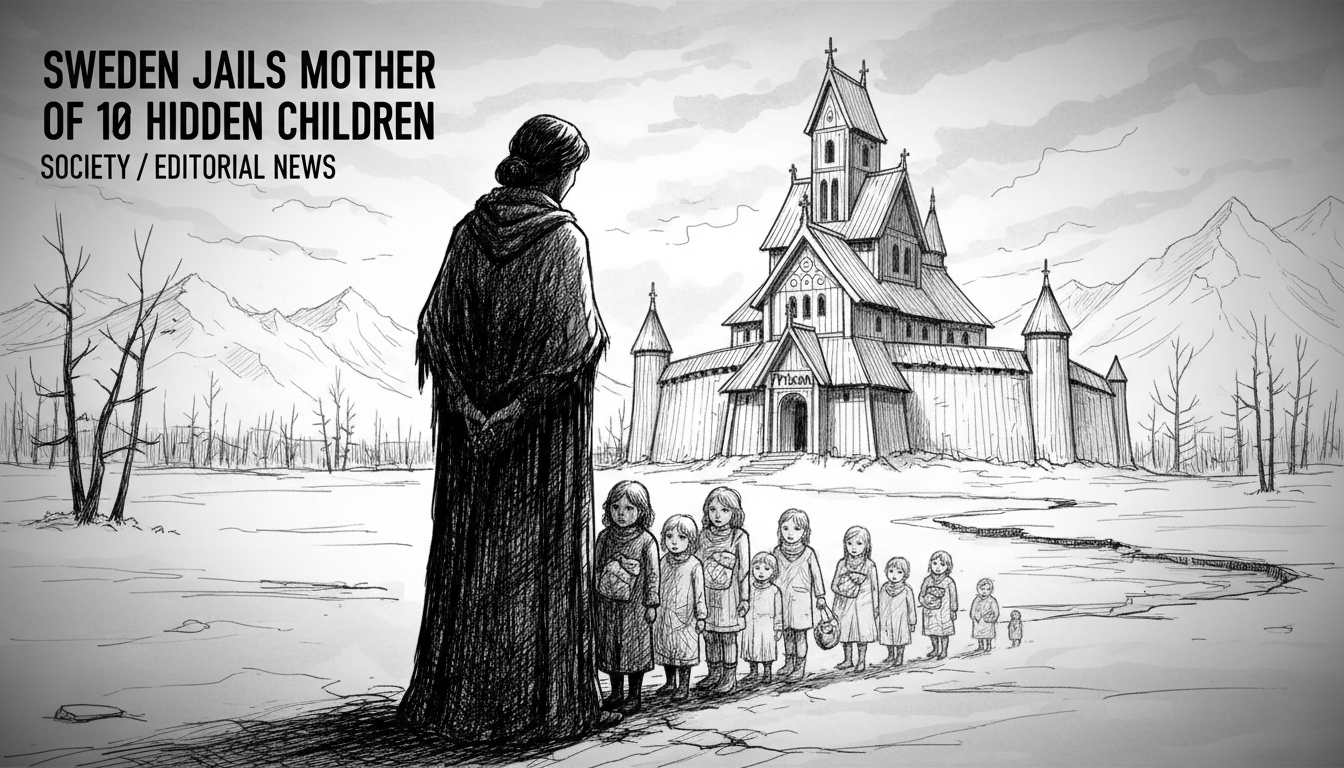
Sweden's shocking child abuse case reveals ten siblings hidden from authorities with GPS trackers in their clothes. Their escape on a freezing night in Mellerud has led to both parents being imprisoned. A Swedish appeals court has now convicted the children's mother, overturning her earlier acquittal and delivering a landmark ruling on parental responsibility.
The three girls arrived at a stranger's door in the Mellerud countryside, thinly clad and shivering. That cold night shattered a years-long secret. Their plea for help exposed a hidden world of control and neglect. It ended with their father's conviction for serious crimes. Yet their mother initially walked free. That changed this week.
A Secret Life in Rural Sweden
Mellerud is a quiet municipality in Västra Götaland County. It's known for lakes and forests, not crime. The family lived isolated from community life. Neighbors saw little of the children. Authorities had no record of them. The parents actively concealed their ten children, and an additional child in their care, from all public systems. No schools. No doctors. No social services.
They used technology to enforce their control. GPS trackers were sewn into the children's clothing. This constant surveillance created an invisible prison. The children's existence was erased from official view. Their case is extreme but highlights a critical question. How can a welfare state like Sweden, with strong child protection laws, miss an entire family?
The Night Everything Changed
The breaking point came when courage overcame fear. Three sisters, whose ages have not been publicly disclosed, saw their chance. They fled their home, braving the harsh Swedish winter with inadequate clothing. Their destination was the nearest light, a house where they knocked and asked for help. The residents immediately contacted police and social services.
This act of desperation triggered a major intervention. All the children were placed into immediate protective custody. Investigators began piecing together a life of severe neglect and psychological abuse. The father stood accused as the primary perpetrator. The mother's role was less clear to the district court. They saw her as another victim under his control. The appeals court saw it differently.
The Legal Reversal and Its Meaning
Swedish law clearly states that both parents carry equal responsibility for a child's welfare. The Hovrätt, or Court of Appeal, applied this principle strictly. Judges found the mother, by her silence and participation, shared culpability for the children's suffering. Her acquittal was overturned. She was sentenced to imprisonment.
"This ruling reinforces a fundamental Swedish value," says legal analyst Erik Lundström, who has followed the case. "Parental responsibility is not passive. You cannot witness profound harm to your children and claim ignorance. The court has sent a clear message. Failing to protect is itself a crime." This legal interpretation moves beyond direct abuse. It tackles complicity through inaction.
Sweden's Child Protection Dilemma
Sweden prides itself on being a champion for children's rights. The Swedish Parental Code emphasizes the child's best interests as paramount. Social services have a mandate to investigate all concerns. Yet this system relies on visibility. Homeschooling is legal but regulated. Healthcare visits are standard. This family circumvented every checkpoint.
"The system is strong but not omniscient," explains Karin Vogt, a veteran social worker in Stockholm. "It requires some point of contact. These children were made invisible. It’s a terrifying scenario for any child protection professional." The case has sparked internal reviews. How can authorities better identify children who are completely off the grid? Some suggest strengthening coordination between municipal registers, schools, and healthcare.
The Children's Road Ahead
The focus now shifts to the victims. Eleven children have begun the long process of recovery. They are receiving specialized care from Sweden's social services. Their needs are immense. They must learn to trust adults, engage with society, and process their trauma. The state will provide therapy, education, and stable foster care.
Their story is not just a legal case. It's a human tragedy set against Sweden's image of social equality and safety. It happened not in a marginalized urban area but in the serene Swedish countryside. This dissonance is jarring for the national self-image.
A Cultural Reflection on Family and Freedom
Swedish culture traditionally holds a deep respect for family privacy. The principle of folkhemmet – the people's home – values a strong, supportive society. Yet it also trusts families to manage their own affairs. This case tests that balance. When does privacy become dangerous secrecy? How does a society founded on trust protect those hidden from view?
As the children rebuild their lives, the legal precedent is set. Parental responsibility in Sweden is an active duty to protect. Silence is not a defense. The Mellerud case will be studied for years. It is a grim reminder that darkness can exist even in one of the world's most enlightened societies. The final question remains: are there other invisible children waiting for their own cold night of courage?