
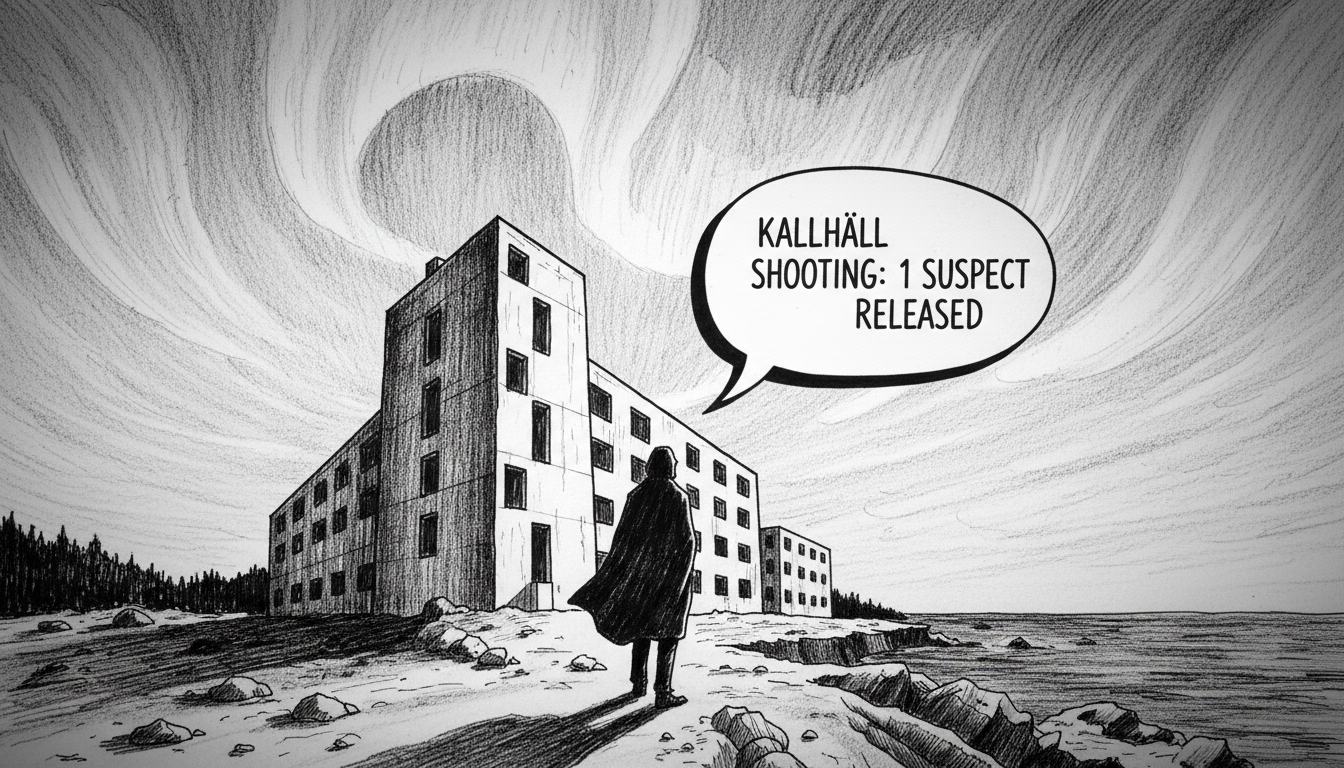
Sweden's latest shooting incident in Kallhäll has taken a paradoxical turn with the release of an 18-year-old suspect initially held for attempted murder. This development underscores persistent challenges in Stockholm's suburbs amid fluctuating gang violence rates. As a senior political correspondent, I analyze how this case reflects broader Swedish government strategies and Riksdag decisions on crime.
A Night of Violence in Järfälla
Gunfire erupted in Kallhäll, Järfälla, on Wednesday evening, December 10, 2025, just before 9 PM. Police received multiple alerts about a shooting in this Stockholm County municipality. A 21-year-old man sustained gunshot wounds and was rushed to hospital for treatment. Authorities have not specified the exact location of his injuries in recent reports. Emergency responders secured the scene while investigators began collecting evidence. The immediate police response included cordoning off areas near the bus terminal, causing temporary diversions for local bus lines 570 and 579.
Within hours, law enforcement executed a house search leading to the arrest of an 18-year-old male suspect. He was formally detained on suspicion of attempted murder related to the Kallhäll incident. This swift action appeared to follow standard protocols for serious violent crimes in Sweden. However, the case took an unexpected shift within a short timeframe.
Suspect Freed as Investigation Continues
Prosecutor Mattias Tarrodi confirmed the suspect's release in a statement to media outlets. "The person previously arrested is no longer deprived of liberty," Tarrodi said, without elaborating on specific evidentiary thresholds. This move suggests initial suspicions did not meet the probable cause requirements for continued detention under Swedish law. The release highlights the careful balance prosecutors must strike between public safety and legal safeguards.
Police maintain an active investigation into the shooting, with forensic teams examining the scene. No alternative suspects have been publicly identified following the 18-year-old's release. Community members in Kallhäll expressed mixed reactions, ranging from relief at cautious policing to concerns about unresolved violence. The incident disrupted normal life, with public transport adjustments affecting daily commutes through the Ragvaldsbovägen area.
Stockholm's Crime Landscape and Policy Responses
Gun violence in Stockholm County has remained a focal point for the Swedish government and Parliament. In 2023, Sweden recorded a decrease in lethal violence compared to peak years 2020-2022. However, gun-related homicides persist at levels exceeding European averages. Stockholm County experiences concentrated incidents in municipalities like Järfälla, despite overall crime rate fluctuations. This pattern demands continuous evaluation of government policy Sweden.
Justice Minister Gunnar Strömmer recently addressed Riksdag committees on enhanced sentencing frameworks for gun crimes. The Swedish Parliament approved additional funding for police surveillance in high-risk areas during autumn 2025 sessions. These Riksdag decisions aim to strengthen law enforcement capabilities following earlier gang violence surges. Policy number 2024/25:JU12 specifically allocates resources for forensic technology upgrades across Stockholm districts.
Government initiatives from Rosenbad, the executive seat, now emphasize coordinated efforts between social services and police. Interior Minister Lena Hallengren has championed community engagement programs in suburbs like Kallhäll. Yet, critics argue that legislative measures require more time to manifest tangible results on streets. The Kallhäll shooting tests these policies amid ongoing public scrutiny.
Expert Insights on Root Causes and Solutions
Criminologists point to interconnected factors driving Sweden's gang violence. Socio-economic disparities, gang rivalries over drug markets, and illegal firearm availability create complex challenges. Professor Eva Lindgren of Stockholm University notes, "Isolated arrests seldom address underlying networks. Effective strategies combine targeted policing with youth intervention programs." Her research indicates that areas with robust social infrastructure see lower recidivism rates.
Law enforcement strategies increasingly focus on intelligence-led operations to dismantle organized groups. The National Police Commissioner has advocated for expanded stop-and-search powers in designated zones. However, civil liberty advocates caution against measures that may erode community trust. This tension plays out in Stockholm politics as policymakers weigh security versus rights.
International comparisons show Sweden's gun homicide rate remains elevated within Scandinavia. Neighboring Norway and Finland implement stricter firearm controls alongside integrated social welfare systems. Swedish Parliament debates often reference these models when crafting domestic legislation. The government's proposed amendments to weapon laws face committee reviews in early 2026.
Community and Legal Implications Moving Forward
The Kallhäll case exemplifies routine criminal justice processes that sometimes escape public notice. Prosecutor discretion in releasing suspects ensures adherence to legal standards, but can fuel perceptions of inefficiency. Victims' rights organizations emphasize the need for transparent communication during investigations. The 21-year-old victim's condition remains undisclosed, highlighting privacy protections in Swedish law.
Local politicians in Järfälla municipality have called for increased patrols and youth center investments. These requests align with broader government policy Sweden directives on preventive measures. Stockholm county administrative boards oversee allocation of national funds to municipal projects. Recent Riksdag decisions mandate annual evaluations of such allocations for accountability.
As the investigation continues, law enforcement faces pressure to deliver results without compromising procedural integrity. The released suspect's status may change if new evidence emerges. Swedish legal framework allows for rearrest based on strengthened probable cause. This flexibility aims to balance investigative diligence with individual rights protections.
A Broader Perspective on Swedish Crime Trends
Sweden's approach to gang violence evolves through iterative policy adjustments. The Swedish government monitors crime statistics quarterly to inform tactical shifts. Parliament's Justice Committee holds regular hearings with police chiefs and researchers. These sessions shape legislation addressing weapon trafficking and youth recruitment into gangs.
Stockholm politics increasingly centers on suburban investment versus enforcement debates. Opposition parties propose alternative strategies focusing on economic opportunities in areas like Kallhäll. Government coalition members emphasize stricter penalties and border controls. This partisan dialogue reflects deeper societal divisions on security priorities.
International observers often cite Sweden as a case study in managing urban violence within welfare states. The Kallhäll incident offers a microcosm of these dynamics. Effective solutions require sustained commitment across political cycles and administrative levels. Community resilience remains crucial for long-term stability in Stockholm's neighborhoods.
Ultimately, the release of a shooting suspect in Kallhäll raises questions about evidentiary standards and public confidence. It also underscores the complexity of combating gun crime in modern Sweden. As policies unfold from Rosenbad and the Riksdag building, their real-world impact will be measured in communities across the country. The path forward demands nuanced approaches that address both immediate violence and its root causes.