
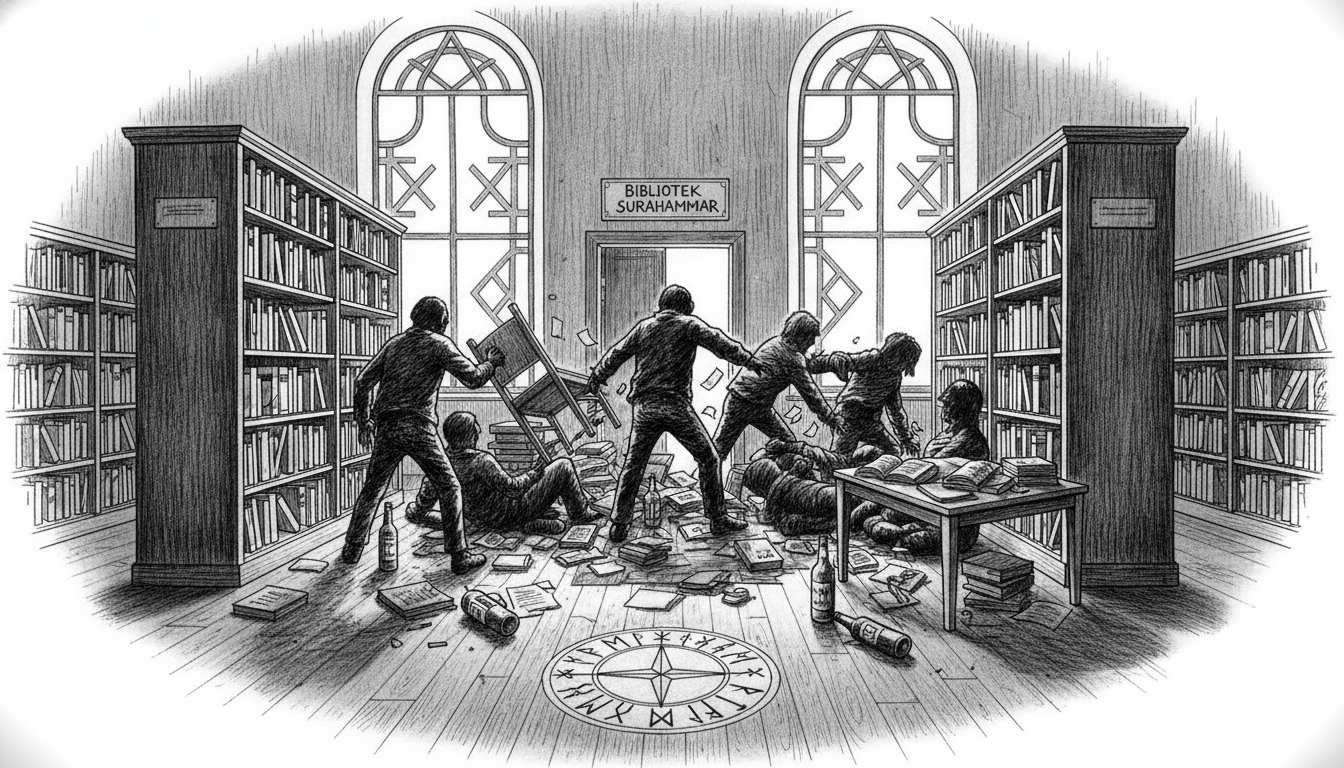
Sweden's public libraries, visited by 80% of the population annually, faced an unusual disruption this week. A quiet afternoon at the Surahammar library was shattered by a group of intoxicated individuals. The incident, which required police intervention around 1:30 PM, has sparked a local conversation about public spaces and social responsibility.
Police were called to the scene following reports of a brawl. Several drunk people were allegedly running amok, disturbing and harassing visitors. Officers managed the situation without making an arrest. One woman was voluntarily escorted from the premises. No formal police report was filed, a common outcome when Swedish police successfully de-escalate such disturbances.
A Sanctuary Disrupted
For regulars, the Surahammar library is more than a book repository. It's a community living room, a study hall for students, and a warm refuge during long winters. "It's always so peaceful here," says local resident, Anna Lundström, who was present that day. "You hear pages turning, not shouting. It was very unsettling." This sentiment echoes across Sweden, where libraries are deeply integrated into the social fabric. They are free, open, and designed to be inclusive for everyone, from toddlers at story time to elderly citizens reading newspapers.
The disturbance in this Västmanland County town stands in stark contrast to the library's normal function. Surahammar, with its industrial heritage in iron and metalwork, is a typical Swedish municipality where public institutions play a central role. The library is a cornerstone of that public life. Events like this are rare, which makes them particularly jarring when they occur.
Policing with a Light Touch
The police response reflects standard Swedish procedure for incidents involving public intoxication. The priority is de-escalation and voluntary compliance. Removing individuals from the situation without immediate arrest is often the goal. This approach aims to resolve conflicts without unnecessary criminalization, especially when no serious violence or property damage occurs.
"Our role is to restore order and ensure safety," a police spokesperson said in a statement regarding the Surahammar event. "When individuals cooperate, we can often resolve matters on the spot." Disturbing the peace in a public place is a crime in Sweden, potentially leading to fines. However, officers exercise significant discretion. The decision not to file a report in Surahammar suggests the situation was brought under control quickly.
Libraries as Social Barometers
Social policy experts see these isolated incidents as potential indicators of broader issues. "Libraries are some of our last truly universal public spaces," explains sociologist Dr. Erik Månsson. "They are open to all, without a requirement to consume. When disturbances happen, it's worth asking if we are failing some individuals in other parts of our social system." He points to support for substance abuse and mental health services as critical backstops that keep public spaces functional for everyone.
The incident isn't seen as a trend, but as a case study. Sweden's 1,359 public libraries overwhelmingly function as intended: as calm hubs of knowledge and community. Yet, their openness makes them vulnerable to the wider problems of society. They are not staffed or designed to be security-heavy environments. Their strength—being open and accessible—is also their point of fragility.
The Community Reaction in Surahammar
In the days following the event, the local reaction has been one of reflection rather than outrage. There is understanding that public institutions serve the entire community, including its most vulnerable. The discussion has leaned towards strengthening social support, not increasing library security. "We don't want bars or guards here," says head librarian, Klas Bergman. "We want to maintain a welcoming atmosphere. This was an unfortunate event, but our doors remain open to all.
The goal is to preserve the library's essence. This means continuing programs that serve as proactive social glue: Swedish language circles for immigrants, homework help for teens, and reading groups for seniors. These activities build community and integrate individuals, potentially preventing social isolation that can lead to public disturbances.
Looking Ahead: Balance and Accessibility
The Surahammar event is a reminder of the constant balance Swedish society seeks. It strives to maintain orderly, safe public spaces while upholding principles of openness and a strong social safety net. The library disturbance was a small tear in that fabric, quickly mended by police and a community used to solving problems collaboratively.
For now, the shelves in Surahammar are orderly again. The quiet has returned, punctuated by the soft sounds of community life. The incident will likely become a brief footnote, a topic for a staff meeting on protocol. But it also poses a quiet question for all of Sweden: How do we care for our public spaces and the people in them, especially those struggling? The answer, as always, will be found not in exclusion, but in the continued commitment to the inclusive ideals that built these community hubs in the first place. Can a library be both perfectly peaceful and truly open to everyone? Surahammar, and Sweden, continue to believe it must.