
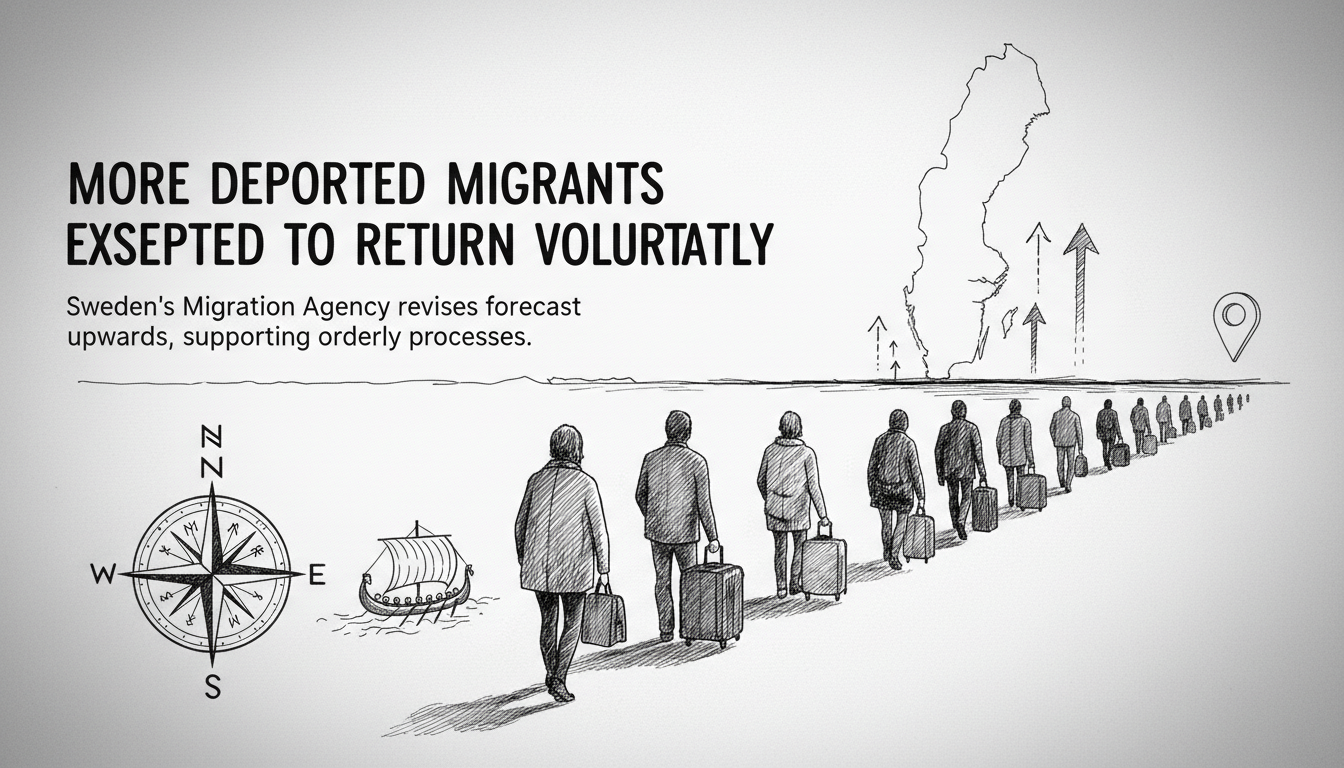
Sweden's Migration Agency reports more migrants are choosing voluntary return after receiving deportation orders. The agency has increased its forecast for voluntary returns this year from 8,800 to 9,500 people.
These figures include both asylum seekers and people who applied for other residence permits, such as work permits. The agency expects only 6,500 asylum seekers to come to Sweden this year, unchanged from previous estimates.
Maria Mindhammar, the agency's director-general, explained the importance of voluntary returns. "Our mission includes ensuring more people follow their deportation decisions and return home," she said in a statement. "This maintains the legitimacy of our regulated immigration system."
Sweden has maintained strict immigration policies in recent years. The country received record numbers of asylum seekers during the 2015 migration crisis. Since then, Swedish lawmakers have tightened immigration rules significantly.
Voluntary return programs typically offer financial assistance and reintegration support. This approach often proves more cost-effective than forced deportations. It also allows individuals to maintain better records for potential future legal migration.
Sweden's migration system operates independently from other Nordic countries. Each Scandinavian nation sets its own immigration policies. Denmark and Norway have also implemented stricter immigration controls in recent years.
International observers note that voluntary return rates often reflect conditions in countries of origin. Improving economic opportunities and security in home countries can influence migrants' decisions. Current global migration patterns show mixed trends across Europe.
The Swedish migration system processes thousands of cases annually. Applicants may seek protection for various reasons, including conflict, persecution, or family ties. Each case receives individual assessment according to Swedish and international law.
Migration remains a politically sensitive topic across Scandinavia. Center-right governments in Sweden and Denmark have prioritized immigration control. Meanwhile, Finland and Norway maintain their own distinct approaches to migration management.
What does this mean for Sweden's future immigration landscape? The increasing voluntary returns suggest the system's enforcement mechanisms are working as intended. Yet migration experts caution that global instability could quickly change these patterns.
Sweden's approach reflects broader European trends toward managed migration. The European Union continues to debate common asylum policy reforms. Member states balance humanitarian obligations with border control concerns.
Nordic countries generally maintain comprehensive welfare systems that depend on stable population planning. Migration levels directly impact social services, housing markets, and labor needs. These practical considerations influence policy decisions across the political spectrum.
Frequently Asked Questions
What is voluntary return?
Voluntary return occurs when migrants choose to go back to their home countries rather than face forced deportation. Sweden and other countries often provide financial assistance and reintegration support to encourage this option.
How does Sweden's migration system work?
Sweden processes asylum claims and residence permits through its Migration Agency. Applicants must meet specific criteria under Swedish law and international agreements. The system has become stricter since the 2015 migration crisis.
Why do migration numbers matter in Scandinavia?
Nordic countries have extensive welfare systems that require careful population planning. Migration levels affect housing, education, healthcare, and employment resources. Each Nordic country sets its own immigration policies while cooperating on border security.