
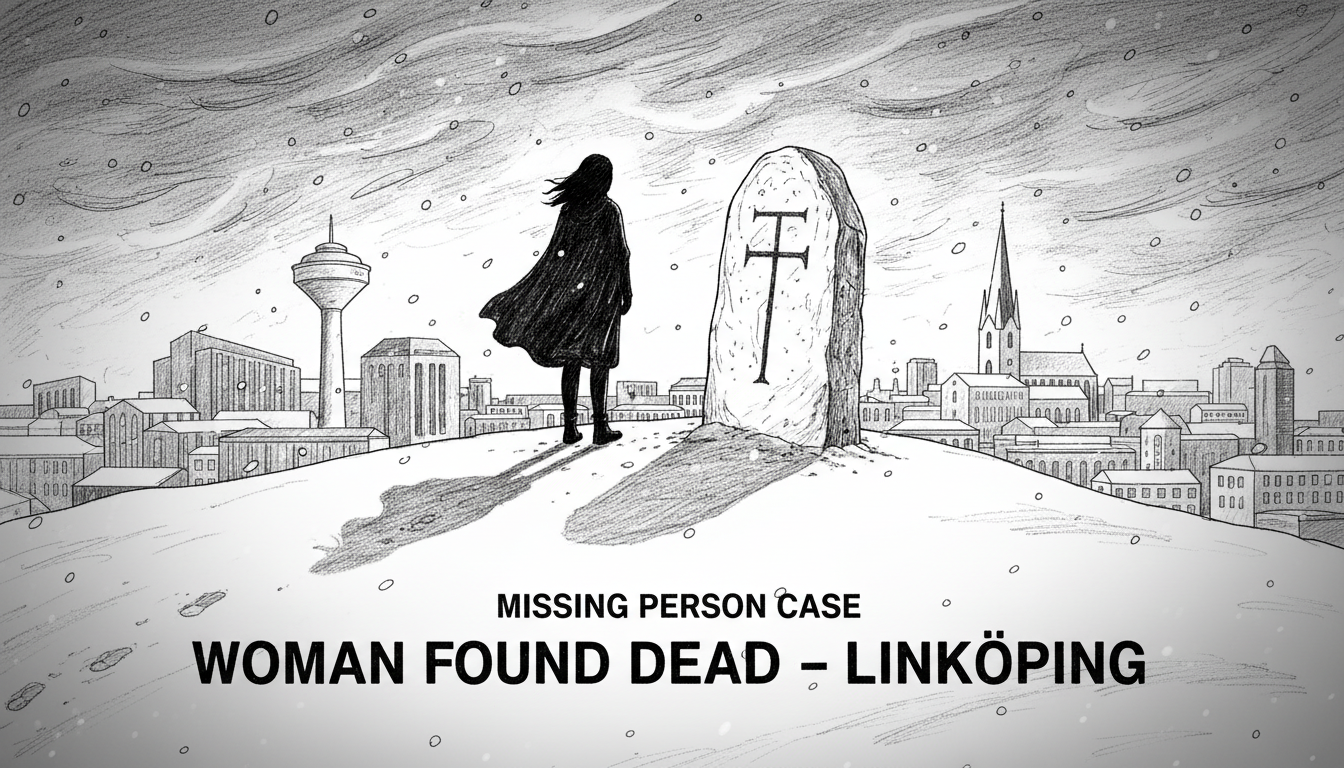
Swedish police have confirmed a woman reported missing was found dead near her home in Linköping. The death is being investigated as an accident, and her next of kin have been notified. The discovery ends a search that began earlier this week in the Sätra and Bestorp areas, casting a shadow over the university city known for its vibrant student life and quiet residential neighborhoods.
A Search Ends in Tragedy
Police had been actively looking for the woman since Wednesday. She was last heard from over the weekend, prompting concern. The search focused on Sätra and Bestorp, localities within Linköping Municipality that blend residential areas with patches of woodland typical of the Swedish landscape. The discovery was made close to where she lived. While details are sparse, the immediate police classification of the death as an accident suggests no evidence of foul play was found at the scene. This initial assessment is standard procedure, allowing authorities to begin their work without public speculation about a crime.
"Our thoughts are with the family and relatives during this difficult time," a police spokesperson said in a brief statement, adhering to the Swedish principle of protecting the privacy of those involved. The woman's identity has not been released, a common practice in Sweden unless the investigation demands public assistance.
The Mechanics of a Swedish Search
When someone goes missing in Sweden, the response is a coordinated effort. The Swedish Police Authority leads the operation. They assess the level of risk based on the person's age, health, and circumstances. For higher-risk cases, or searches in difficult terrain, police often collaborate with volunteer organizations. Missing People Sweden (Saknade Personer i Sverige) is a key partner, providing both logistical support and a vital public communication channel.
"These operations are deeply systematic," explains Karl Lundström, a former police officer and now a security consultant based in Stockholm. "It starts with the immediate vicinity—the home, the daily routes. Then it expands. In areas like Sätra, with houses near forested patches, the search grid becomes crucial. Volunteers can cover ground that would take police much longer."
While this case did not escalate to involve the Swedish Armed Forces, which can be called in for large-scale wilderness searches, it highlights the network that springs into action. The goal is always swift resolution, but outcomes are not always hopeful.
The Human Story Behind the Headline
Beyond the police bulletins lies a profound human tragedy. Linköping is a city of 165,000 people, home to a prestigious university and a thriving tech sector. It’s a place often associated with innovation and education, not personal loss. The woman’s death, in the familiar surroundings of her own neighborhood, resonates on a deeply personal level for the community.
In Swedish culture, the concept of trygghet—security and safety in one’s environment—is fundamental. An incident like this, so close to home, subtly challenges that feeling. It prompts neighbors to check in on one another, a quiet reinforcement of community bonds that is very Swedish in its understated way.
Anna, a resident of a nearby district who asked not to give her full name, expressed the mood. "You hear about these things, but never think it will be so close. It makes you pause. I think everyone just hopes the family has the peace they need." This reflection is common; there is a collective respect for the privacy of grief, even as the news spreads.
Navigating Loss in the Digital Age
The case also touches on modern realities. When a person is reported missing, their digital footprint often becomes part of the investigation. Last known phone activity, social media logins, or location data can provide critical clues. The police statement that she was "last heard from during the weekend" likely stems from such digital or personal contact.
This aspect creates a difficult duality for families. While they may share appeals for help on social media to aid the search, they are also suddenly exposed to public attention. In Sweden, there is a strong legal and cultural emphasis on the integrity of the individual, even after death. This controls the flow of information, sometimes frustrating to outside observers, but designed to protect those most affected.
A Community's Quiet Response
There will be no loud vigils or public gatherings announced in the news for this woman. That is not typically the Swedish way. Support will flow through quieter channels: close friends, family, and possibly local parish communities (församlingar) if the family is connected. The Lutheran Church of Sweden, though no longer a state church, still plays a significant role in providing ceremonial and counseling support during times of loss.
The impact lingers in the neighborhood. People walking their dogs in the wooded areas around Sätra or Bestorp might now be more aware. They might glance at the passing police car with a new understanding. The sense of safety is repaired slowly, through the mundane rhythm of daily life returning.
What an 'Accident' Investigation Means
The police's classification of the death as an accident is not a final conclusion. It is the starting point of a forensic investigation. The Swedish Police work with the National Board of Forensic Medicine (Rättsmedicinalverket) to determine the exact cause of death. This process can take time. The investigation will seek to reconstruct the woman's final hours and understand the precise circumstances that led to her death.
Only if evidence emerges that points to a crime—such as another person's involvement or signs of violence inconsistent with an accident—will the classification change. This methodical, evidence-based approach avoids premature judgments. For the family, it means a painful wait for definitive answers amidst their grief.
The Broader Picture of Safety and Risk
Statistically, Sweden remains a very safe country. Most missing person cases are resolved quickly, often with the individual found safe. Fatal outcomes, particularly those classified as accidents, are relatively rare but devastating when they occur. They remind us that risk exists even in safe societies, often in the most ordinary settings.
For international readers, this story offers a window into how Swedish society functions during a crisis. The response is structured, cooperative between authorities and volunteers, and intensely private regarding the victims. There is no media circus. The tone is sober, factual, and respectful.
The woman found in Linköping is more than a news item. She was a neighbor, a family member, a person with a story that ended too soon. As the police continue their work, the city continues its life, carrying this loss with a quiet dignity. The true measure of a community is not just how it searches, but how it supports and remembers when the search is over. In the coming days and weeks, that support will be the real, unseen story unfolding behind closed doors in Linköping.