
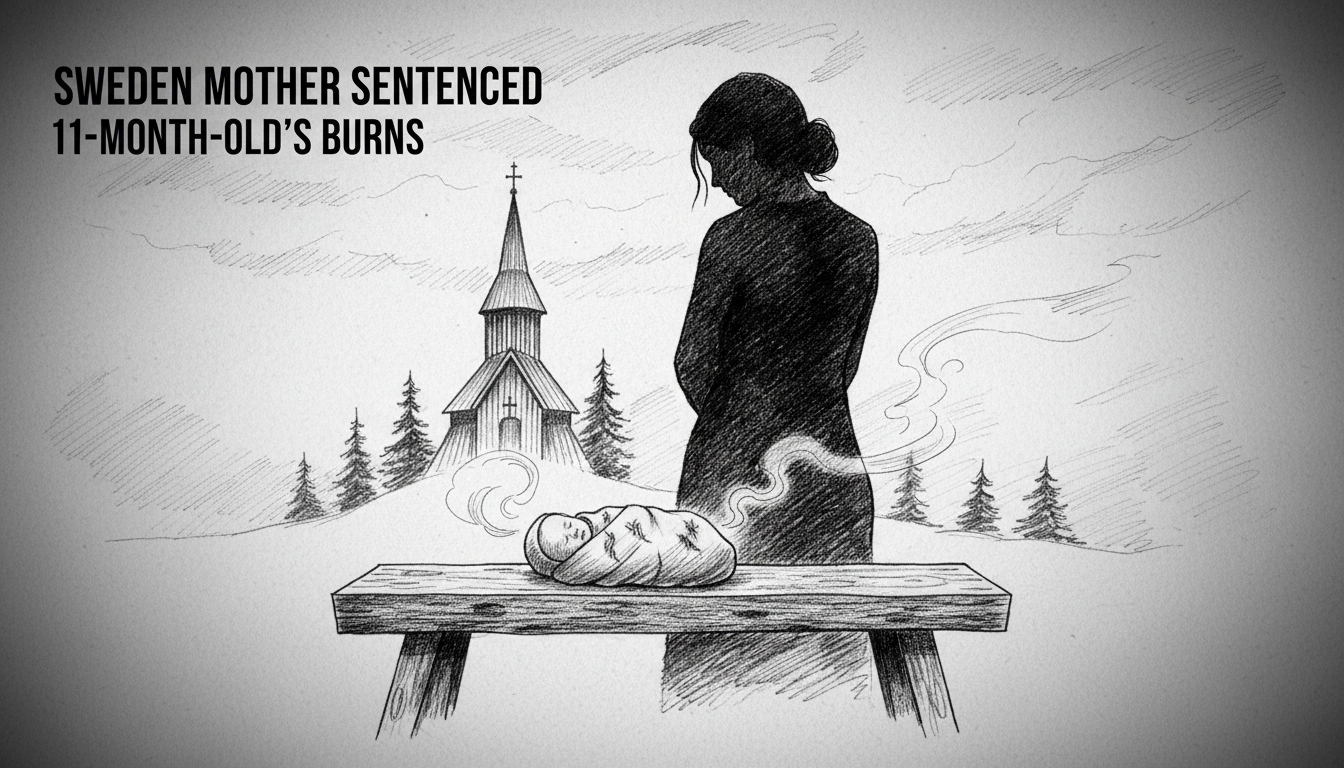
Sweden child injury law has placed a mother under a conditional sentence and a significant financial penalty after her 11-month-old daughter suffered severe burns. The incident, which occurred in a municipality in Jönköping County a year ago, resulted in the baby sustaining 17% burns to her face and body. The mother was recently convicted of gross negligence causing bodily harm, a ruling that has ignited conversations across Swedish society about parental responsibility, the nature of accidents, and the legal system's role in family life.
A Moment of Distraction, A Lifetime of Scars
According to the court's findings, the mother placed her daughter in a high chair near an active electric kettle. The child then pulled on the cord, tipping the kettle and spilling boiling water over herself. The injuries were severe, leading to what medical reports describe as lasting skin damage, scarring, and pigment changes. In her defense, the mother explained she was distracted, preparing porridge and talking on the phone. She stated she simply did not think her daughter could reach the cord. This single, distracted moment now carries a legal and financial weight: a conditional sentence, 140 day-fines totaling 7,000 SEK, and a staggering 907,000 SEK in damages to be paid to the child for violation, pain, and permanent injury.
The Legal Framework of Care in Sweden
This case operates within a clear Swedish legal context. The Swedish Social Services Act underscores the fundamental duty of parents to protect their children from harm. "There is a high threshold for what society considers acceptable risk in child-rearing," explains legal scholar Erik Lundström, who focuses on family law. "The law doesn't expect perfection, but it does demand a reasonable standard of care. Placing a child within reach of an active boiling hazard, particularly one with a dangling cord, would generally be seen as falling below that standard." The charge of grovt vållande till kroppsskada, or gross negligence causing bodily harm, reflects the court's view that the negligence was not merely minor. The substantial compensation awarded—nearly a million kronor—is intended to address the child's future needs and suffering, a sum that underscores the severity of the long-term consequences.
A Society Grappling with Judgment and Empathy
The story has resonated deeply, sparking debate in online forums and coffee breaks. In a culture that highly values both child safety and a supportive, non-punitive approach to parenting, the case presents a difficult tension. "My heart breaks for everyone involved," says Karin Berg, a preschool teacher from Vasastan. "As a parent, you know those seconds of distraction happen. But as a professional, I also see the devastating, permanent results of such accidents. The system has to respond to protect the child, but it feels incredibly harsh." This sentiment is common. Many express empathy for the mother's impossible position, trying to multitask in a home environment, while simultaneously recoiling at the image of a baby's severe burns. The discussion often turns to the invisible labor of parenting and the societal lack of support that leads to dangerous multitasking.
The Child's Future in the Aftermath
Beyond the legal verdict, child welfare advocates stress the lifelong journey for the injured girl. "A burn injury of this magnitude for an infant is not just a physical trauma," says Lisa Falk, a psychologist at a Stockholm children's hospital. "It involves repeated, painful medical procedures, potential surgeries during growth, and later, navigating social situations with visible scarring. The psychological impact on her self-image and development is a significant part of the lasting harm the compensation aims to address." The damages are held in trust for the child, a financial acknowledgment of a childhood and adulthood altered. This aspect moves the case from a simple legal finding of fault to a broader contemplation of how society supports a child who has been permanently injured, even unintentionally, within their own home.
Where Does Responsibility Lie?
The case forces a uncomfortable question: where does the line sit between a tragic accident and a criminal act? The mother's defense—distraction by mundane tasks—is universally relatable. Yet, the court's ruling sends a clear message that relatability does not negate responsibility. "The law has to look at the objective outcome and the actions that led to it," says Lundström. "The 'I didn't think' defense is often insufficient when the risk was foreseeable. The purpose isn't necessarily to punish a parent ruthlessly, but to uphold a standard that prioritizes the child's absolute right to safety." Some argue this could deter parents from being honest with healthcare providers after an accident for fear of legal repercussion. Others see it as a necessary, if painful, reinforcement of a child's rights as an individual separate from their parents.
A Verdict That Echoes Beyond the Courtroom
The mother's sentence, particularly the massive compensation order, will likely shape her life for decades. It also serves as a sobering precedent. For new parents across Sweden, the story is a terrifying cautionary tale about kettle cords, hot liquids, and the split-second nature of disaster. It has sparked practical conversations in parental groups about home safety checks and the critical importance of creating completely child-safe zones, especially during moments of distraction. The cultural ideal of the trygghet—security and safety—within the Swedish home has been visibly punctured by this event. The verdict doesn't just conclude a legal process; it leaves a lasting mark on the collective consciousness of Swedish parents, a reminder of their profound and legally enforceable duty in a society that places the child's well-being at its very center. Can a legal judgment truly measure a lifetime of regret, or compensate for a childhood scarred? The court has issued its answer, but for the family involved, the real consequences are only just beginning.