
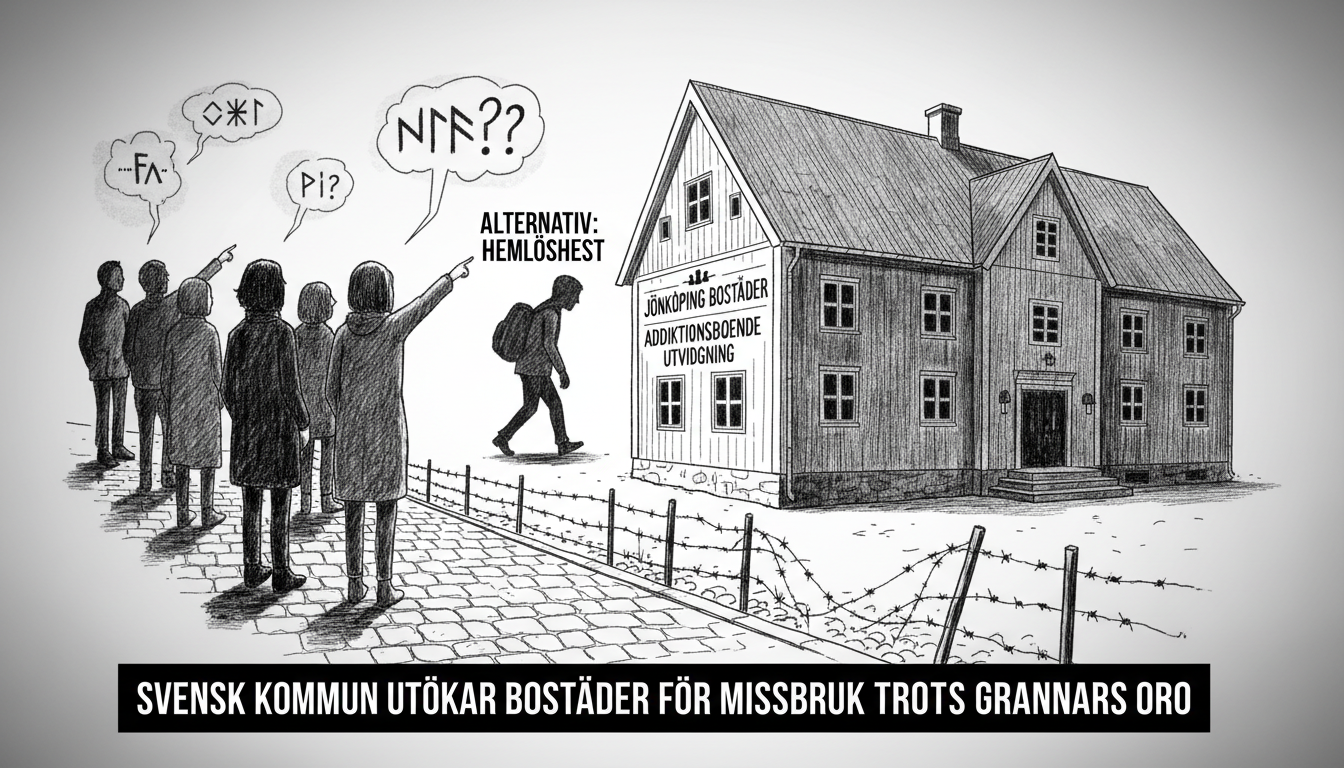
A Swedish municipality plans to expand specialized addiction housing despite resident complaints about safety incidents. Jönköping's social services committee wants to add two more supportive housing units in Kortebo, where three such facilities already operate.
Committee chair Christer Sjöberg acknowledged the difficult reality of these facilities. "We wish these category homes weren't necessary, but the alternative is homelessness," he said in a statement. "These individuals get support where they are. We cannot help them overcome addiction if they have nowhere to live."
Research from Jönköping University shows even addicts who enter these homes with recovery ambitions often lose motivation over time. Still, officials defend the approach as necessary.
Neighbors report frightening incidents in recent years near existing facilities. They feel ignored by local government and question the expansion plan. The municipality cannot produce impact analysis documents for the new housing despite repeated requests.
Sjöberg responded to neighbor concerns by noting disturbance perceptions vary individually. He claimed officials listened to residents before deciding on expansion and analyzed the housing situation.
The situation highlights Sweden's ongoing struggle to balance addiction treatment needs with community safety. Municipalities face limited options for housing vulnerable populations while maintaining neighborhood harmony.