
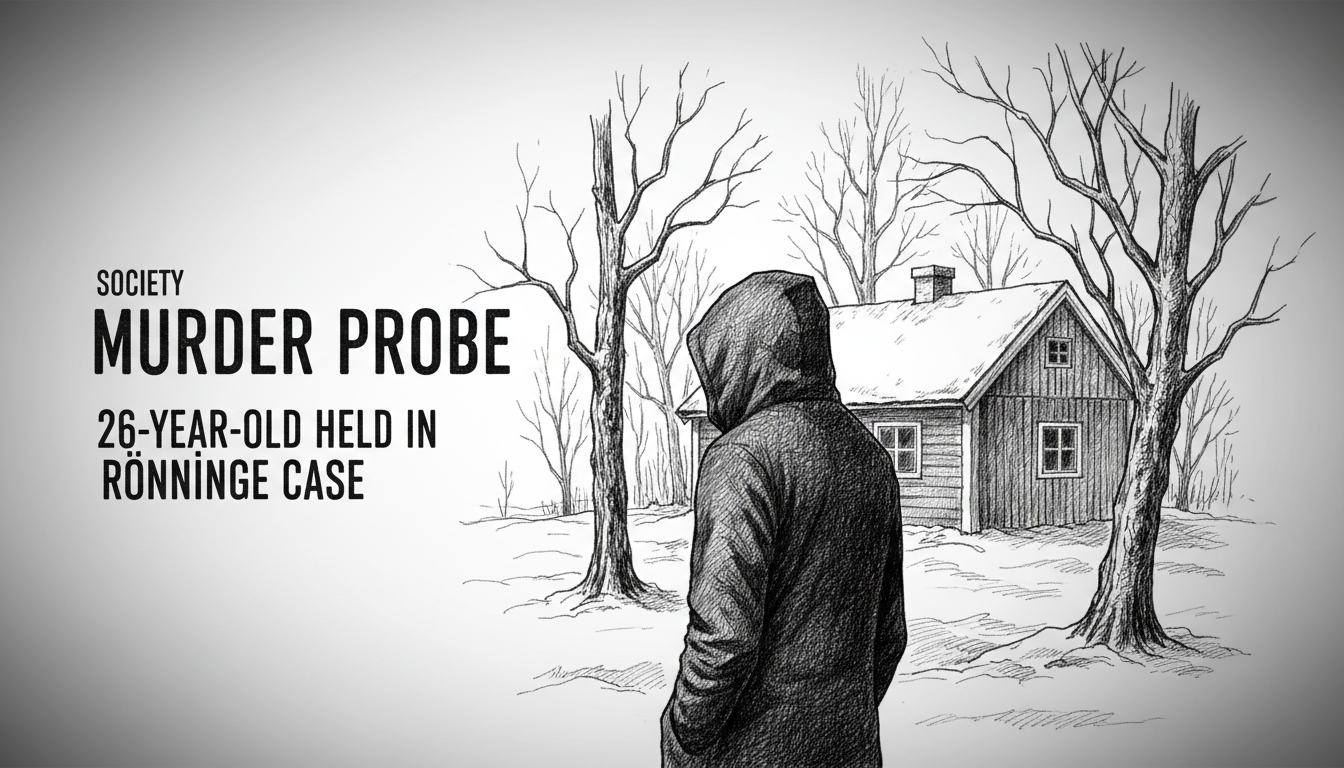
Sweden's criminal justice system is now focused on a 26-year-old man, held on suspicion of murder and aggravated violation of a gravesite in the quiet community of Rönninge. The suspect is being detained on 'probable cause,' a standard but serious step in the Swedish legal process. This case has sent ripples through Salem municipality, an area more accustomed to suburban calm than violent crime headlines.
For residents of Rönninge, a locality within Salem just southwest of Stockholm, the news is deeply unsettling. The area is known for its residential neighborhoods, green spaces, and proximity to Lake Mälaren. It is not a place that often features in national crime reports. The specific allegations—murder coupled with a grave desecration—add a particularly disturbing layer to the investigation, suggesting motives that extend beyond a typical violent act.
Understanding the Swedish Legal Threshold
The suspect is being held on 'sannolika skäl,' which translates to 'probable cause.' This is a crucial pre-trial detention threshold in Sweden. It means the prosecutor has presented enough evidence to make it likely the suspect committed the crime. It is a step below the higher 'skäligen misstänkt' (reasonably suspected) standard needed for a formal indictment, but it is sufficient for a court to order custody if there is a risk the suspect might flee, obstruct justice, or continue criminal activity.
"Probable cause is a significant hurdle," explains a Stockholm-based legal analyst familiar with pre-trial procedures. "It requires concrete evidence pointing to the individual's involvement. The court doesn't take this decision lightly, especially when ordering detention. The dual nature of the suspected crimes—murder and grave violation—would have been a key part of the prosecutor's argument."
Sweden's Homicide Rate in Context
While any murder is a profound tragedy, Sweden's overall homicide rate provides important context. In 2022, the rate was approximately 1.1 per 100,000 inhabitants. This is relatively low by global standards and comparable to other Northern European nations. Each case, however, is investigated with intense resources. Sweden's clearance rate for homicides is generally high, with a strong majority of cases leading to convictions.
This statistical reality offers little comfort to a community directly affected. The shock is often greater in areas with low crime prevalence. "When violence strikes a peaceful suburb, it disrupts the fundamental sense of security people have," says a criminologist who studies urban safety in the Stockholm region. "The community's reaction isn't just about the act itself, but about the violation of their perceived safety. The added element of a gravesite violation touches on deep cultural taboos around respect for the dead."
The Cultural Weight of 'Gravfrid'
The concept of 'gravfrid'—gravesite peace—is deeply ingrained in Swedish culture. Cemeteries are considered sacred, tranquil places for reflection. Violating this peace is a serious crime, taken very personally by the public. An 'aggravated' violation, as suspected here, suggests a particularly egregious act, such as disturbing a burial site or a coffin.
This aspect of the case may resonate strongly with Swedes, for whom seasonal traditions like All Saints' Day (Alla helgons dag) involve visiting and lighting candles at family graves. The alleged crime strikes at a core cultural value of showing respect to the deceased and their families.
The Path Forward in the Investigation
The suspect will remain in custody while the preliminary investigation continues. Swedish law mandates that a detained suspect must be brought before a court for a custody hearing promptly. The court will then review the detention order regularly. The next major step for prosecutors is to gather enough evidence to formally charge the individual. For a murder charge, this requires meeting the higher 'reasonably suspected' standard.
Potential penalties under Swedish law are severe. Murder can carry a prison sentence of 10 to 18 years, or life imprisonment. Aggravated violation of a gravesite is a separate crime that can result in significant prison time. The police and the Swedish Prosecution Authority will now work meticulously, interviewing witnesses, examining forensic evidence, and establishing a clear timeline and motive.
A Community Waits for Answers
In Rönninge and the wider Salem area, life continues, but with an underlying current of anxiety and sorrow. Neighbors talk in hushed tones, and the local press follows each development closely. The human impact of such a case is immeasurable, affecting the victim's family, the suspect's family, and the collective psyche of the community.
The Swedish principle of the presumption of innocence remains paramount. The 26-year-old is a suspect, not a convicted criminal. The coming weeks will be critical as investigators piece together what happened. Their work will determine whether this case moves to trial, seeking justice through a system designed to be both thorough and fair, even in the face of horrific allegations. For now, a Stockholm suburb grapples with a darkness it never expected, awaiting answers that only a careful, complete investigation can provide.