
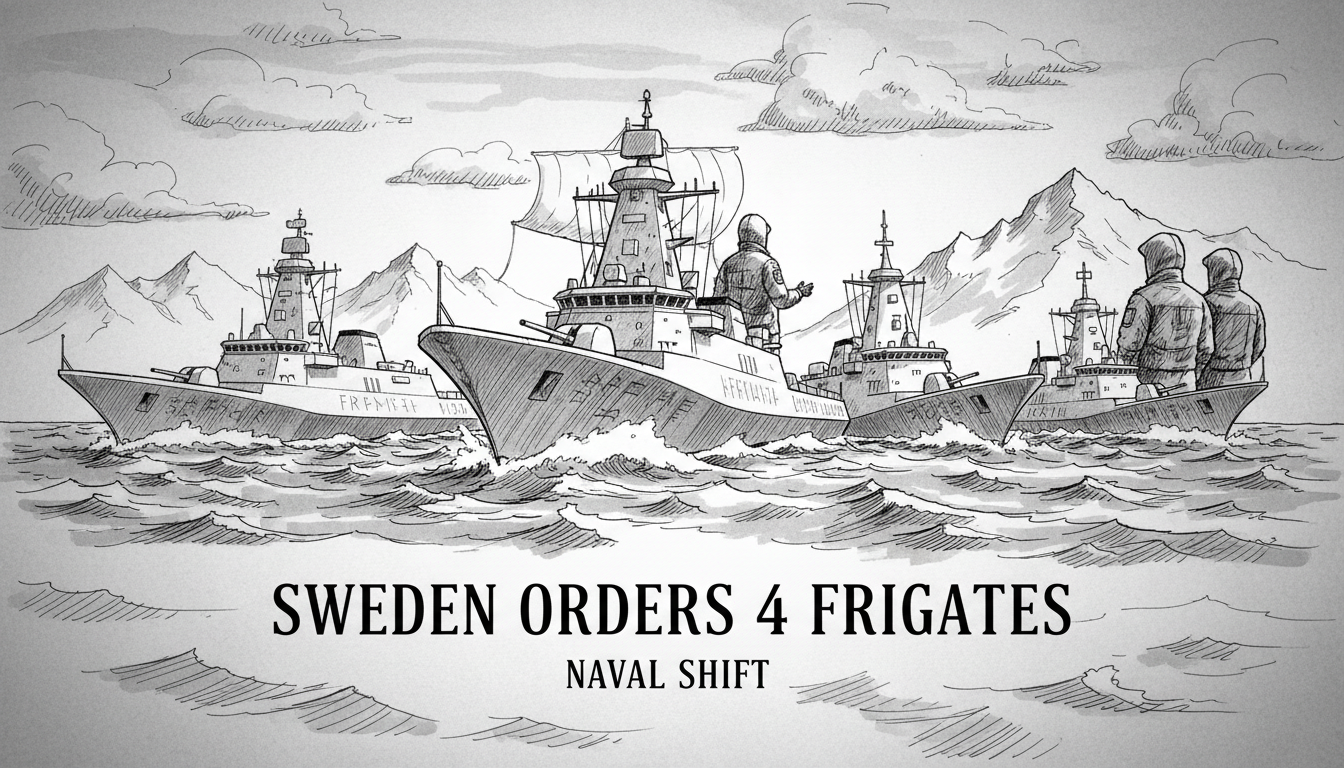
Sweden defense spending is fueling a historic reversal, with four new 120-meter frigates set to join the navy for the first time in 50 years. The multi-billion kronor investment marks a dramatic departure from decades of reliance on smaller, coastal defense vessels. This move signals a profound recalibration of Swedish security policy in response to a tense Baltic Sea region.
For half a century, the Swedish Navy's strategy centered on a 'light fleet' designed to thwart a coastal invasion. The largest warships currently in service are the stealthy Visby-class corvettes, measuring 72 meters. The new frigates will be nearly twice as long, enabling extended operations far from Swedish shores. Linus Fast, a researcher at the Swedish Defence Research Agency (FOI), calls this a fundamental change in approach. 'We are moving away from a light fleet whose main purpose was to stop an expected invasion force heading toward Swedish waters,' Fast said.
A Half-Century Gap Closes
Sweden has not operated warships of this size since its last destroyers were decommissioned in the 1980s. The return to large vessels reflects a new era of maritime ambition. The Swedish Defence Materiel Administration (FMV) aims to sign a contract with a supplier in the first half of 2025. These frigates are not just bigger; they are multi-role platforms capable of anti-submarine warfare, air defense, and securing vital sea lanes. This capability is crucial for protecting trade routes and energy infrastructure in the Baltic Sea.
The Baltic Sea: A New Front Line
The decision stems from a stark reassessment of regional threats. Since the end of the Cold War, Sweden downsized its military and focused on international peacekeeping. However, increased Russian naval activity and the war in Ukraine have forced a rapid rethink. Sweden's defense spending has been rising steadily, with a goal to reach 2% of GDP, aligning with NATO targets. The Baltic Sea is no longer a peaceful backyard but a potential frontline, necessitating a navy that can project power and ensure stability.
Inside the Multi-Billion Kronor Deal
The technical leap from the Visby-class corvettes to the new frigates is significant. To illustrate the scale of change, consider these key comparisons:
| Feature | Visby-class Corvette | New Frigate |
|---|---|---|
| Length | 72 meters | 120 meters |
| Primary Role | Coastal defense, stealth | Anti-submarine, air defense, sea control |
| Operational Range | Limited to nearer waters | Extended, for open seas and NATO missions |
| Era Introduced | Early 2000s | Expected delivery post-2025 |
This table underscores the shift from a defensive, near-shore force to an expeditionary one. The frigates will be equipped with advanced sensors and weapons systems to detect submarines, intercept aircraft and missiles, and defend other vessels. Their size allows for better crew facilities and longer endurance, which is essential for patrols in the harsh Baltic environment and beyond.
Expert Insights: A New Maritime Strategy
Analysts view this investment as a move toward greater interoperability with allies. 'This is about moving from a purely territorial defense mindset to having a navy that can operate alongside NATO and other partners in international waters,' said a Stockholm-based defense analyst who requested anonymity due to their institutional affiliation. The frigates will enable Sweden to contribute meaningfully to collective security tasks, such as escorting cargo ships or participating in carrier strike group protections. This aligns with Sweden's NATO membership, which requires capable and compatible forces.
What This Means for NATO and Beyond
Swedish navy modernization directly enhances Baltic Sea security. The new frigates can monitor subsurface threats, a persistent concern given suspected underwater activity in the region. They also provide a mobile air defense shield, protecting not only Swedish territory but also allied nations. In a crisis, these ships could be deployed under NATO command to areas far from Sweden, demonstrating commitment to alliance obligations. This capability fosters deterrence, signaling to potential adversaries that the Nordic region is firmly defended.
The Ripple Effects on Swedish Society
Such a substantial financial commitment inevitably sparks debate. The billions spent on frigates could alternatively fund schools, healthcare, or climate initiatives. However, the political consensus in Sweden now strongly favors bolstered defense. Public opinion has shifted significantly since Russia's invasion of Ukraine, with greater acceptance of high military spending. This project will also impact Swedish industry, with contracts likely involving domestic shipyards and technology firms, creating jobs and driving innovation in naval engineering.
Looking Ahead: Sweden's Naval Future
The journey from contract to commissioning will take years. Challenges include integrating complex systems, training crews, and ensuring the ships meet evolving threats. Yet, this investment is a clear statement: Sweden is rebuilding its naval power for a more uncertain world. As Linus Fast noted, the era of the 'invasion cake' defense is over. Welcome to the age of the Swedish frigate – a symbol of national resolve and international partnership. Will this mark the beginning of a sustained naval buildup, or is it a one-time response to current crises? Only time will tell, but for now, Sweden's seas are getting a new guardian.