
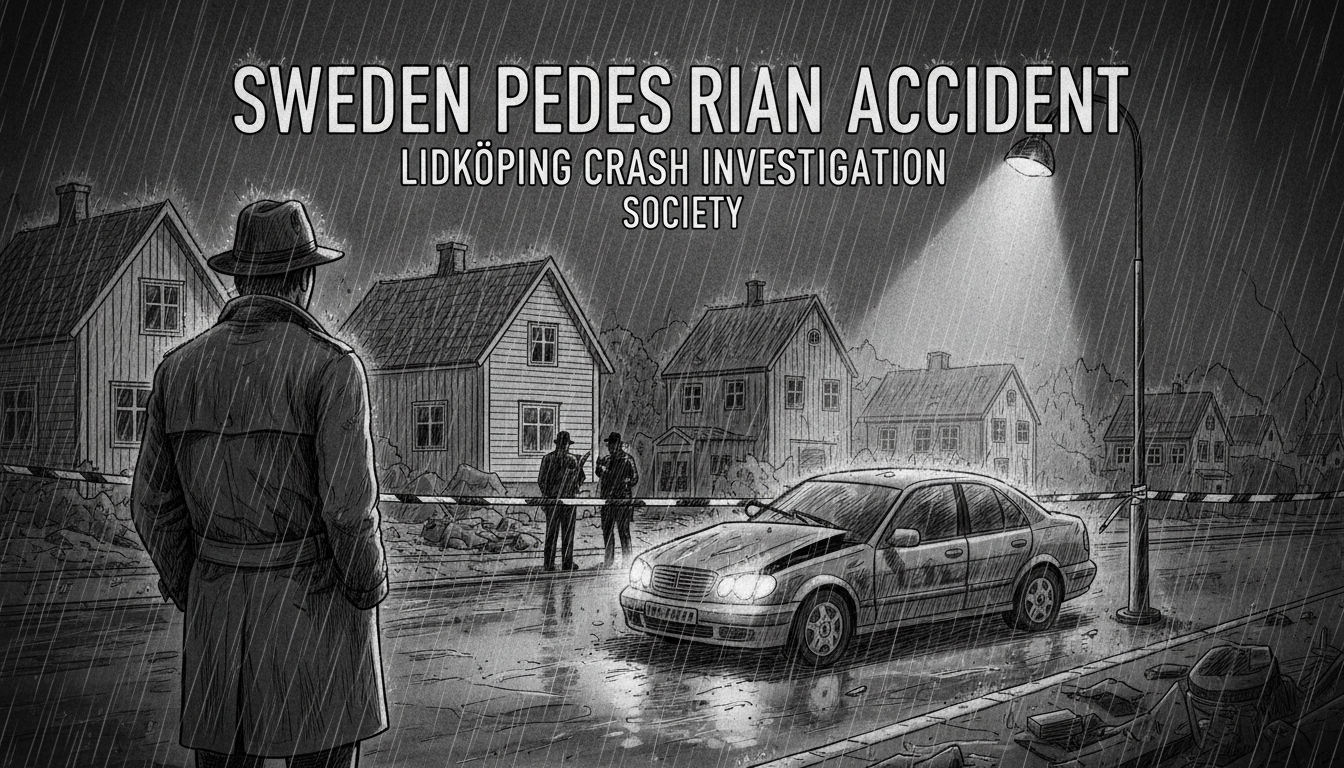
Sweden traffic laws are under scrutiny after a dramatic pedestrian accident in Lidköping. A person in their 40s was struck by a car and thrown into the air late this afternoon. The victim, conscious and speaking when taken by ambulance, was hospitalized with unclear injuries. A 55-year-old woman was driving the vehicle. Police have filed a report for ‘vållande till kroppsskada’ – causing bodily harm. The quiet streets of this lakeside town became the scene of a sudden, violent event that will now trigger a meticulous legal process.
A Sudden Impact on a Quiet Afternoon
The incident occurred around 5 p.m., a time when daylight is already fading in Swedish autumn. Lidköping, a picturesque town on the shores of Lake Vänern, is known for its calm atmosphere and historic Rörstrand porcelain. This tranquility was shattered by the sound of impact. Witnesses described a shocking scene to local reporters, with the pedestrian being launched upward by the force of the collision. The specific location within the town has not been disclosed, but such accidents often occur at intersections or on streets without clear pedestrian crossings. The immediate response from emergency services was swift, a testament to Sweden's highly coordinated rescue system.
The Legal Road Ahead: ‘Vållande till Kroppsskada’
The police report centers on a specific charge: vållande till kroppsskada. This Swedish legal term is crucial. It does not automatically imply malicious intent, like reckless driving. Instead, it means the driver is suspected of causing bodily harm through negligence or carelessness. The investigation will now work to determine what that carelessness entailed. “The focus will be on whether the driver failed in her duty of care,” explains a Stockholm-based legal analyst familiar with traffic law. “Did she exceed the speed limit? Was she distracted? Did she fail to yield to a pedestrian who had the right of way? These are the questions investigators will ask.”
In Sweden, the outcome of such cases depends heavily on the severity of the injuries and the degree of negligence. Penalties can range from heavy fines and a suspended driver’s license to imprisonment for up to two years. If the injuries prove to be very serious, the charge could be escalated. The driver, a 55-year-old woman, will be interviewed extensively. Her emotional state, any potential mechanical failure with the vehicle, and her driving record will all become part of the official record.
The Human Cost Beyond the Statistics
While the victim’s identity is protected, the human story is central. A person in their 40s, likely finishing a workday or running an errand, now faces an uncertain physical and psychological recovery. The trauma of such an event lingers long after physical wounds heal. For the driver, a woman in her 50s, life is also irrevocably changed. The weight of causing harm to another person, even unintentionally, is a profound burden. This dual tragedy is the human face of road safety statistics.
Sweden has long been a global leader in road safety through its ‘Vision Zero’ policy, which aims to eliminate all traffic fatalities and serious injuries. The approach has yielded results. In 2022, there were 272 fatal road accidents in Sweden, resulting in 284 deaths. While any death is a tragedy, this number is low relative to the country's population and represents a significant decrease over decades. Serious injuries have also trended downward, thanks to safer car designs, improved road engineering, and lower urban speed limits.
A Broader Conversation on Urban Safety
This Lidköping accident sparks a broader conversation about safety in Swedish towns and cities. Even with national progress, local incidents reveal ongoing vulnerabilities. “Vision Zero is not just about highways,” says a road safety consultant. “It’s about every street, every crossing. It requires constant vigilance from everyone – planners, drivers, and pedestrians. A moment’s inattention can undo years of systemic safety work.”
In Stockholm, neighborhoods like Södermalm and Vasastan have implemented extensive traffic calming measures. Narrowed roads, raised crosswalks, and priority for cyclists and pedestrians are common. The question is whether smaller municipalities like Lidköping have the same resources to implement these often-costly changes. This accident may prompt local politicians to review dangerous intersections and consider lower speed limits in residential and central areas.
The Path to Recovery and Resolution
The immediate next steps are medical and legal. The victim’s recovery is the primary concern. Swedish healthcare will provide comprehensive treatment, supported by the nation’s strong social safety net. The legal investigation will proceed methodically. Police will gather witness statements, examine the vehicle for technical faults, and analyze the accident scene for evidence like skid marks. A technical report from the Swedish Transport Administration (Trafikverket) may also be commissioned.
For both individuals involved, the support of community and family will be essential. Such events ripple outwards, affecting coworkers, friends, and neighbors. In a close-knit society like Sweden’s, the community often rallies around those in crisis, offering practical help and emotional support through difficult times.
This incident in Lidköping is a stark reminder. It shows that despite Sweden's world-class safety standards, the shared space of our roads remains a place of potential danger. It underscores the profound responsibility every driver holds. As the investigation continues and the victim fights to recover, the core principles of Swedish society – care, responsibility, and a commitment to protecting one another – are put to the test on an ordinary street, on an ordinary afternoon.