
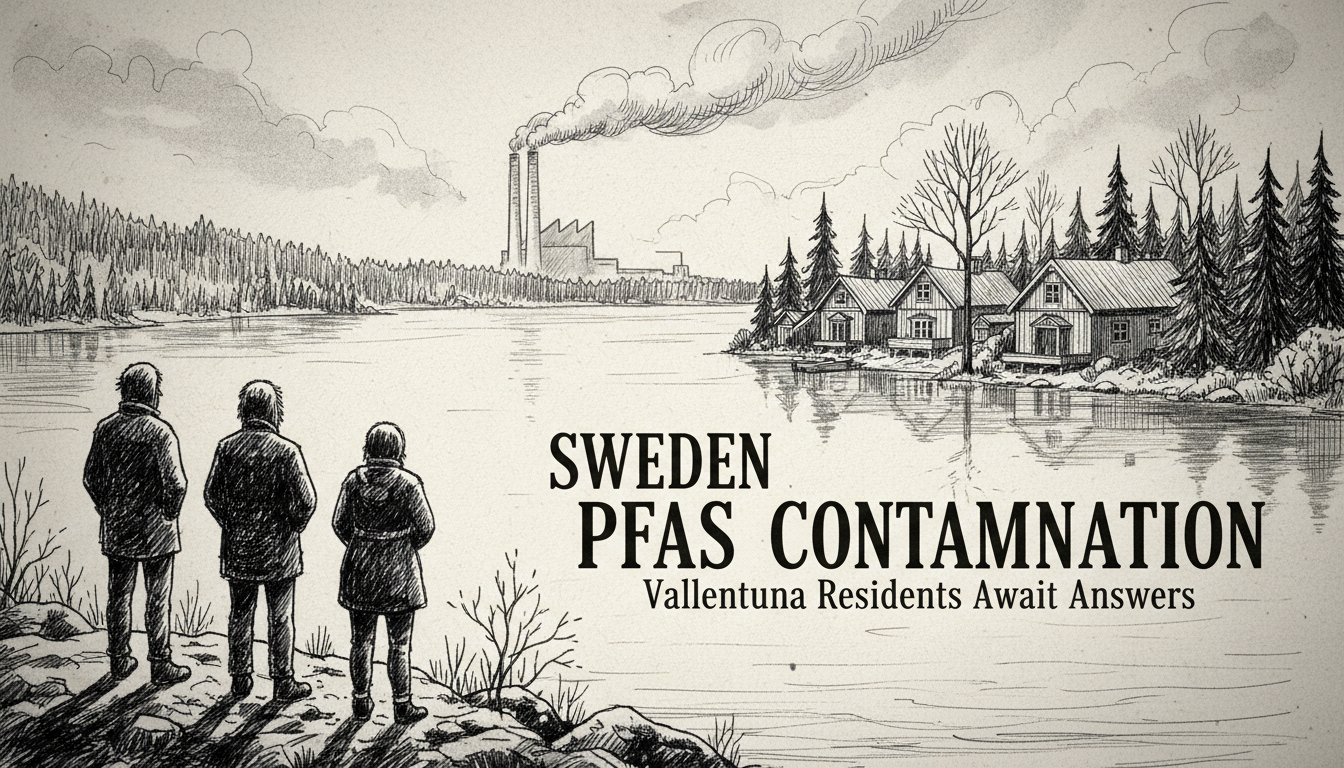
Sweden PFAS contamination has left Vallentuna residents facing indefinite uncertainty over their drinking water. Two weeks after the Parliamentary Ombudsmen (JO) received a complaint, the municipal director still cannot provide answers. "It takes time to investigate," said the director, declining to comment further on a case that has yet to formally reach her desk. This bureaucratic delay underscores a growing national crisis affecting over 1,000 potentially contaminated sites across Sweden.
Families reliant on private wells in the affected area continue collecting water from municipal taps. They lack a clear timeline for when their primary water source will be safe. The complexity of PFAS, known as 'forever chemicals,' presents significant scientific and administrative hurdles. Vallentuna Municipality now awaits a supplementary report from the Swedish Board of Agriculture's Rural Economy and Agricultural Societies (SSBF), due by January 31, 2026.
A Crisis of Confidence and Leadership
The investigation's slow pace coincides with notable staff turnover in Vallentuna's environmental department. Two environmental managers have resigned since the PFAS discovery, with a third now in place. The municipal director declined to specify reasons for the departures. This leadership instability raises questions about institutional capacity to manage long-term environmental health threats. Analysts suggest such turnover can disrupt continuity in complex remediation projects, potentially delaying public protection measures.
Residents' frustration is palpable. They submitted their JO complaint seeking accountability for the handling of the contamination. The complaint alleges failures in communication and action. By law, the JO must investigate complaints about public agency conduct. However, the process is methodical, often spanning months. The director's statement that the complaint has not yet "reached the municipality" highlights the procedural layers separating citizens from accountability.
The National Scale of a 'Forever Chemical' Problem
Vallentuna's situation is not isolated. A 2020 report by the Swedish Chemicals Agency identified over 1,000 sites with potential PFAS contamination nationwide. These 'forever chemicals' resist natural degradation, accumulating in soil, water, and the human body. Their historical use in firefighting foam, textiles, and non-stick coatings has created a diffuse and persistent environmental legacy. Health authorities link PFAS exposure to immune system deficiencies, liver damage, thyroid disease, and certain cancers.
In 2023, the European Chemicals Agency proposed a sweeping EU-wide restriction on PFAS under REACH regulations. This represents the broadest regulatory action ever proposed for these substances. The restriction aims to drastically reduce PFAS use and emissions across the European Union, including Sweden. Its implementation, however, will take years. Meanwhile, municipalities like Vallentuna grapple with existing contamination and immediate public health duties.
Scientific Complexity Meets Bureaucratic Process
The director's reference to PFAS as a "complex contamination" is a significant understatement. Remediation often requires advanced filtration like granular activated carbon or ion exchange systems. Identifying the precise contamination source is also challenging, impacting liability and cost recovery. The awaited SSBF report is part of this detailed technical investigation, necessary for designing an effective cleanup strategy.
Experts stress that source control is as crucial as remediation. Without preventing ongoing contamination, cleanup efforts are futile. This necessitates thorough environmental forensics, adding time to the investigative phase. The Swedish Food Agency has established strict maximum limits for PFAS in drinking water. Municipalities must ensure compliance, often resorting to providing alternative water sources during investigations, as seen in Vallentuna.
Legal and Financial Implications on the Horizon
The Vallentuna case previews a coming wave of legal and insurance challenges across Sweden. As more contamination sites are identified, affected communities and homeowners will seek compensation. Determining responsibility involves tracing chemical use back decades, often to defunct businesses or state-owned entities like defense facilities. The Swedish government has established guidance but no blanket national fund for PFAS remediation, placing financial pressure on municipalities and private landowners.
Insurance claims related to environmental damage are becoming increasingly common. Legal analysts predict a rise in litigation as scientific evidence of health impacts solidifies. The JO complaint in Vallentuna may be an early example of citizens using oversight mechanisms to demand accountability before pursuing costlier legal routes. The outcome could influence how other local governments respond to similar crises.
A Test for Local Governance and Public Trust
The prolonged timeline erodes public trust. Telling residents to wait for a report due in 2026, nearly two years away, is a difficult political message. It tests the social contract between citizens and local government, which holds primary responsibility for drinking water safety. Effective crisis communication and transparent interim actions are vital to maintaining community confidence during lengthy technical investigations.
The turnover of environmental managers compounds this trust deficit. Consistent, knowledgeable leadership is essential for navigating complex inter-agency collaborations. These involve the Swedish Geotechnical Institute, the Public Health Agency, and county administrative boards. The Swedish government's national strategy for PFAS, while providing a framework, relies on local implementation. Vallentuna's experience reveals the strain on municipal resources and expertise.
Looking Beyond Vallentuna: A Systemic Challenge
This case illustrates systemic challenges facing Sweden as it confronts its PFAS legacy. The chemicals' persistence means problems discovered today stem from decisions made decades ago. Addressing them requires sustained funding, scientific expertise, and regulatory enforcement. The Swedish Parliament has debated strengthening environmental liability laws, but legislative change moves slowly compared to the urgency felt in contaminated communities.
Comparative analysis with other Nordic countries shows varied approaches. Denmark has moved aggressively to set strict PFAS limits in soil and water. Sweden's methodical, investigation-first approach prioritizes comprehensive data collection. Both models face criticism: one for potential overreach, the other for perceived delays. The Vallentuna case sits at the heart of this policy debate, balancing thoroughness against residents' immediate need for certainty and safety.
The path forward for Vallentuna residents remains unclear. They are dependent on the pace of science, bureaucracy, and inter-agency coordination. Their experience serves as a cautionary tale for other Swedish communities yet to discover contamination. It raises a fundamental question: How swiftly can Sweden's environmental governance systems respond to slow-moving, invisible crises that threaten public health? The answer will define the nation's environmental legacy for decades to come.