
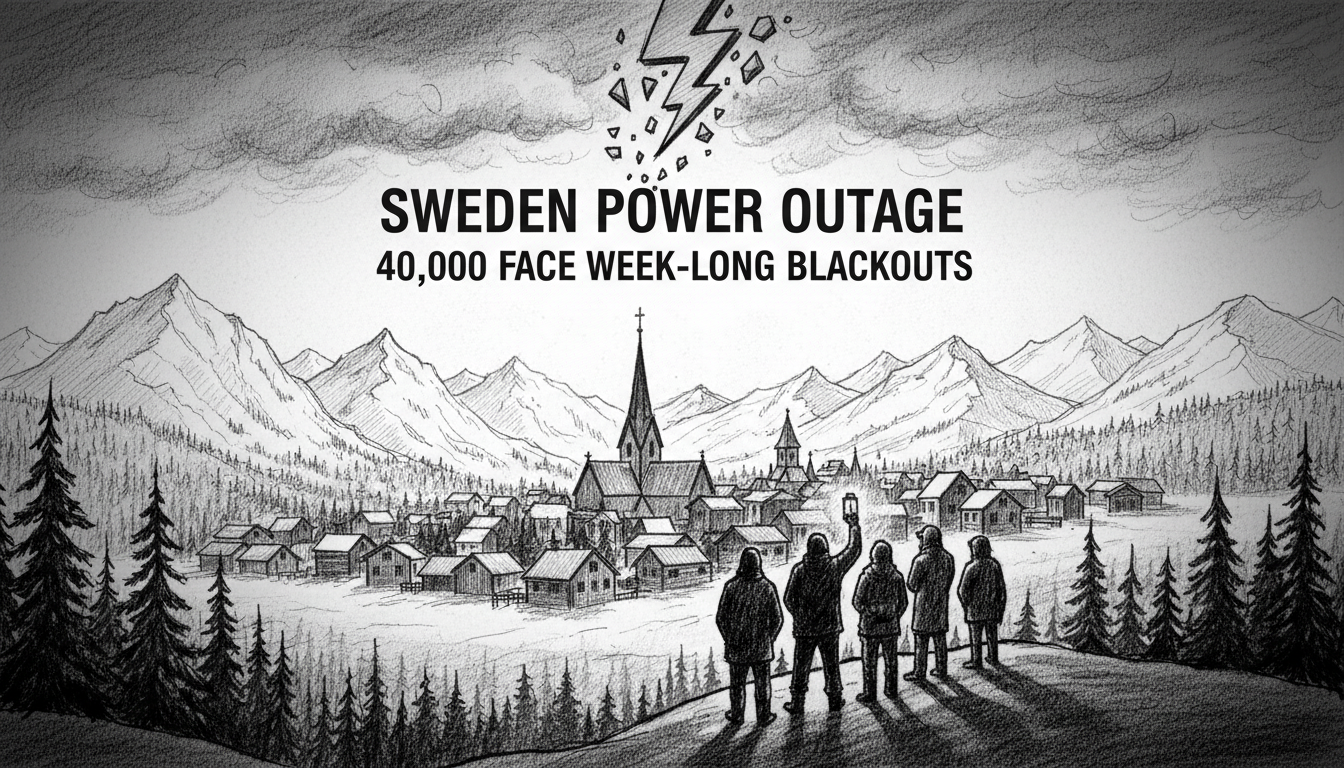
Sweden power outage has escalated into a crisis, with nearly 40,000 households bracing for over a week without electricity. Storm Johannes has unleashed chaos across the regions of Hälsingland and Dalarna, toppling trees onto power lines and severing the modern lifelines of rural communities.
Anna Karlsson, a teacher in Bollnäs, Hälsingland, watches her breath fog in the cold air of her kitchen. Her family's wood stove is their sole heat source. "We stocked up for winter, but not for this," she says. "No lights, no WiFi for the kids' schoolwork. It feels like we've stepped back in time." Her story is one of thousands, echoing through the forested valleys where silence has replaced the hum of appliances.
A Storm Unearths Systemic Vulnerabilities
Storm Johannes arrived with a fury that caught many off guard. Jesper Liveröd, press chief at grid operator Ellevio, describes the damage. "This is a string of outages, more extensive than we anticipated. It's exclusively trees falling on lines, but the intense wind makes repair work unsafe." Ellevio has heightened its alert status and called in extra crews. Yet, the geography of Hälsingland—a region celebrated for its UNESCO-listed farmhouses and vast pine forests—turns every repair into a logistical puzzle. Long, exposed power lines stretch between isolated homes, each vulnerable to the next falling branch.
In Sweden, electricity is the bedrock of daily life. Over 80% of homes use electric heating, and winter temperatures in Hälsingland can drop below -10°C. A blackout here isn't just an inconvenience; it's a heating emergency. The cultural cornerstone of 'fika'—the daily coffee break—grinds to a halt without functioning kitchens. This outage reveals the thin line between modern comfort and elemental survival.
The Rural Divide: Scenic Beauty Meets Harsh Reality
Hälsingland embodies the Swedish ideal of rural tranquility. It's a place of dispersed villages and deep forests, where 'allemansrätten'—the right to roam—is cherished. But this same dispersion makes infrastructure fragile. "When a single tree falls, it can cut power to dozens of properties along a 10-kilometer line," Liveröd explains. Repair teams face hazardous conditions, often waiting hours for winds to calm before they can even assess the damage.
Compare this to Stockholm, where events like the upcoming Christmas markets in Gamla Stan proceed under the glow of underground cables. The contrast highlights a national divide. Urban centers enjoy resilient networks, while rural areas rely on overhead lines that are cheaper to install but exposed to nature's whims. For families in Hälsingland, the storm is a reminder of their periphery in the national infrastructure narrative.
The Long Wait: Days Without Power
Ellevio initially hoped to restore power by Sunday morning. That timeline has now stretched. "In some cases, aftermath work could go on for over a week," Liveröd states. Safety remains the priority. "We urge people to stay indoors. Fallen power lines are deadly." For residents, this means improvisation. Demand for generators has spiked, but many rely on older alternatives. Community hubs, like the folkets hus in Ljusdal, have opened as warming centers, serving hot soup and offering charging stations—a testament to Swedish 'gemenskap', or community spirit.
The societal ripple effects are significant. Schools have closed, local businesses shuttered, and routines upended. In a society where digital connectivity is assumed, the loss of internet isolates people further. Yet, resilience emerges. Neighbors share battery packs, check on elderly relatives, and gather for communal meals. It's a forced return to simpler interactions, highlighting the Swedish value of practicality.
Expert Analysis: Grid Resilience in Question
Infrastructure expert Dr. Lena Strömberg, from Lund University, provides context. "This event isn't an anomaly," she says. "Climate models predict more frequent severe storms in Scandinavia. Our rural grid, built for last century's weather, is increasingly vulnerable." She emphasizes the need for investment in resilient solutions, such as underground cabling or localized micro-grids powered by renewables. However, the economics are daunting. "Sparsely populated areas present a cost challenge. But the social and economic toll of prolonged outages must be part of the calculation."
Strömberg points to initiatives in Norway, where some municipalities subsidize home battery systems for remote homes. "Sweden could learn from this. Diversifying energy sources reduces dependency on long transmission lines." The debate often centers on urban development, but storms like Johannes force a reckoning with rural equity. Swedish society trends show a growing urban-rural divide, and infrastructure vulnerability deepens it.
Cultural Threads: How Swedes Adapt
Swedish culture is steeped in self-reliance and a deep connection to nature. This outage tests that relationship. Traditions like 'mys'—cozy indoor time—are transformed into a struggle for warmth. Yet, cultural adaptations shine. In Hudiksvall, volunteers organized a pop-up community kitchen using gas stoves. Local Facebook groups buzz with offers of help, reflecting the informal support networks that underpin Swedish life.
For immigrants in affected areas, the experience can be doubly challenging. Newcomers might lack knowledge of local resources or networks. Community leaders in Gävle report efforts to reach out in multiple languages, ensuring everyone has access to information and aid. This crisis underscores the importance of inclusive community planning in Swedish society.
Looking Beyond the Storm
As repair crews work around the clock, the larger questions linger. How can Sweden build a more resilient power grid that serves all its citizens? For families in Hälsingland, the immediate goal is light and heat. But for policymakers, this is a pivotal moment. Investments in infrastructure are investments in social cohesion.
Sweden's identity is tied to reliability and innovation. When the power fails, that identity is challenged. Anna Karlsson sums it up: "We'll get through this, we always do. But it makes you wonder: are we prepared for the next storm?" The darkness will lift, but the lessons learned in these cold, quiet days must illuminate a path toward a more secure future.