
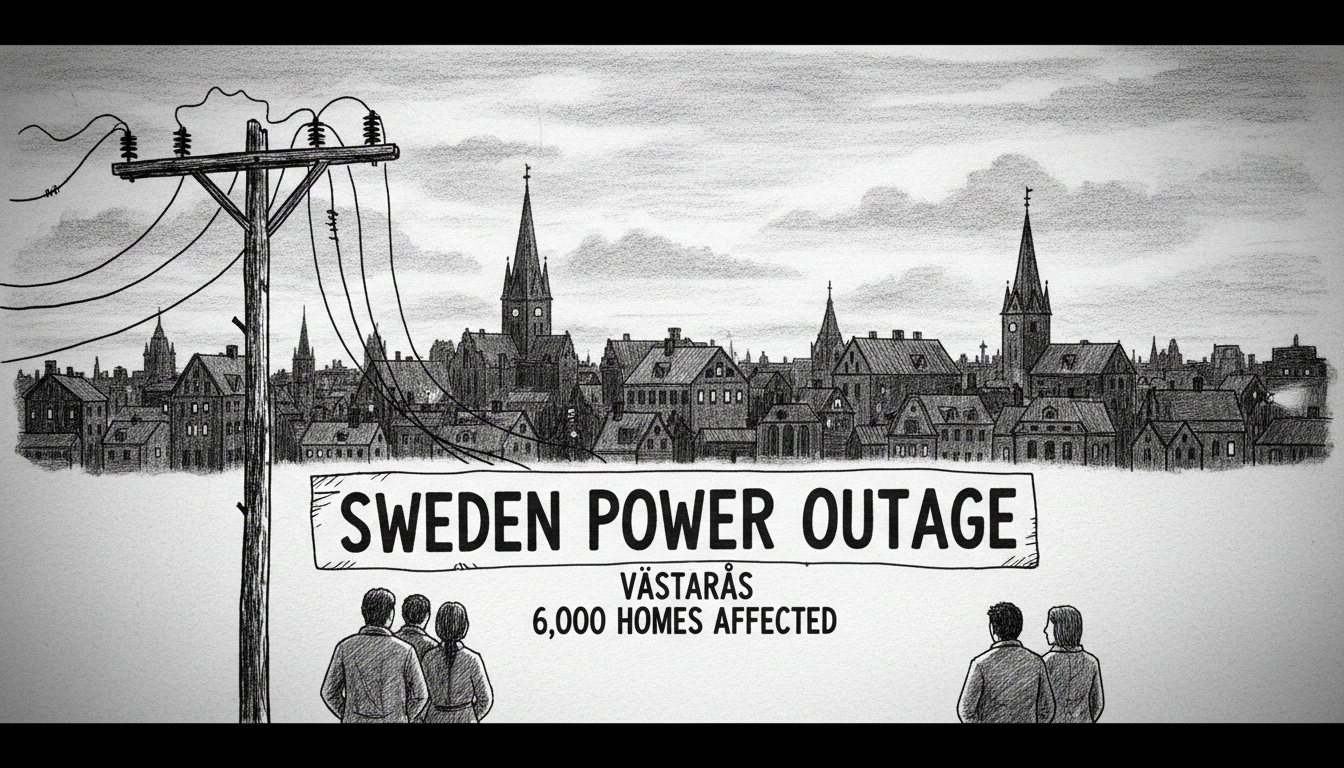
Sweden's renowned reliability faced a significant test recently when a major power outage plunged parts of eastern Västerås into darkness. Approximately 6,000 households and key commercial areas lost electricity, with no immediate timeline for restoration. The disruption highlights the tangible human and economic cost when modern infrastructure fails, even in one of Europe's most stable grids.
Reports confirm that neighborhoods including Irsta, Skiljebo, and the Hälla commercial district were affected. Residents described an abrupt halt to daily life. For businesses in Hälla, the outage meant shuttered shops, inoperable payment systems, and lost revenue. The incident serves as a stark reminder of society's profound dependence on a constant, invisible flow of energy.
A Community Left in the Dark
The immediate impact was felt in homes and on the streets. Without power, heating systems in some residences stopped working during a cool spring day. Refrigerators began to warm, and Wi-Fi networks died, severing digital lifelines. Public transportation experienced delays as traffic lights failed, creating congestion and safety concerns. For the elderly or those reliant on electronic medical equipment, the situation moved beyond inconvenience to potential risk.
Local authorities activated contingency plans. Emergency services were placed on heightened alert, prioritizing response to calls related to the outage. Information became a critical commodity, with residents scrambling for updates through mobile networks and battery-powered radios. The uncertainty around the restoration time amplified frustration, a common sentiment when control is stripped away by technical failure.
The Business District Grinds to a Halt
The inclusion of the Hälla commercial area underscores the economic ripple effect. This is not just a residential problem. Retail stores were forced to close their doors. Cafés and restaurants, unable to operate kitchens or card readers, turned customers away. Office workers were sent home, disrupting productivity. For small business owners, the outage translated directly into a loss of daily income with no clear avenue for recourse.
This event in Västerås offers a case study for business hubs like Stockholm's Östermalm or Södermalm. A prolonged power failure in a major financial district could freeze millions in transactions, disrupt trading, and cripple fintech operations. Venture capital firms and startups, often operating in cloud-based environments, are particularly vulnerable to infrastructure instability, which can erode investor confidence in a region's operational resilience.
Stress on a System in Transition
Sweden's electricity grid is among the world's most robust, with a very high share of renewable energy from hydro and nuclear power. However, no system is infallible. Outages typically stem from three sources: extreme weather events, technical faults at substations or in distribution lines, and human error during maintenance. The Västerås incident appears to be a significant technical fault, the exact nature of which grid operators are likely investigating.
This outage occurs against a backdrop of national energy transition. Sweden is aggressively integrating more wind and solar power, which are intermittent by nature. The grid must become smarter and more flexible to manage these variable sources while maintaining stable frequency. Furthermore, parts of the physical infrastructure—the cables, transformers, and substations—are aging. Modernizing this network requires substantial, continuous investment.
Energy experts point to this need for grid hardening. 'Investing in grid resilience is not glamorous, but it is fundamental,' says a Stockholm-based energy analyst. 'As we electrify transport and industry, demand on the grid will only increase. Outages like the one in Västerås show where vulnerabilities lie. The focus must be on redundancy, smart monitoring systems, and faster isolation of faults to minimize customer impact.'
Communication Is Key During Crisis
A critical lesson from any outage is the importance of clear, timely public communication. When the power goes out, people need answers. How widespread is it? What caused it? When will it be fixed? The absence of an immediate restoration prognosis in Västerås likely increased public anxiety. Effective crisis communication involves providing regular updates, even if the message is simply that crews are working and more information is pending.
Grid operators and municipalities can leverage multiple channels: SMS alerts, social media updates, and coordinated messaging with local media. Providing practical advice—checking on vulnerable neighbors, keeping freezers closed, using generators safely—can help communities manage the situation. Transparency about the cause, once known, builds public trust in the institutions responsible for keeping the lights on.
A Wake-Up Call for a Digital Nation
Sweden is a deeply digital society. From cashless payments and remote work to digital public services and startup innovation hubs, nearly every facet of life and economy depends on electricity. This makes the country exceptionally efficient but also uniquely vulnerable. The Västerås outage, while localized, is a microcosm of a broader systemic risk.
For the business community, particularly in tech and finance, it reinforces the necessity of backup power solutions and disaster recovery plans. For policymakers, it underscores that investments in digital infrastructure must be matched by investments in the physical energy infrastructure that supports it. The goal of a fossil-free society cannot be achieved without a grid that is not only green but also unshakably reliable.
The lights in eastern Västerås eventually came back on. Power was restored after several hours, though the precise duration and full technical cause remain details for the official report. The episode, however, will linger in the minds of residents and business owners. It serves as a potent reminder that progress, digitalization, and economic growth are built upon a foundation of electrons flowing through wires. When that flow stops, even briefly, the modern world stops with it. How Sweden chooses to strengthen this foundation will determine its resilience in an increasingly electrified future.