
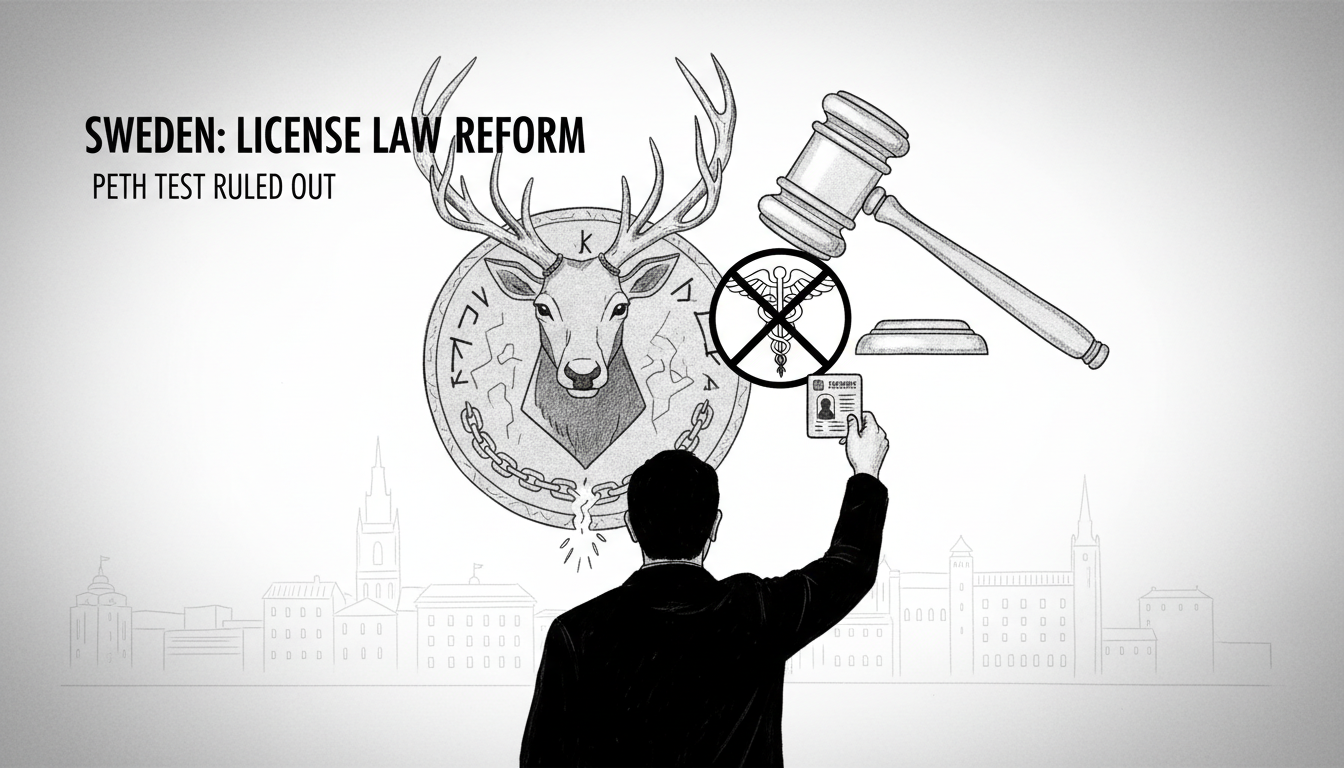
Sweden's Transport Agency wants to stop revoking driver's licenses based solely on elevated PETH test results. The controversial blood tests measure alcohol consumption over several weeks and have been used to identify excessive drinking.
The proposed rule change follows strong public criticism earlier this year. Several drivers lost their licenses after showing at least two elevated PETH readings.
Under the new proposal, only alcohol dependency diagnoses would justify license revocation. Less severe alcohol-related diagnoses would no longer automatically cost people their driving privileges.
"We've worked for a long time to clarify the regulations," said Katarina Norén, unit manager at the Transport Agency. "We conducted an international comparison and deeper scientific study. We found no connection between milder diagnoses and driving ability."
Current Swedish rules allow license suspension for alcohol abuse or harmful alcohol use that isn't temporary. The agency now suggests aligning with EU driving license directives that only mention dependency.
"With dependency diagnosis, you have reduced cognitive functions and slower reaction times," Norén explained. "But we're not certain about the milder diagnoses. If we want stricter requirements than the EU, we need better justification."
PETH tests will continue for drivers with alcohol dependency diagnoses to confirm sobriety. Doctors will still need to report patients they consider medically unfit to drive.
The proposal is now out for consultation and could take effect in January 2026. This represents a significant shift in Sweden's approach to monitoring driver sobriety and reflects growing skepticism about using biological markers alone to determine driving fitness.