
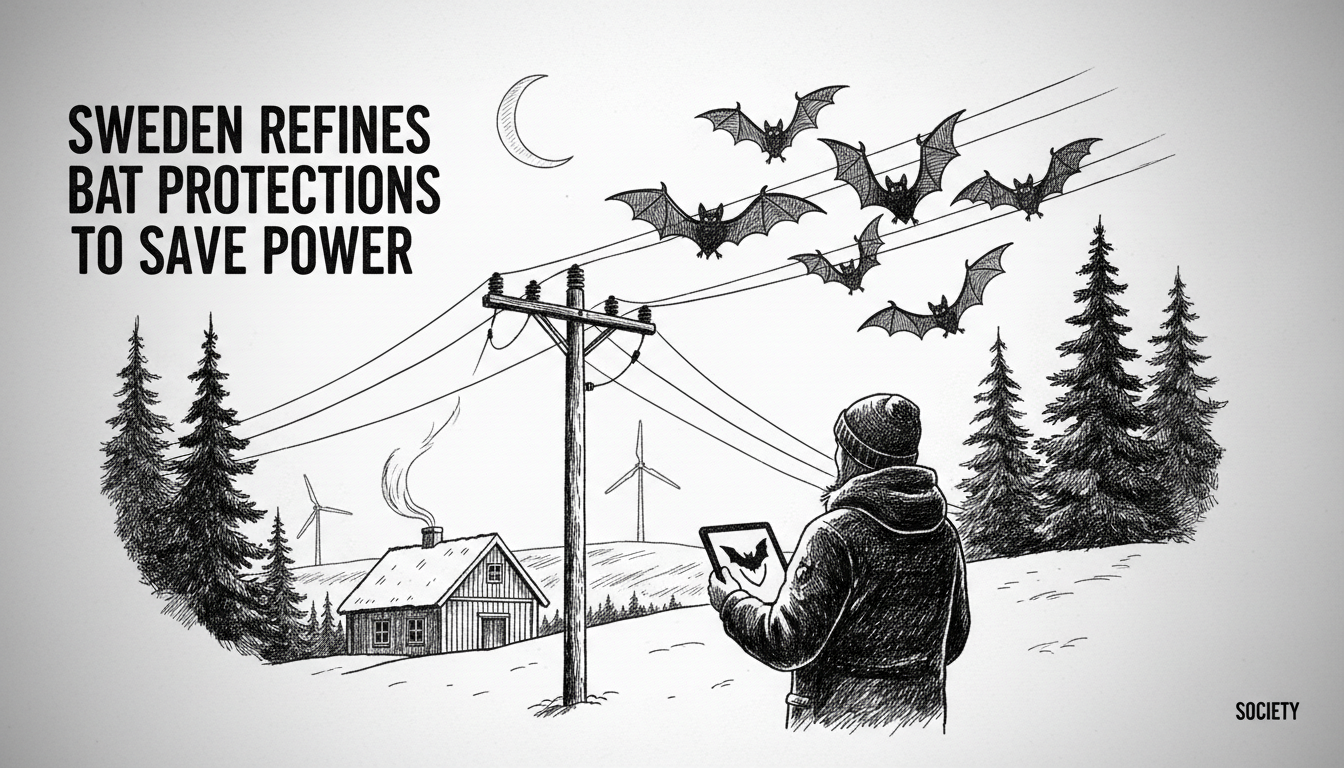
Sweden's wind power sector is scaling back a widely-used protection measure, following new research showing its most significant benefits are highly localized. The method, colloquially known as 'bat mode,' involves shutting down turbines during low wind speeds to prevent collisions with foraging bats. Studies confirm it can reduce bat mortality by over 60 percent, a compelling figure that drove its broad adoption. Yet this success comes with a substantial cost in lost renewable energy generation, prompting a strategic reassessment rooted in detailed ecological data.
Authorities and energy companies now advocate a targeted approach, applying the shutdown protocol only at high-risk turbine sites identified by new research. This shift represents a significant recalibration of Sweden's environmental policy, aiming to balance strict species protection with the urgent national need for green electricity. The decision underscores a move toward evidence-based conservation, where blanket measures are replaced by precision tools.
The Bat Mode Conundrum
'Bat mode' operates on a simple ecological principle: bats fly and hunt primarily during periods of low wind. During high winds, they remain sheltered. Wind turbines, conversely, produce the most energy when winds are strong and are less productive in gentle breezes. The mitigation strategy strategically idles turbines during these low-wind, high-bat-activity windows. Implemented across many Swedish wind farms, it has been a key response to concerns over the impact of the nation's rapid wind power expansion on vulnerable wildlife.
Sweden's ambitious climate goals rely heavily on wind energy, making the efficient operation of every turbine a national priority. Every megawatt-hour lost to voluntary shutdowns represents a delay in the fossil fuel phase-out. The blanket application of 'bat mode' has therefore created a tangible tension between climate targets and conservation mandates. This friction has propelled the search for a more efficient system, one that safeguards bats without unnecessarily curtailing clean energy production.
Research-Driven Policy Shift
The push for a new approach stems from a collaborative study involving ecologists, energy companies, and government agencies. Researchers like ecologist Richard Ottvall found that bat mortality rates vary dramatically between different wind farm locations. 'On certain sites, maybe it is not needed, because the mortality rate is so small there—smaller than previously thought. That could be the outcome,' Ottvall stated. This geographical variance is the key insight driving the policy change.
Previously, the over 60 percent reduction figure justified widespread use. Now, that same data is being used to argue for restraint. The research suggests that a significant portion of wind turbines operate in areas posing minimal risk to local bat populations. Applying costly shutdowns at these low-risk sites yields diminishing conservation returns for disproportionate energy losses. The study provides the empirical foundation to distinguish between high-risk and low-risk installations.
The Balancing Act: Kilowatts vs. Conservation
This targeted strategy requires sophisticated site-by-site risk assessment. Experts like Ina Müller Engelbrektson, who contributed to the study, emphasize that successful implementation hinges on continuous monitoring and adaptive management. The process involves analyzing local bat species, their population densities, migratory routes, and foraging patterns relative to turbine placement. This granular data allows for the creation of a risk map, guiding where 'bat mode' is truly essential.
The Swedish Energy Agency and the Environmental Protection Agency are now integrating these findings into official guidance. The goal is a standardized framework for assessing collision risk, moving away from a one-size-fits-all rule. For wind farm operators, this promises reduced operational complexity and higher revenue where risks are low. For conservationists, it means focusing protective resources where they will have the greatest impact on preserving bat biodiversity.
Implementing Smarter Protections
The transition to a targeted system is not without challenges. It demands upfront investment in ecological surveys and monitoring technology at individual wind farms. Smaller operators may find these costs burdensome compared to the simpler, blanket shutdown rule. Furthermore, regulatory certainty is required; companies need clear, long-term guidelines on assessment protocols to justify the capital investment in monitoring equipment and specialized analysis.
Richard Ottvall notes the importance of this adaptive framework. 'It allows us to be much more precise. We protect bats where they are truly threatened by turbine collisions, and we allow green energy to flow where the threat is minimal.' This precision is seen as the future of coexistence infrastructure policy. It reflects a maturation in Sweden's green transition, acknowledging that both climate action and biodiversity protection are complex, interconnected goals that require smart, flexible solutions.
A Model for Renewable Development
Sweden's refinement of 'bat mode' offers a potential model for other nations aggressively expanding renewable energy. The conflict between wind power and wildlife, particularly birds and bats, is a global issue. Demonstrating that data-driven, localized approaches can effectively reconcile these interests strengthens the political and social license for further wind farm development. It moves the debate from a binary choice between energy and nature to a more nuanced discussion about optimized siting and operation.
As Sweden continues its march toward a fossil-free future, such policy adjustments will be critical. The decision to scale back 'bat mode' selectively is not a retreat from conservation but an evolution toward a more sustainable and efficient form of it. The ultimate success of this strategy will be measured in two key metrics: stable or growing bat populations and an uninterrupted acceleration in wind power generation. Achieving both will confirm that intelligent policy, guided by robust science, can align ecological and climatic imperatives.
The coming years will test this balanced approach. Monitoring programs at adjusted sites will provide crucial feedback, indicating whether the targeted reductions in 'bat mode' use are sufficient. The outcome will likely influence not only Swedish regulations but also international standards for renewable energy development, proving that environmental protection and energy security can be pursued not as rivals, but as complementary pillars of a resilient society.