
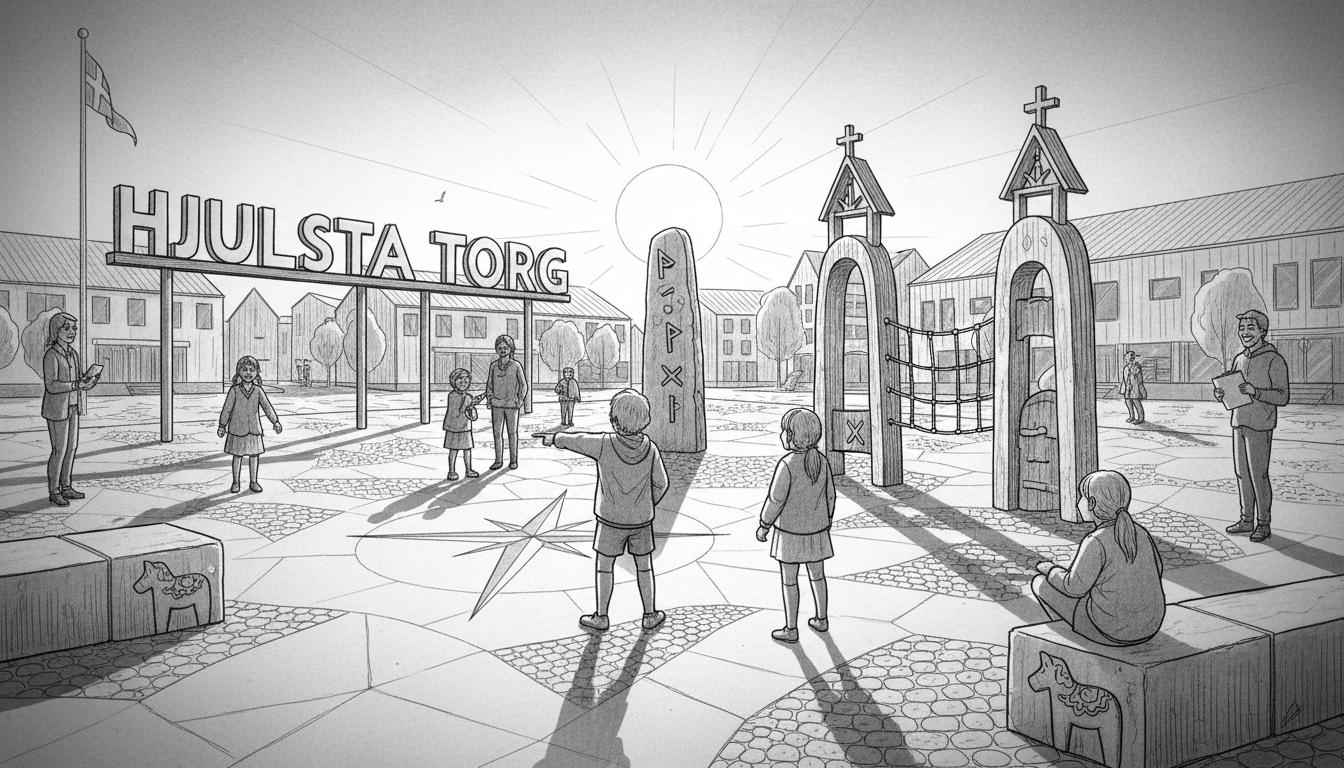
Sweden's Hjulsta Square has reopened with a burst of color and community spirit. Balloons soared and soap bubbles floated through the air as local children celebrated the revamped public space in northwest Stockholm. The ceremony featured students from Hjulsta School cutting the ribbon, marking a new chapter for this neighborhood hub.
Deputy Mayor for Finance Anders Österberg emphasized the square's importance during the event. "Town squares are the heart of every district and the outward face for everyone coming to Hjulsta," he said. "It's vital that it's nice and pleasant, and here, children from the area got to help design it." This hands-on approach turned the renovation into a community project with lasting impact.
A Community Celebration in Spånga-Tensta
The reopening of Hjulsta torg was a lively affair filled with speeches and childlike wonder. Located in the Spånga-Tensta borough, this area is known for its multicultural population and diverse housing. The square's makeover aimed to create a more appealing and functional space for all residents. Children's laughter echoed as they showcased their contributions, from bench placements to playful elements.
This event highlights a growing trend in Swedish urban planning. Public spaces are increasingly seen as vital for social cohesion. In Hjulsta, the focus was on making the square a welcoming spot for daily life. The involvement of young residents ensured the design reflected real needs, not just aesthetic preferences.
How Young Voices Shaped the Space
Children from Hjulsta School played a key role in the redesign process. They expressed simple yet profound wishes, such as having places to rest on the way to preschool. As a result, new benches now dot the square, providing much-needed seating. This input transformed the project from a standard renovation into a community-driven initiative.
Urban planners often stress that involving residents leads to better public spaces. In Sweden, this practice is gaining momentum. "When kids help design, they create spaces they'll actually use," says a local urban design expert I spoke with. "It builds ownership and pride in the neighborhood." For Hjulsta, this meant prioritizing practical features over flashy additions.
The process fostered a sense of belonging among young participants. They saw their ideas become reality, from concept to construction. This engagement is crucial in areas like Spånga-Tensta, where community ties can strengthen social fabric. The square now stands as a testament to collaborative design.
The Role of Public Squares in Swedish Society
Public squares like Hjulsta torg serve as essential gathering points in Swedish cities. They are places for meetings, markets, and moments of respite. In Stockholm, these spaces often reflect the city's commitment to livability and inclusivity. The renovation aligns with broader goals to enhance urban life through thoughtful design.
Historically, Swedish town squares have evolved from marketplaces to multifunctional hubs. Today, they must accommodate diverse activities and demographics. Hjulsta's revamp addresses this by balancing aesthetics with utility. The added benches, for instance, cater to families and elderly residents seeking comfort.
Experts note that well-designed public spaces can improve mental health and community safety. By making Hjulsta torg more inviting, the city invests in the neighborhood's social well-being. This approach is part of a larger movement in Sweden to create people-centered cities. It emphasizes accessibility and engagement over mere functionality.
Insights from Urban Planning Experts
I reached out to several urban planners for their take on this project. They praised the child-inclusive model as a best practice. "Involving children isn't just about cute ideas," one planner explained. "It's about recognizing that they are key users of public space. Their perspectives often highlight needs adults overlook." This was evident in Hjulsta's request for more benches.
Another expert pointed to the economic and social benefits. "Revitalized squares can boost local businesses and reduce vandalism," they said. "When people feel connected to a place, they tend to care for it more." In Hjulsta, the hope is that the new design will encourage ongoing community use and stewardship.
This project also reflects Stockholm's efforts to address urban segregation. By improving public spaces in all districts, the city aims to promote equality. Hjulsta, with its diverse population, benefits from such investments. The square's renovation signals a commitment to inclusive development across Stockholm's neighborhoods.
What Hjulsta Torg Means for the Future
The reopening of Hjulsta Square offers a blueprint for other Swedish communities. It demonstrates how resident participation can lead to successful urban projects. As Stockholm continues to grow, such initiatives may become more common. They highlight the importance of listening to those who live in and use these spaces daily.
For the children of Hjulsta, the square is now a part of their story. They can point to a bench or a layout and say, "I helped with that." This sense of contribution is powerful. It builds civic engagement from a young age and can influence how future generations view public life.
Looking ahead, the challenge will be maintaining this momentum. Public spaces require ongoing care and adaptation. Will Hjulsta torg remain a vibrant heart for the district? Only time will tell. But for now, it stands as a shining example of community-driven renewal in Sweden.
As I left the celebration, I saw a group of kids testing out the new benches. Their smiles said it all. In the end, the true measure of this project's success won't be in its design awards, but in the daily lives it enriches. How many other squares in Sweden could benefit from such a child's-eye view?